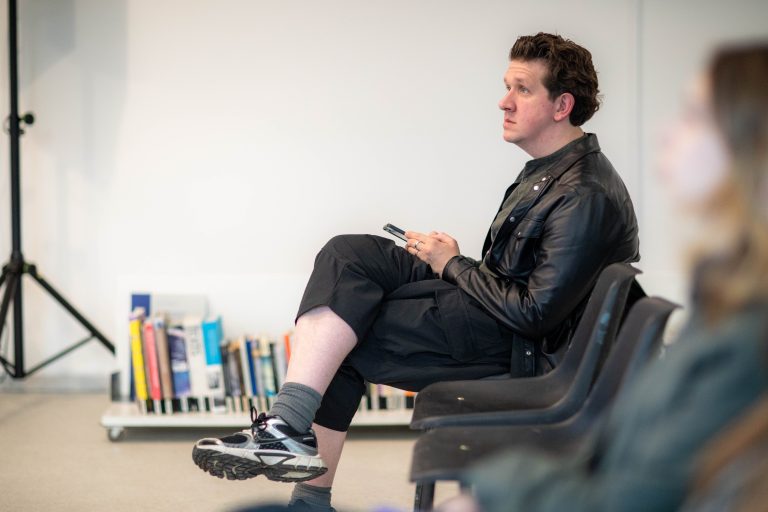
On Thursday 24 September at 6 p.m., the Contemporary Art Centre (CAC) Reading Room launches ‘Critical Proximity’, a new series of public lectures, talks and discussions.
As part of the Contemporary Art Centre’s public programme, ‘Critical Proximity’ invites artists, curators, researchers and professionals from other fields to reflect on the themes and discourses that accompany contemporary art. Art is inseparable from the circumstances in which it emerges – from material conditions and the technologies that permeate everyday life to crisis itself, which has become not a rupture in the flow of history but a permanent condition of the contemporary world. The title alludes to the modernist assumption that critical distance is necessary for perceiving art. With this series, we invite you to choose the path of proximity – to engage, to understand, to think together, while retaining the critical perspective needed to address important contemporary issues.
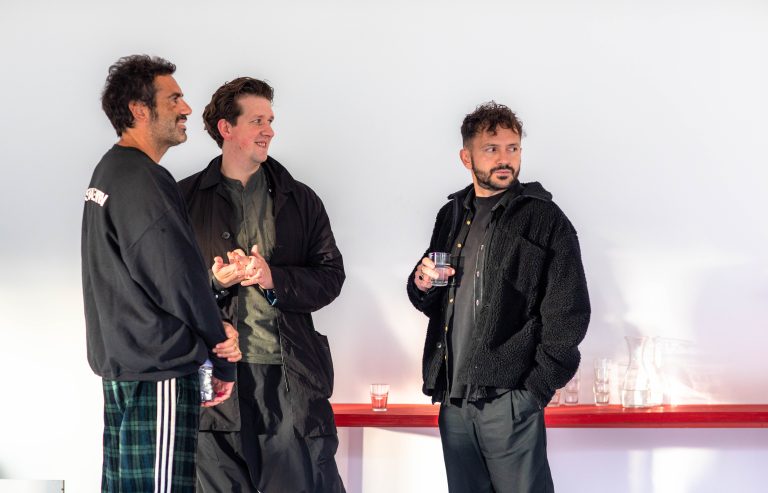
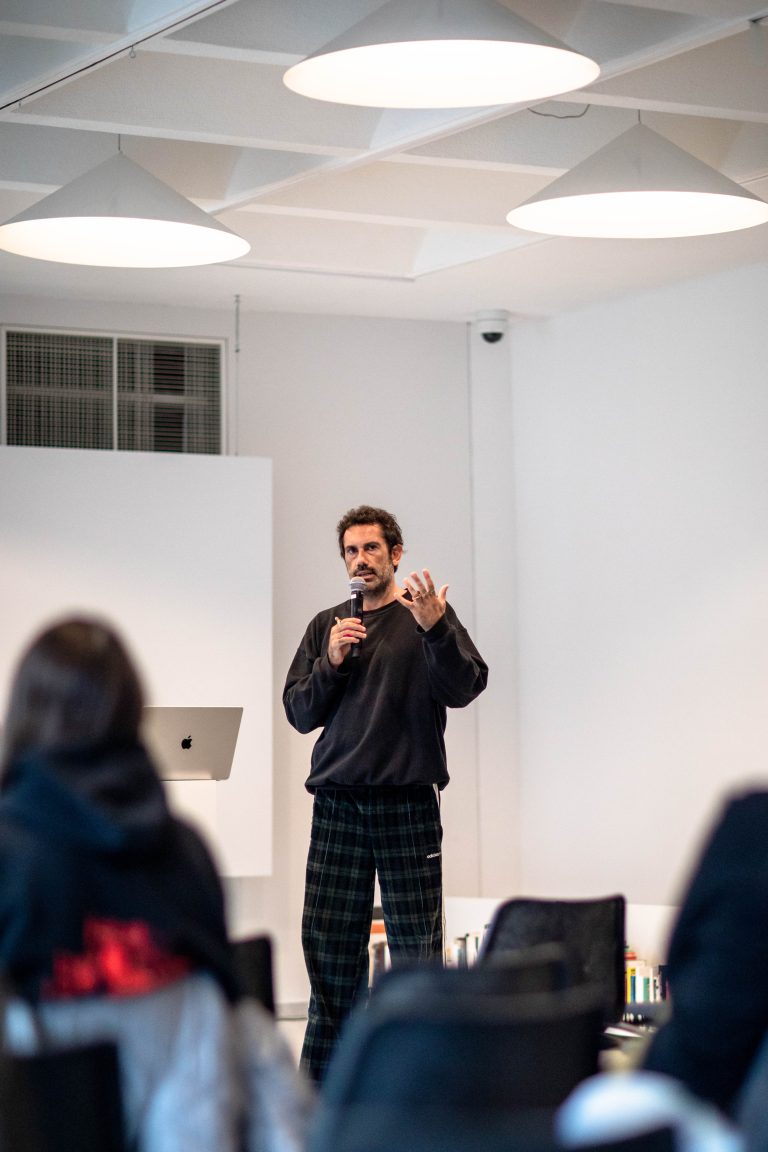
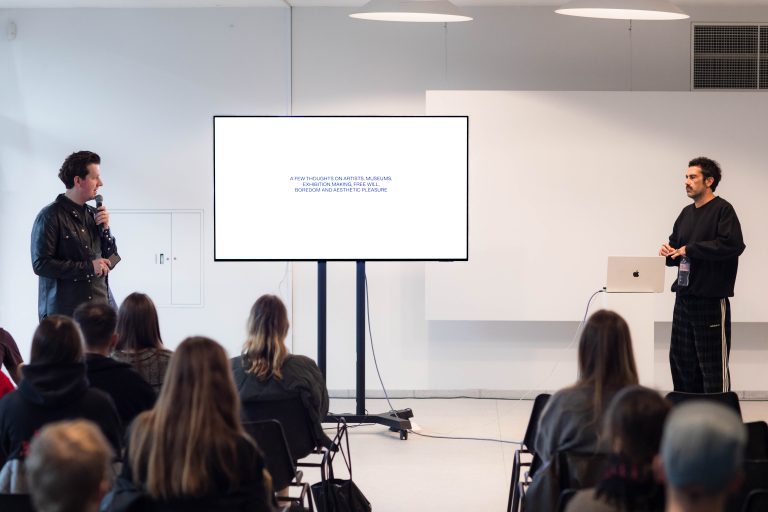
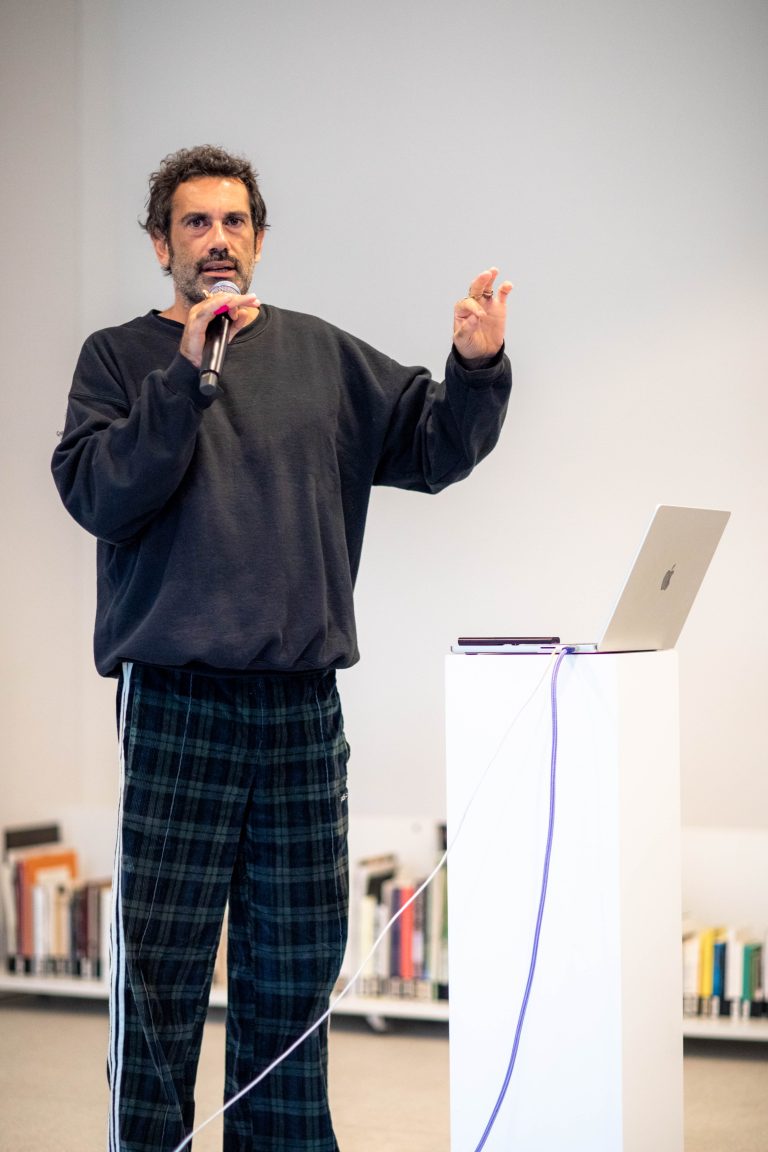
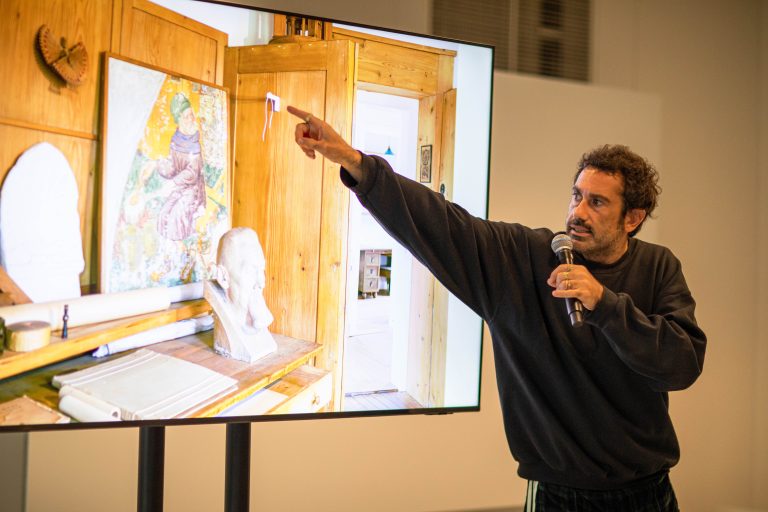
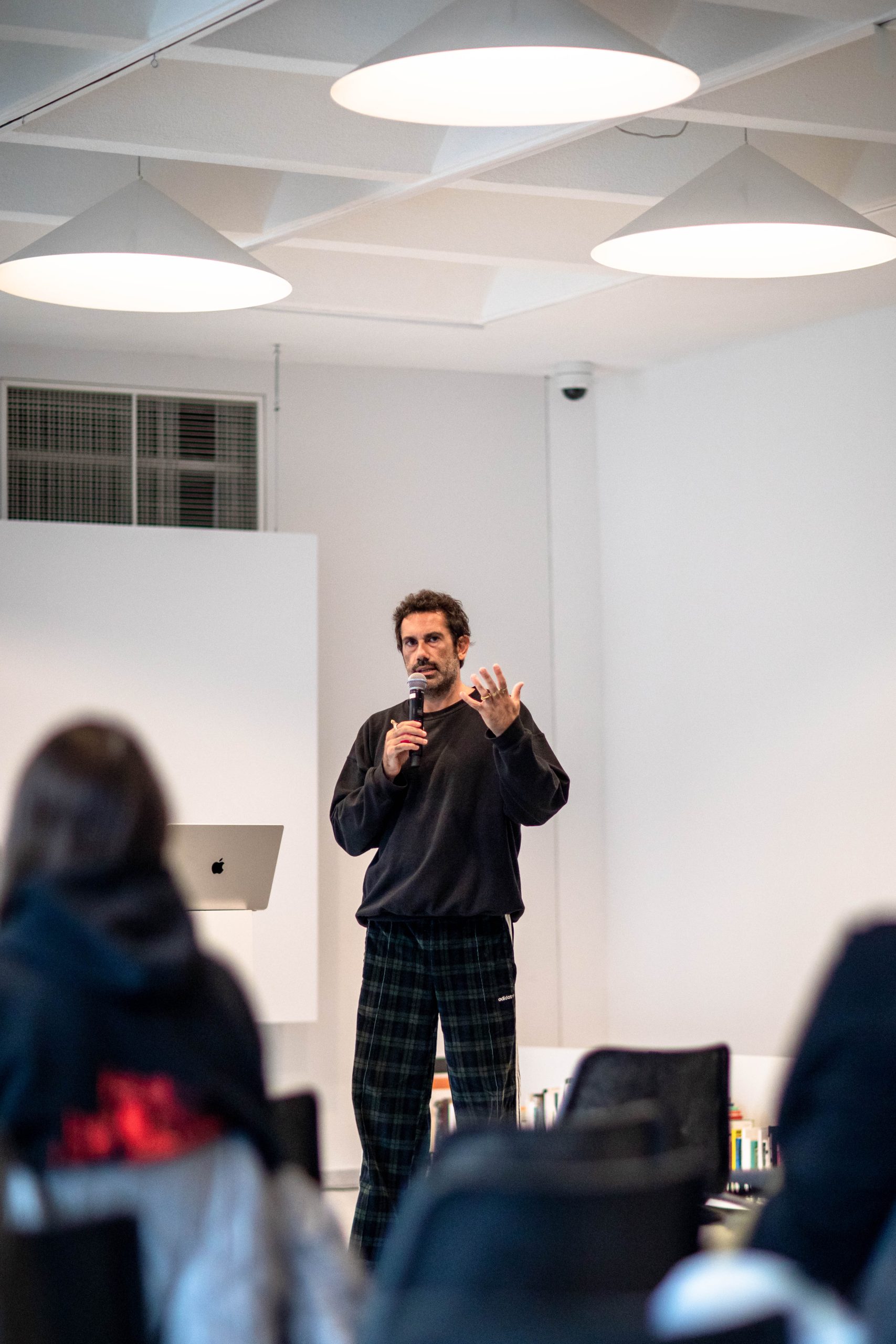
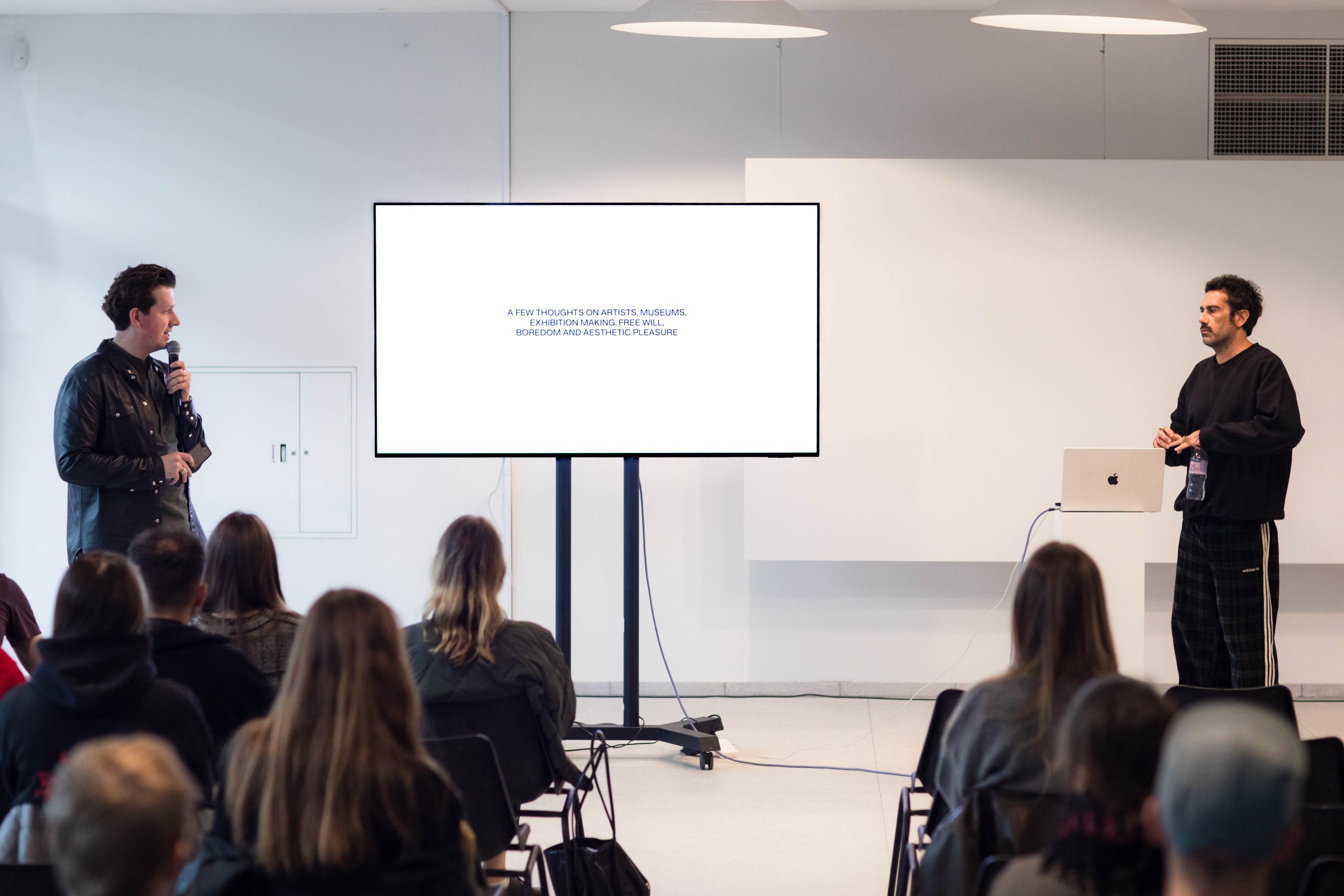
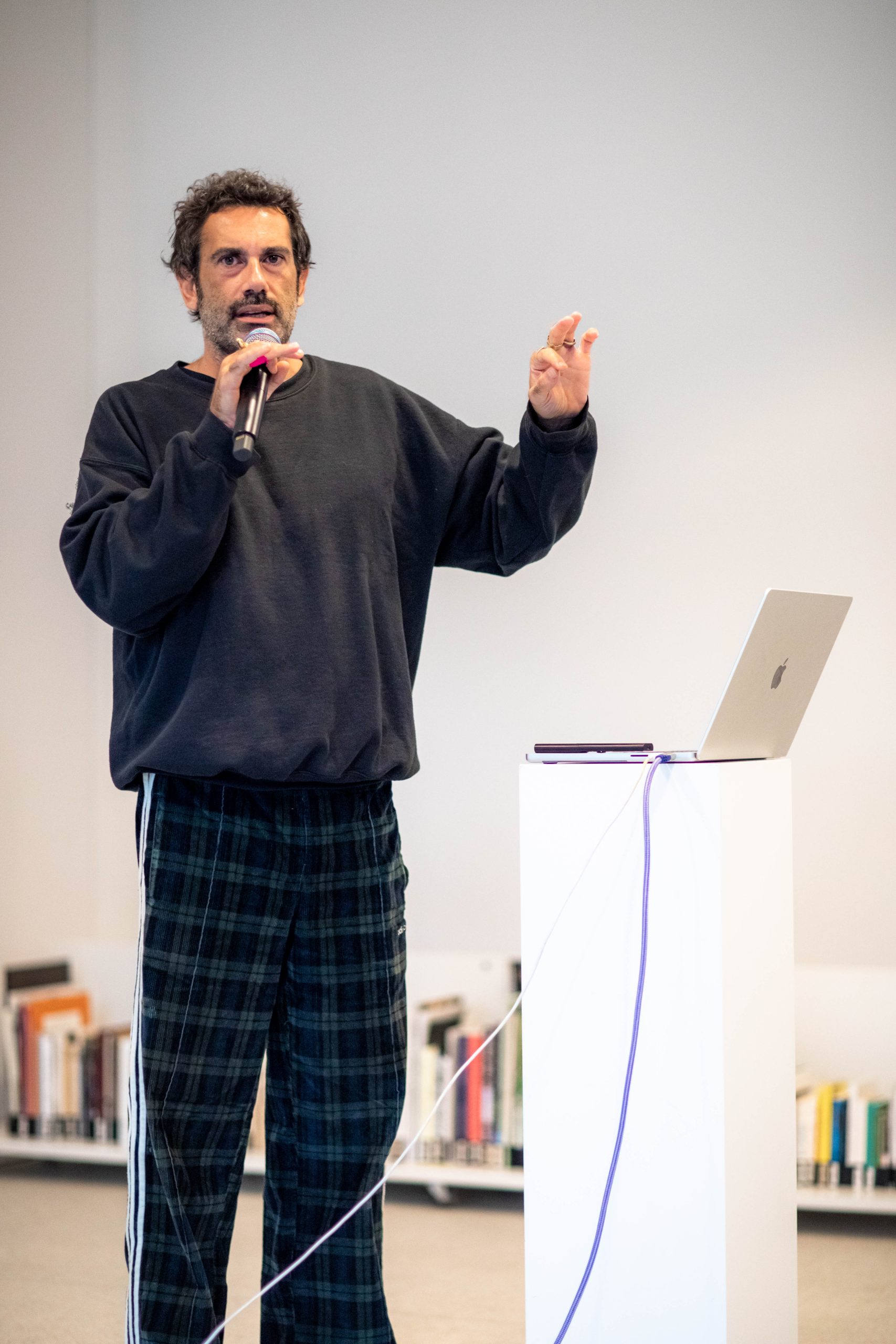
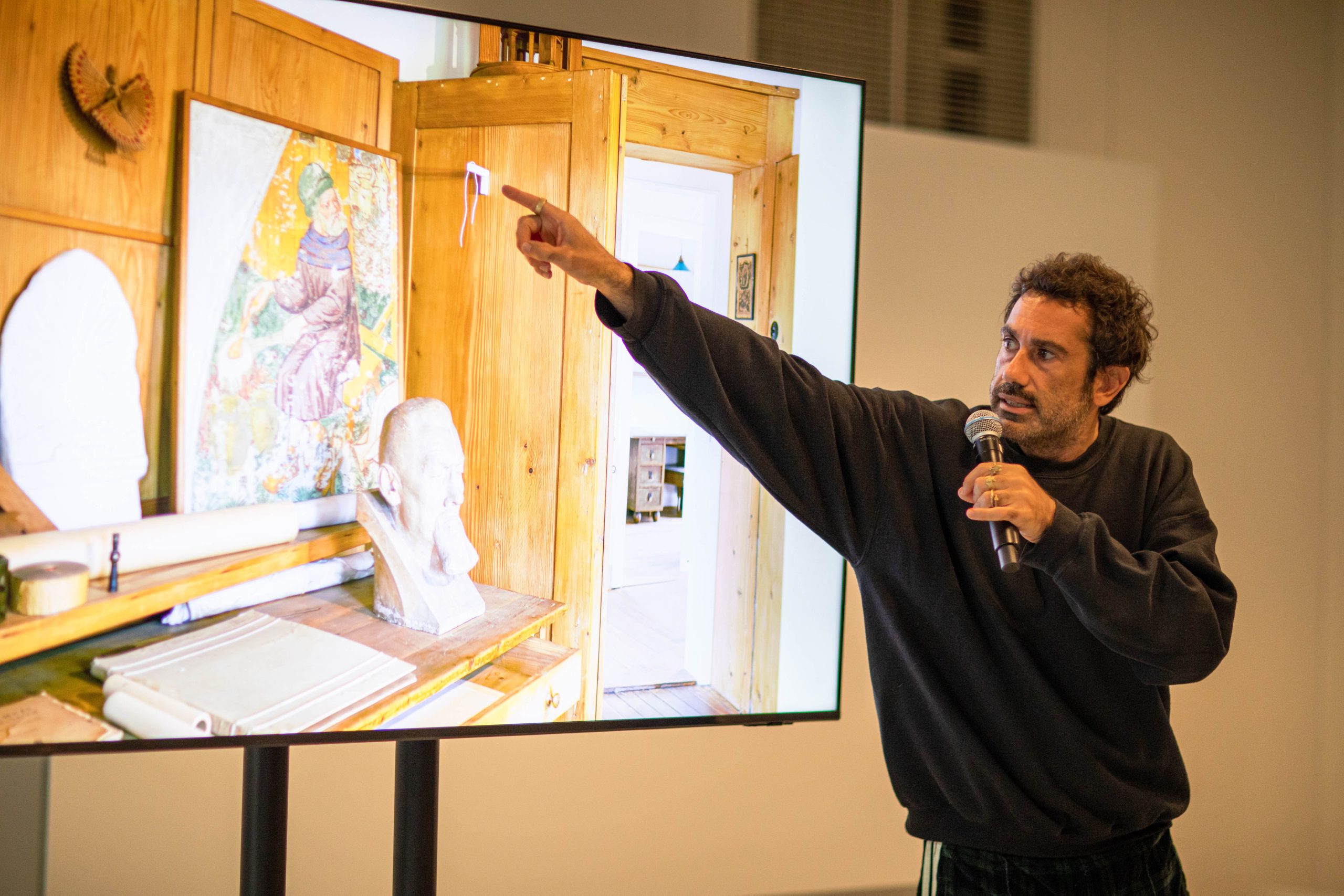
The first ‘Critical Proximity’ event welcomes Italian curator Luca Lo Pinto, former artistic director of MACRO – Museum of Contemporary Art of Rome. He will give a talk titled ‘A few thoughts on artists, museums, exhibition making, free will, boredom and aesthetic pleasure’.
In his curatorial practice, Luca Lo Pinto explores how exhibition-making can become a tool for creating situations that open up multiple points of entry – both visual and conceptual. He also examines the potential of such situations to offer a productive response to intellectual and emotional dyslexia. In his talk, the curator will discuss the medium of exhibition-making, focusing on projects he has realised in contemporary art institutions (primarily at MACRO – Museum of Contemporary Art of Rome) as well as outside institutional contexts.
The event will be held in English.
The event is free. Due to limited capacity, we encourage you to arrive a little early to secure a seat in the Reading Room.
LUCA LO PINTO is an Italian curator and editor. He was the artistic director of MACRO – Museum of Contemporary Art of Rome from 2020 to 2025. From 2014 to 2019, he worked as curator of Kunsthalle Wien. He is the co-founder of the magazine and publishing house NERO. He has produced a range of solo exhibitions with artists including Emilio Prini, Simone Forti, Michel Auder, Nathalie du Pasquier, Jason Dodge, Tony Cokes, Friedl Kubelka, Cinzia Ruggeri, Camille Henrot, Olaf Nicolai, Pierre Bismuth, Babette Mangolte, Lawrence Weiner, Gelatin & Liam Gillick, Charlemagne Palestine, Lisa Ponti, Darren Bader, as well as publications with Mario Garcia Torres and Mario Diacono.
Other curatorial projects include ‘The Screen is a Muscle’ (Gallerie d’Italia, Turin); ‘I am only the housekeeper, but I don’t know…’ (Plečnik House, Ljubljana); the 16th Art Quadriennale (Palazzo delle Esposizioni, Rome); ‘Le Regole del Gioco’ (Achille Castiglioni Studio-Museum, Milan); ‘Trapped in the Closet’ (Carnegie Library/FRAC Champagne Ardenne, Reims); ‘Antigrazioso’ (Palais de Toyko, Paris); ‘AnderSennoSogno’ (Hendrik Christian Andersen Museum, Rome); ‘D’après Giorgio’ (Giorgio de Chirico Foundation, Rome); ‘Conversation Pieces’ (Mario Praz Museum, Rome). In 2012, he edited the book Documenta 1955–2012. The Endless Story of Two Lovers. He has contributed to numerous exhibition catalogues and magazines, including Flash Art, Kaleidoscope, Mousse, Purple, Spike, Rolling Stone, All In, and Capsule.
The ‘Critical Proximity’ series invites us to reflect on the discourses and themes that inevitably accompany contemporary art. Against the backdrop of today’s crises, contemporary art is inseparable from the circumstances in which it emerges, and these circumstances become an important factor in how it is perceived and the influence it has. These range from the physical and material conditions in which art exists to the technologies and social dynamics that permeate everyday life – not just art – and reveal how authority and legitimacy are determined. They also encompass crisis itself, which has become not merely a rupture in the flow of history but a permanent feature of the contemporary world. These questions emerge through what is created, exhibited, and discussed. In this series, which also marks the general direction of the Contemporary Art Centre’s public programme, we invite people to engage, understand and reflect together.
Contemporary art here serves as a vehicle for discussing the contemporaneity in the broadest sense – a concept that philosophers such as Giorgio Agamben and Peter Osborne theorise, each in their own way, as a ‘present’ that does not coincide with itself. For Osborne, the contemporary is a structure in which individual moments do not coalesce into a whole, and the present is sustained solely by this fictitious construct, which is inevitable under the conditions of globalisation. For Agamben, contemporaneity is instead a position in which we remain at odds with the present by perceiving not only its light but also its darkness – in other words, by engaging with contemporaneity through a critical relationship.
In light of these dynamics, the title of the series also alludes to the modernist assumption that a critical distance is necessary for the perception of art. This assumption can no longer be accepted at face value: there is nowhere left to step back to. What we might wish to observe from the outside also affects us – we are critically close. Bruno Latour proposed ‘critical proximity’ as an alternative to distance, arguing that a gaze from nowhere is not a condition of objectivity, but rather its loss. This reversal becomes significant in the context of this series too: proximity is not a choice, because war, climate change and other crises are also critically close, regardless of how we think about them. We therefore invite you to choose how we might inhabit this proximity while retaining the distance necessary to reflect critically upon it.
The guests in this series will include practitioners – artists and curators – and theorists, as well as representatives from other fields who work with different aspects of the contemporary world, including technology, ecology and current political forms. While discussing each guest’s practice in specific terms, the series will situate it within broader contexts of agency, legitimacy, responsibility and power. Consequently, the series is not limited to the field of art alone; the questions it raises will extend into other parts of the Contemporary Art Centre’s public programme, including lectures, educational initiatives and reading room activities.
Edvardas Šumila
Photography and/or filming may take place at the event, so please be informed that you may be seen in photos and/or videos of the event. These photos and videos can be published on social networks or media.