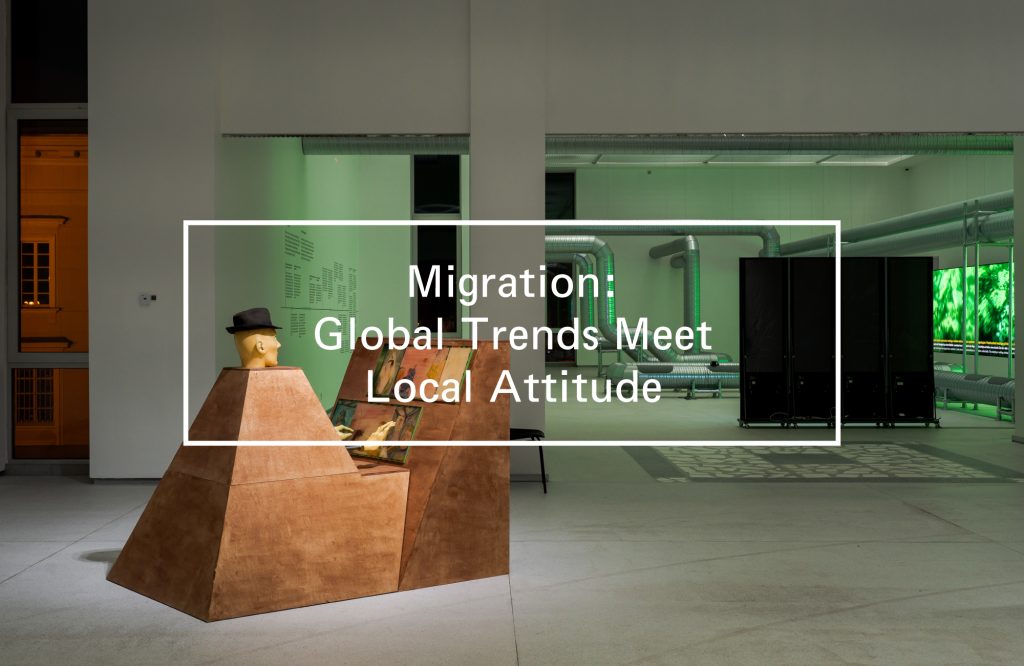
On Thursday, 29 January 2026, at 6 pm, a discussion on global migration trends and their reverberations in the Lithuanian context will take place in the Reading Room of the Contemporary Art Centre (CAC). The discussion will be moderated by Eglė Elena Murauskaitė.
How are the global migration trends reflected in the Lithuanian context? How does the ‘other’ fare in everyday local experience, against the backdrop of myths and concerns linking migration and security? Bringing together perspectives from culture and politics, the panel will share insights and lived experiences at this interdisciplinary intersection.
The discussion will feature Aistė Ulubey, founder and director of the arts agency Artscape, Aleksandra Grzonkowska, Head of NOMUS – New Art Museum in Gdańsk, as well as artist Mathu Bùi, whose sculptures are presented in the exhibition ‘Bells and Cannons’.
Discussion will be held in English. Participation in the event is free of charge.
PARTICIPANTS
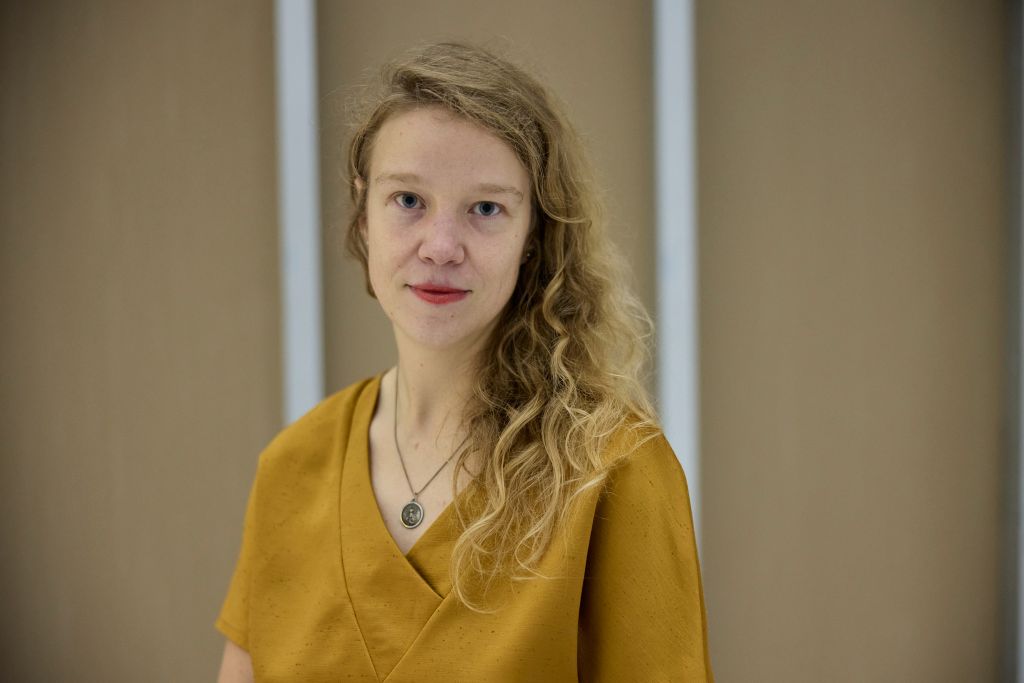
EGLĖ ELENA MURAUSKAITĖ is an art critic, translator, and author of the NARA culture column ‘Kraštinė’. Having completed a Master’s degree in International Relations at Sciences Po in Paris, she worked actively in the field of international security for fourteen years and is a co-author of four monographs and 25 academic texts. She is also the author of the audio guide for the exhibition ‘Bells and Cannons: Contemporary Art in the Face of Militarisation’, currently on view at the CAC.
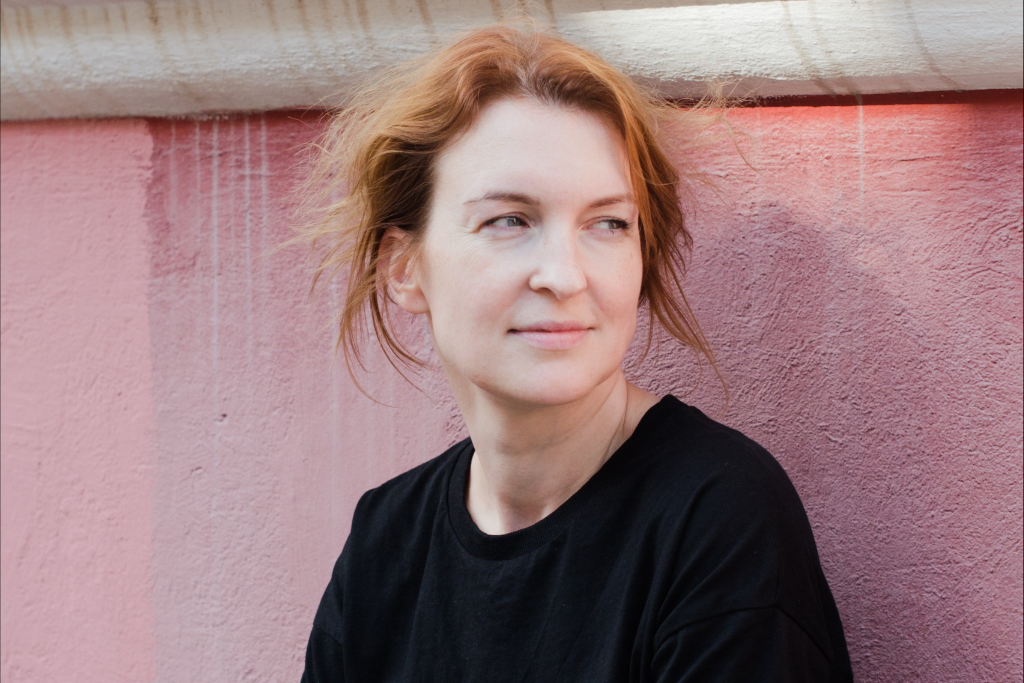
AISTĖ ULUBEY is the founder and director of the arts agency Artscape, an NGO thatpromotes a more open and inclusive world through art. The organisation has received prestigious awards for its work in social cohesion, human rights, and innovative artistic expression. Since 2019, Artscape has been recognised as a strategic partner of the United Nations Refugee Agency. Aistė actively participates in international forums, from Iceland to South Africa, speaking about art as a tool for inclusion and advocacy. She is also a member of the International Committee for Culture & Mental Health (Dr Guislain Museum, Ghent, Belgium).
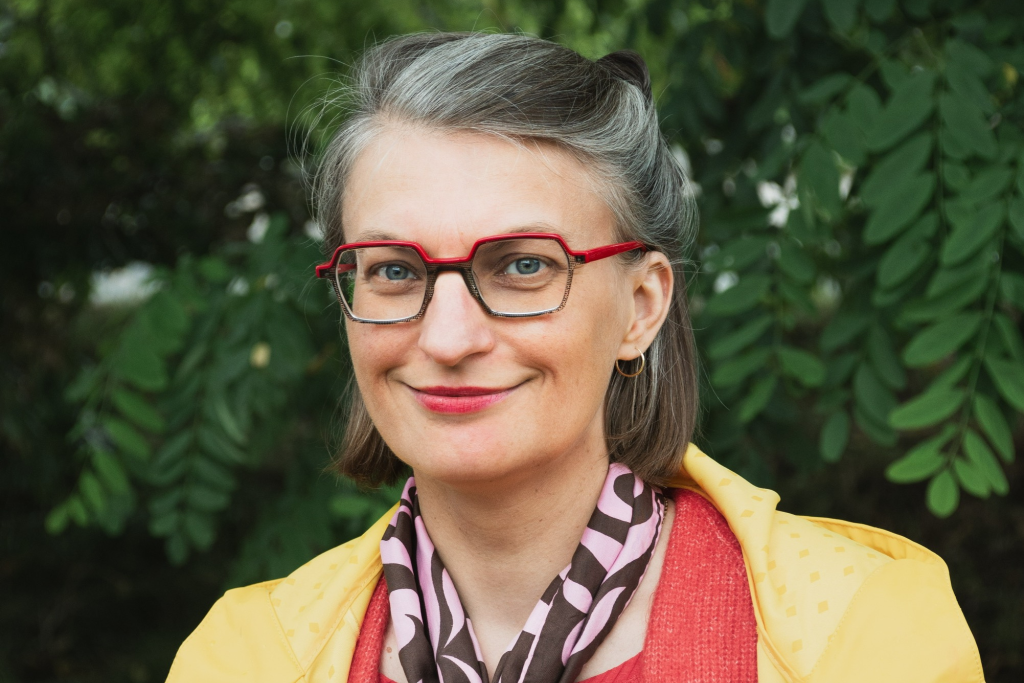
ALEKSANDRA GRZONKOWSKA is an art historian, curator, and researcher of contemporary art. She is Head of NOMUS – New Art Museum, a branch of the National Museum in Gdańsk, where she recently curated the exhibition ‘Hospitalities’ (with Maja Murawska), exploring themes of migration, mobility, and identity. Grzonkowska holds a postgraduate degree from Gdańsk University of Technology and is currently completing doctoral studies in History, History of Art and Archaeology at the University of Gdańsk. Since 2016, she has run the non-governmental organisation Chmura Visual Culture Foundation, where she is responsible for its artistic, research, and curatorial programme. Grzonkowska is the editor of The Art of Transformation. Gdańsk Threads (with Maksymilian Wroniszewski), Rising. Learning from the Past Today for Tomorrow, NOMUS. Collection in Action (with Aneta Szyłak, 2021), Own Circulation (2020), Augustus F. Sherman. Atlas of the Immigrant (2017), and Bogna Burska’s monograph Films, as well as co-editor of the Alternativa Editions publishing series.
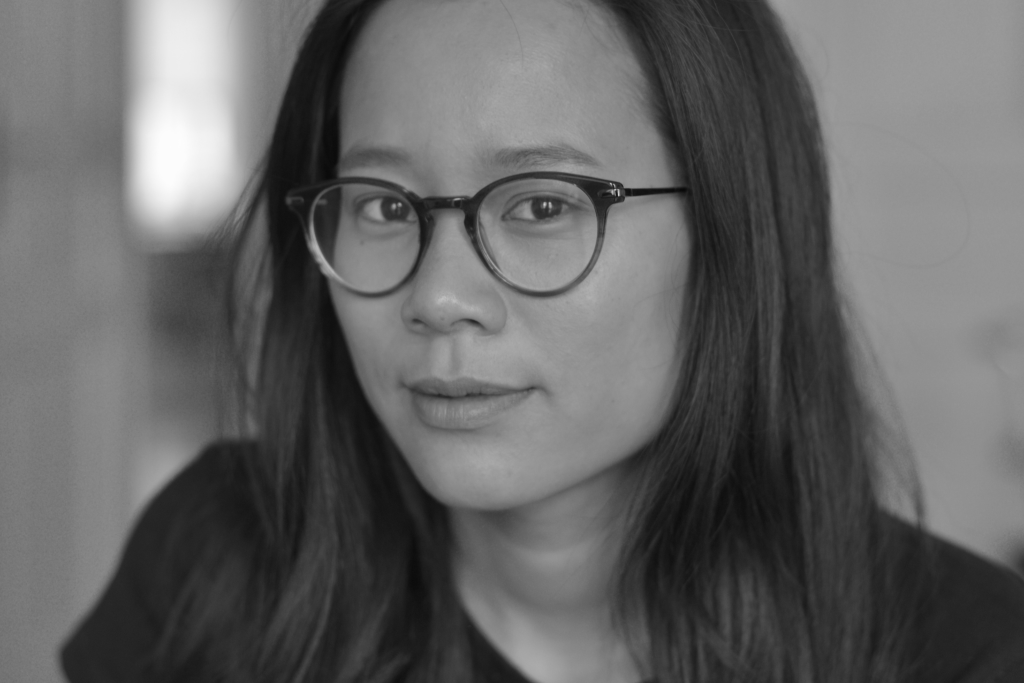
MAITHU BÙI explores networks of human intervention at the intersection of collective history, science, and technology. They studied Philosophy of Language and Logic at LMU Munich and Fine Arts at UdK Berlin. Their work has been presented at the 12th Berlin Biennale, Bundeskunsthalle Bonn, Kunsthalle Bratislava, Museum der bildenden Künste Leipzig, and E-WERK Luckenwalde x Akademie der Künste Berlin. Bùi co-founded the research collective Curating through Conflict with Care (CCC) and the working group art+computation at the Gesellschaft für Informatik. They are a 2024 Human Machine Fellow at Akademie der Künste, a 2025 Dreaming Beyond AI Fellow and a 2025 recipient of a stipend from Stiftung Kunstfonds.
At the exhibition ‘Bell and Cannons’, Maithu Bùi explores the impact of war waste, especially the remains of explosives and mines, on human and non-human lives. The two series presented at the exhibition speak directly to the issue of mine contamination. One consists of works that look like open fruit – similar to how some bombs are nicknamed after pineapples or cucumbers, depending on their shape. In the second series, the sculptures take on forms similar to seashells. This series was created following the artist’s recent research visit to the Lithuanian coast of the Baltic Sea.
Photography and/or filming may take place during the event. Photographs and/or video recordings may be used to promote the event on social media, websites, in the media, and elsewhere.