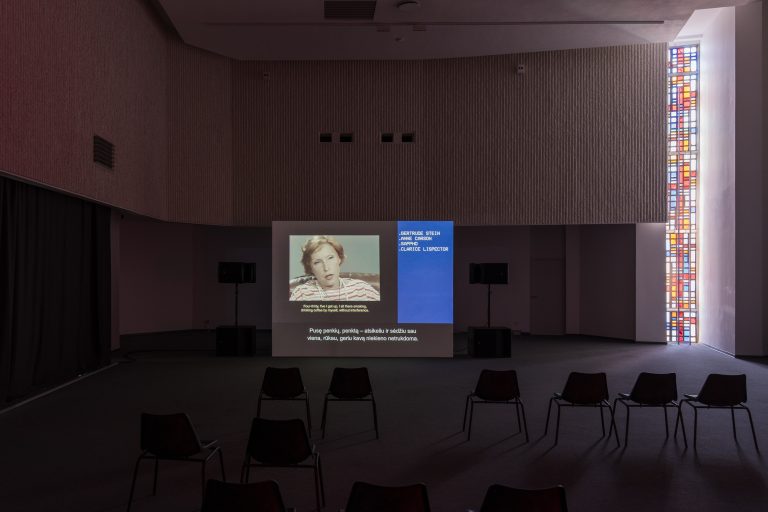
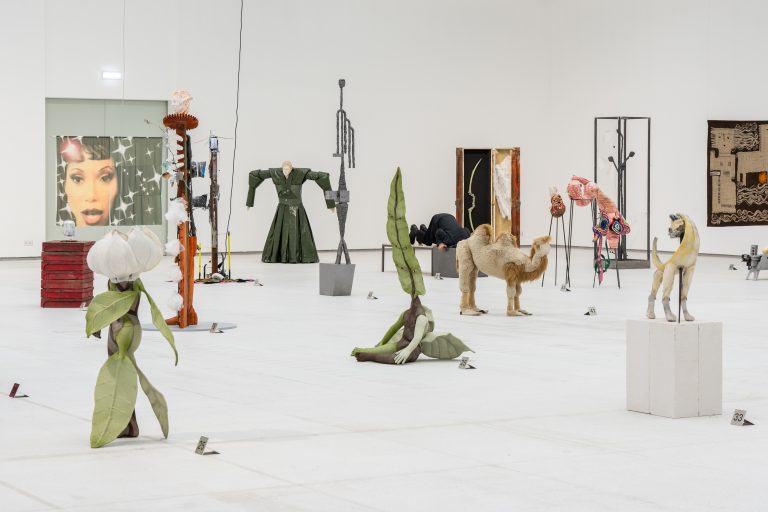
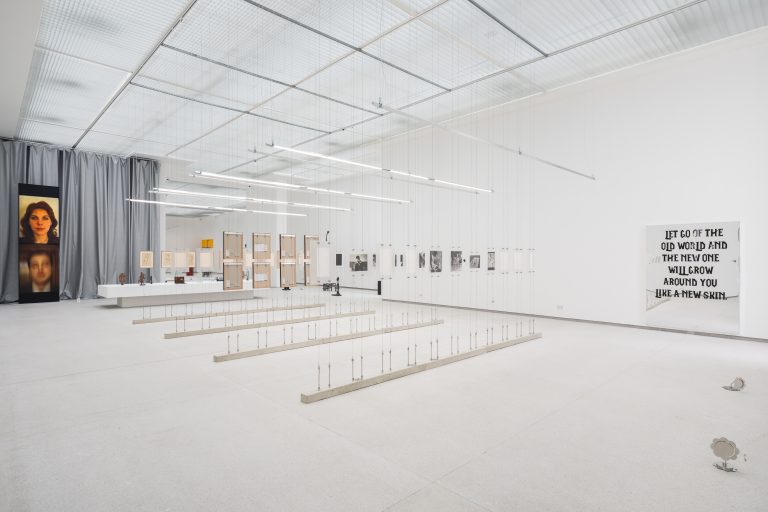
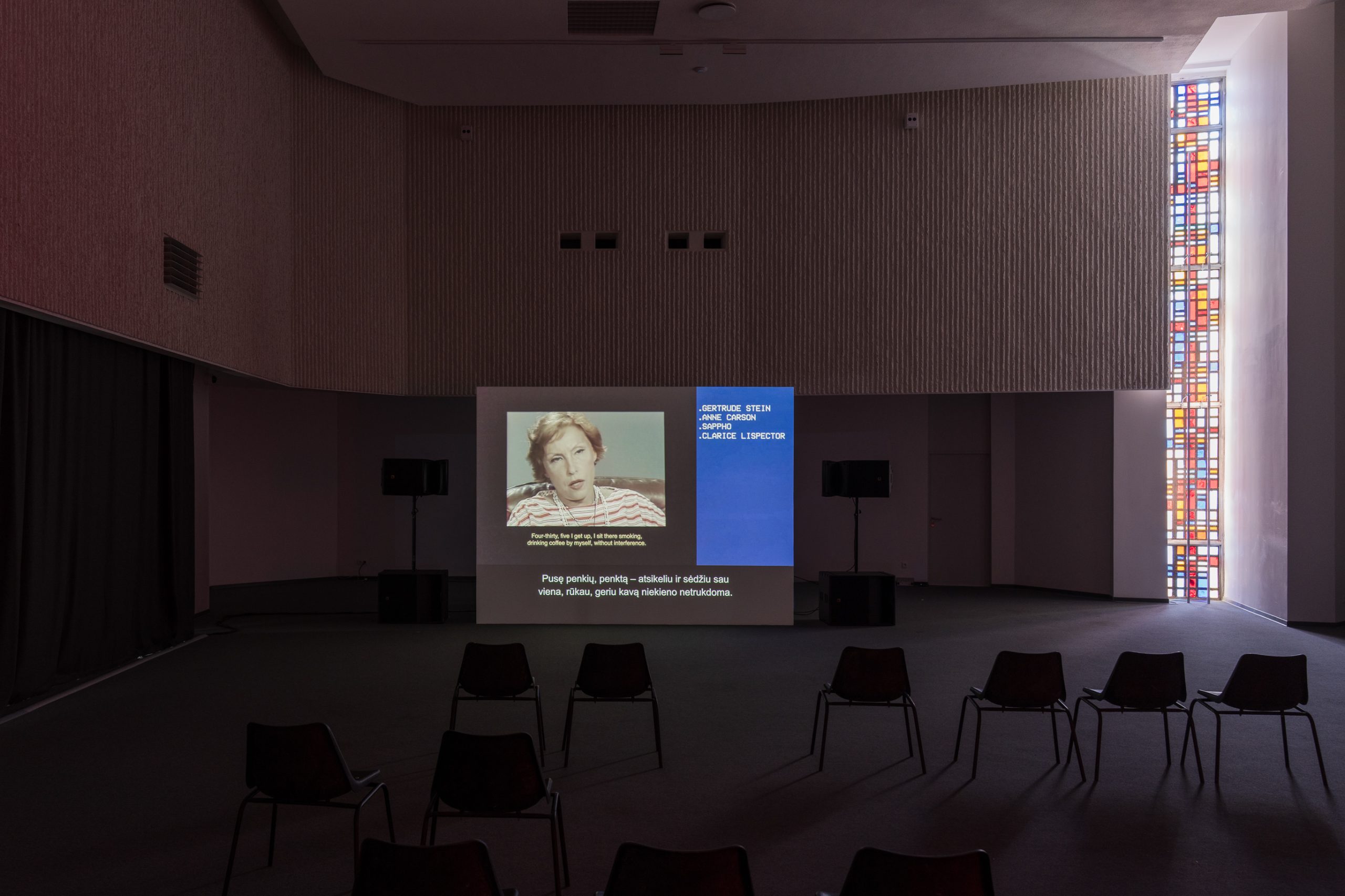
Goda Palekaitė, “I Write While Disappearing”, 2021. Video (17 min. 28 sec.). Courtesy of the artist. “Superglue, or Inventing the Friend”, Contemporary Art Centre, 2026. Photographer: Andrej Vasilenko
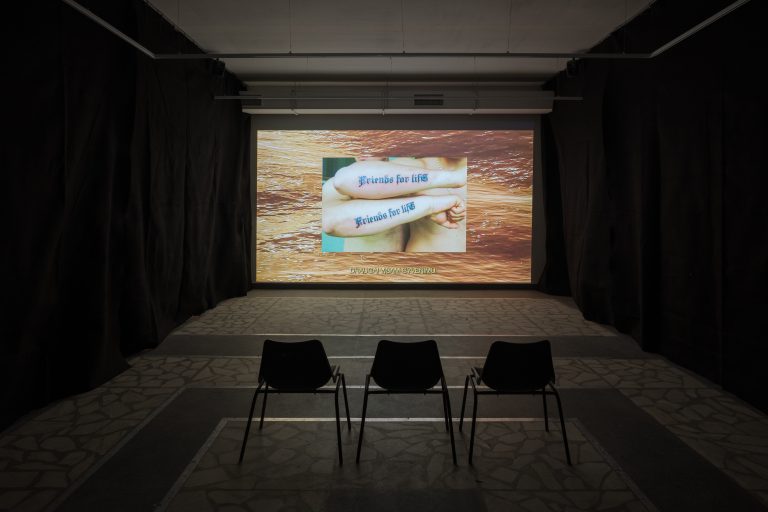
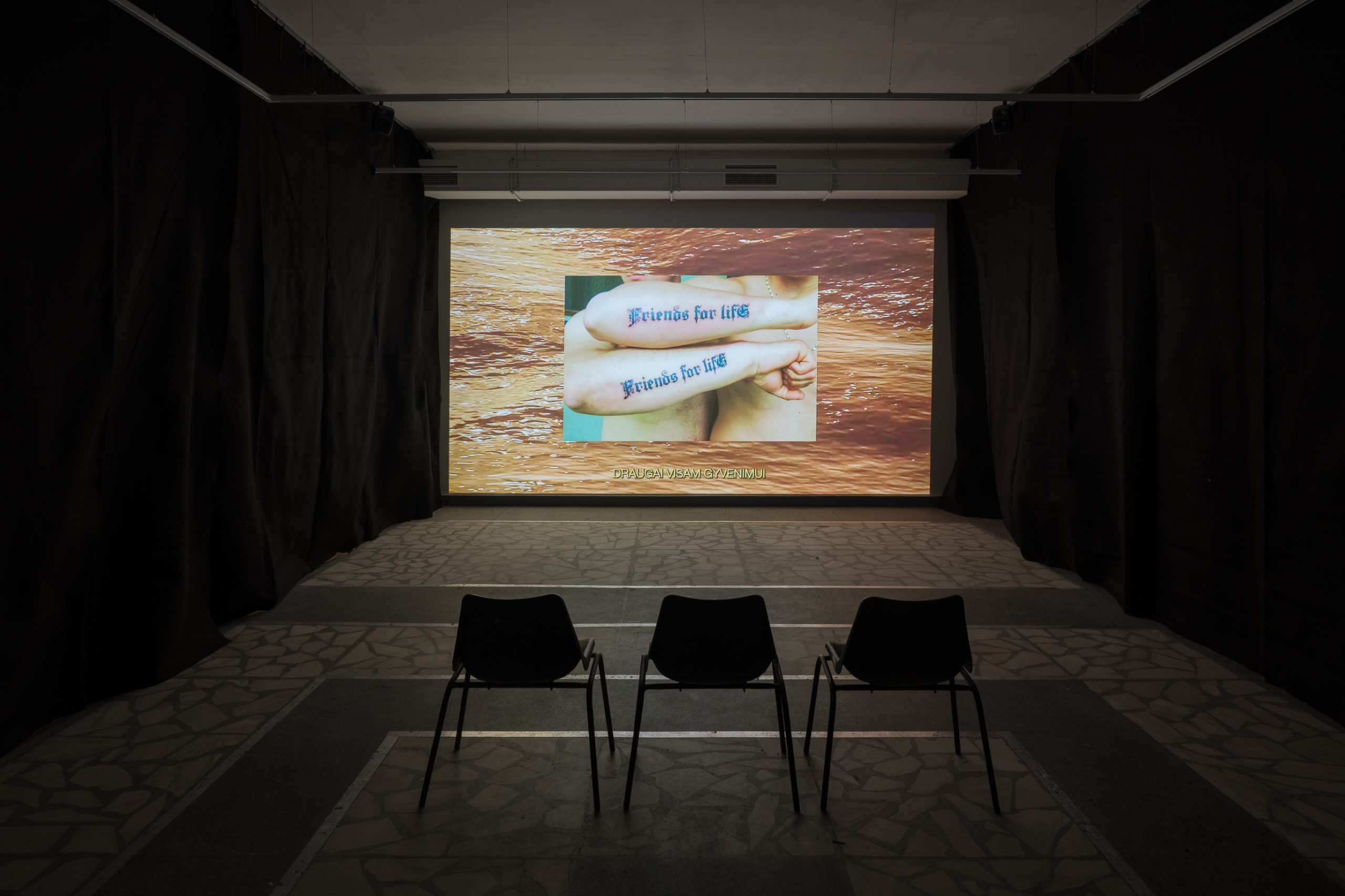
Jonathan Vinel, “Martin Cries”, 2017. Video (16 min). Courtesy of the artist and New Galerie, Paris. “Superglue, or Inventing the Friend”, Contemporary Art Centre, 2026. Photographer: Andrej Vasilenko
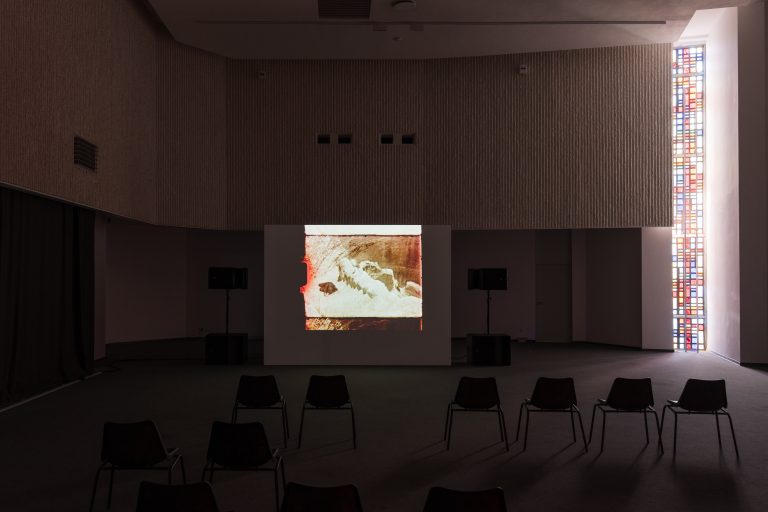
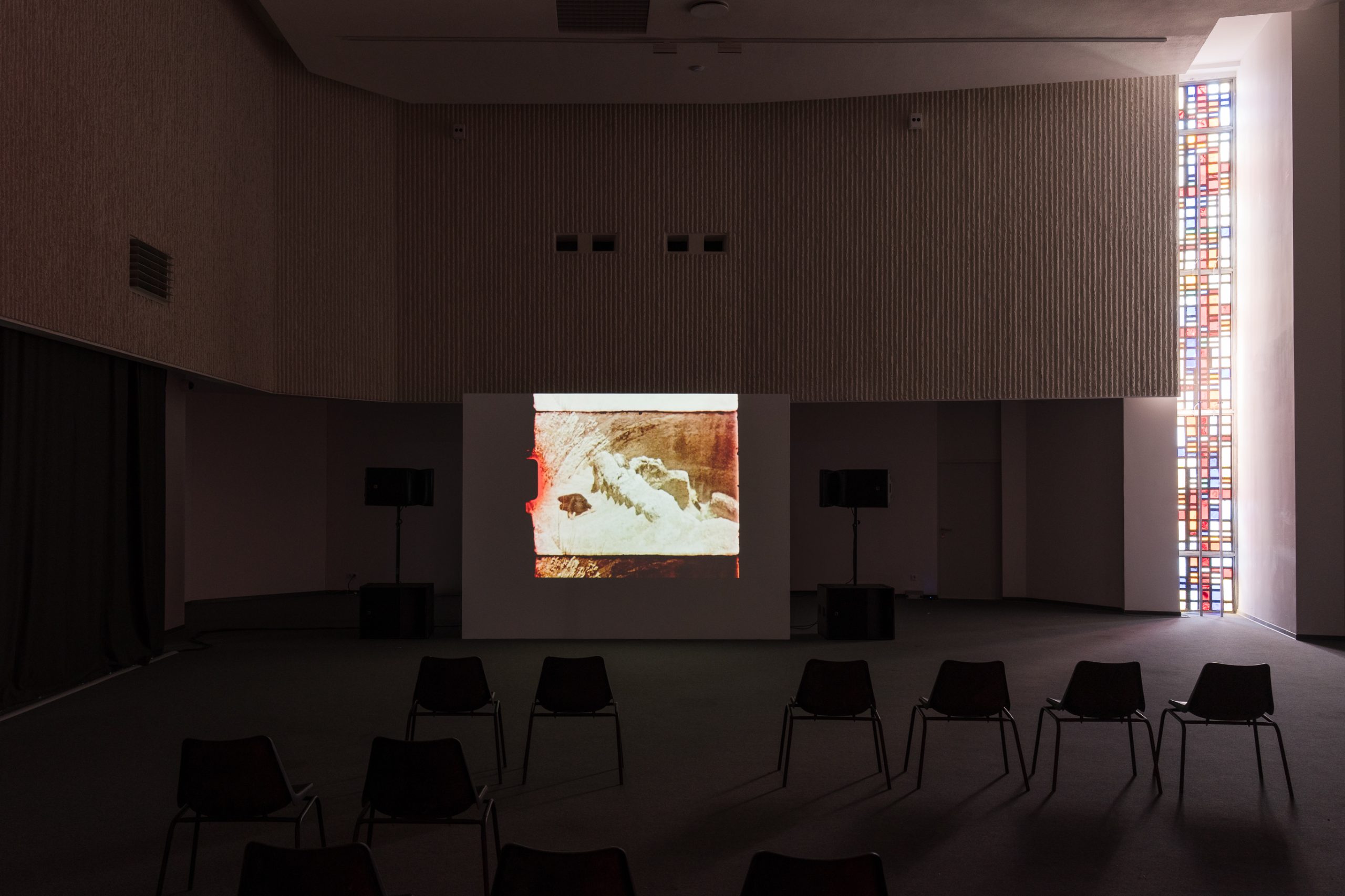
Noor Abed, “Our songs were ready for all wars to come”, 2021. Super 8mm (19 min. 52 sec.). Courtesy of the artist. “Superglue, or Inventing the Friend”, Contemporary Art Centre, 2026. Photographer: Andrej Vasilenko
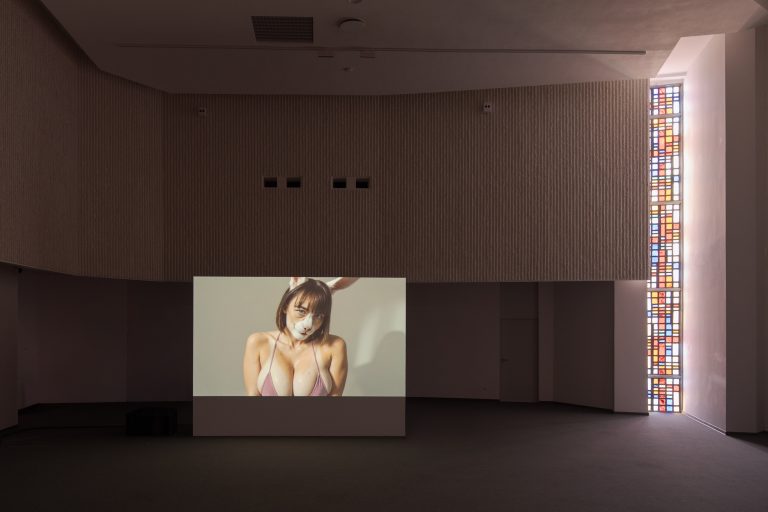
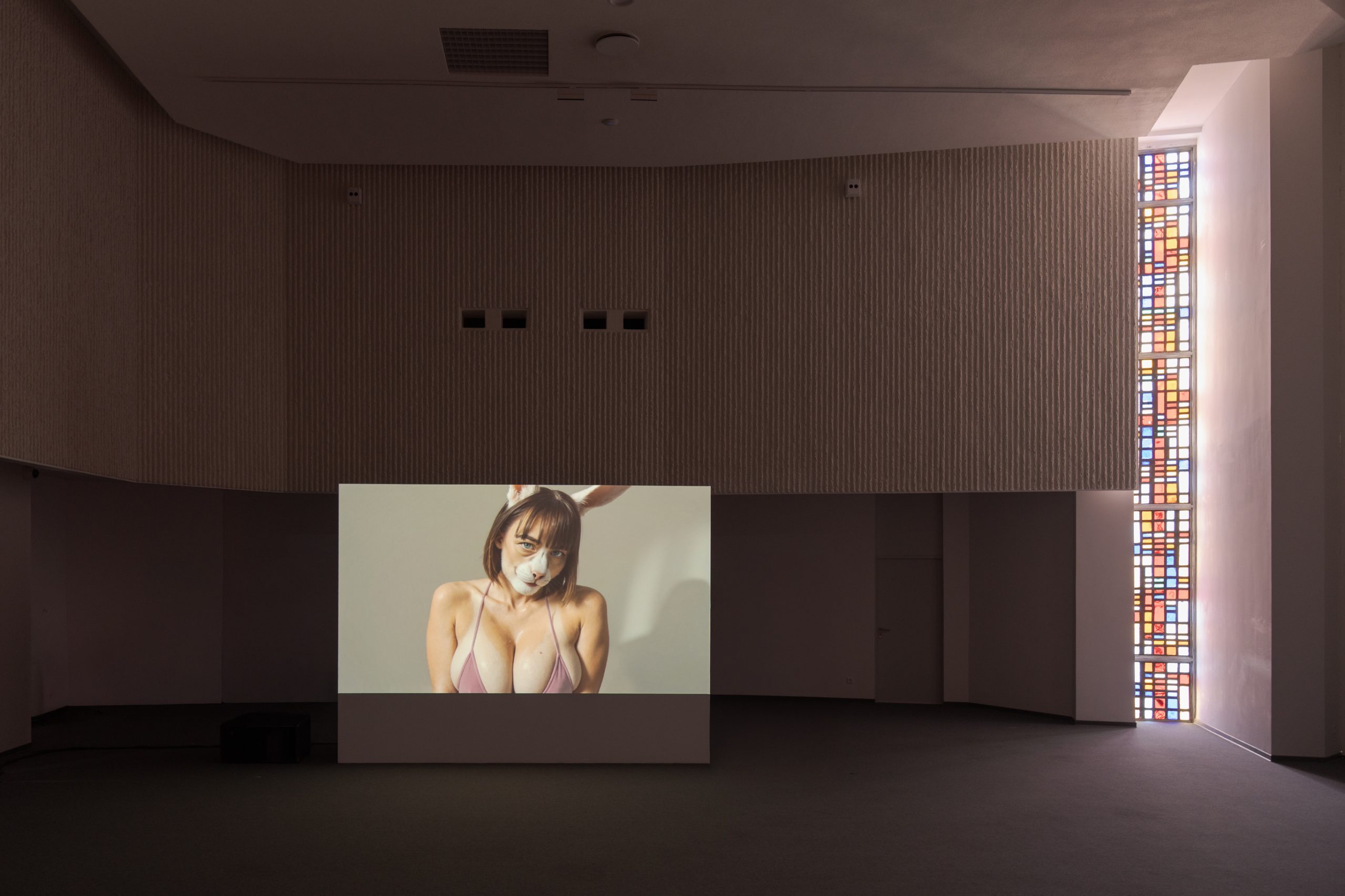
Arvida Byström, “PET: Projected Emotional Technologies”, 2025. Video (6 min 29 sec). Courtesy of the artist. “Superglue, or Inventing the Friend”, Contemporary Art Centre, 2026. Photographer: Andrej Vasilenko

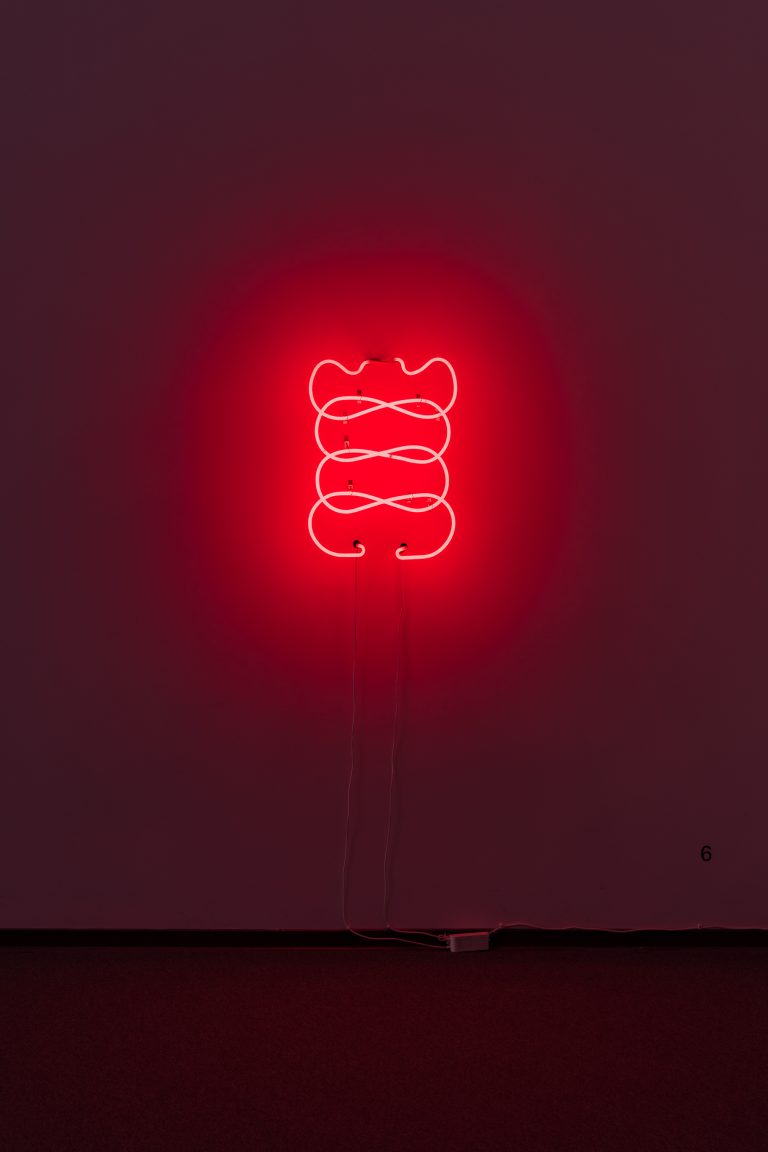
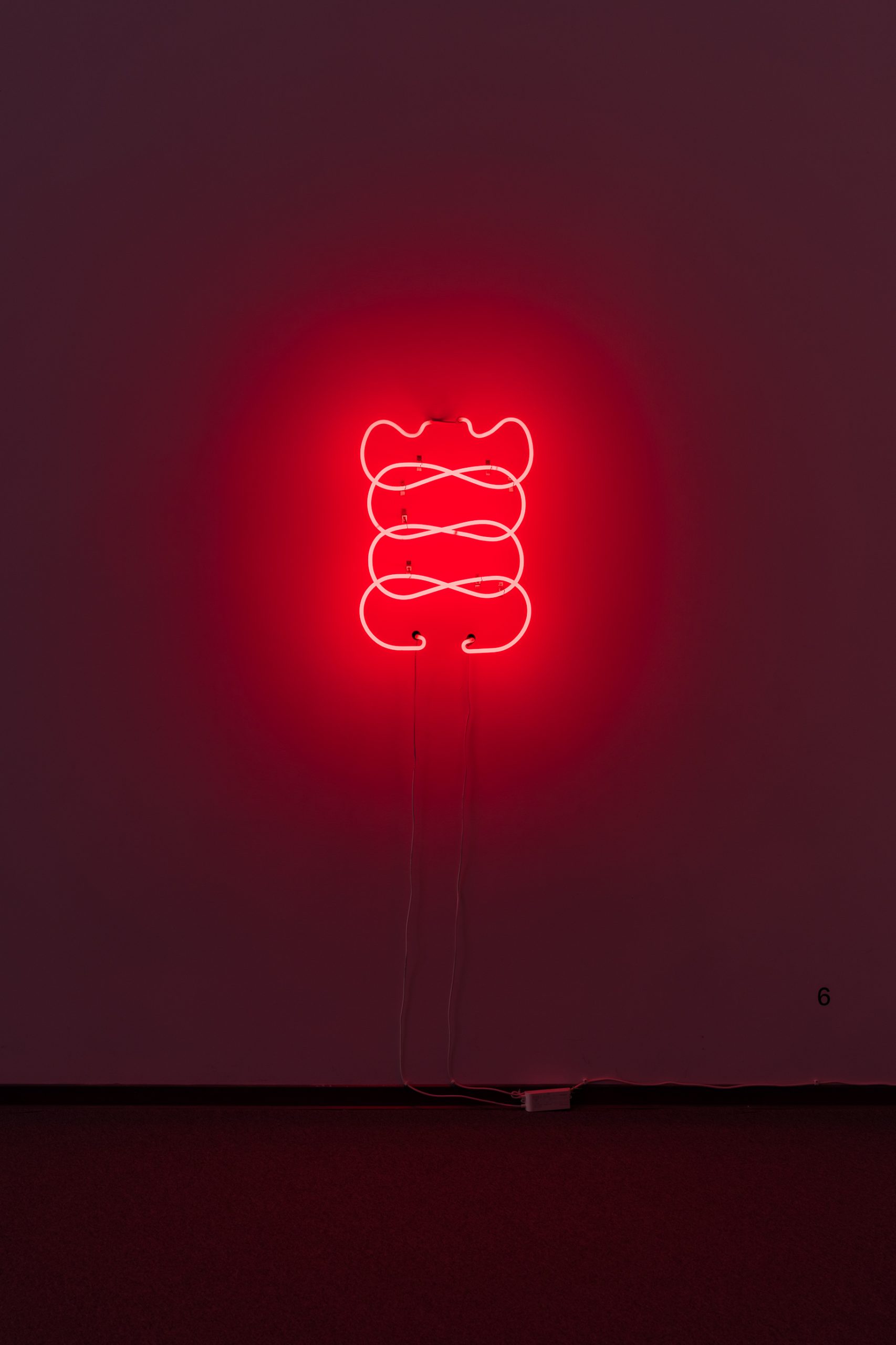
Andrius Arutiunian, “Geryon & Herakles”, 2025. Glass neon tubing, 60 × 40 cm. Courtesy of the artist. “Superglue, or Inventing the Friend”, Contemporary Art Centre, 2026. Photographer: Andrej Vasilenko
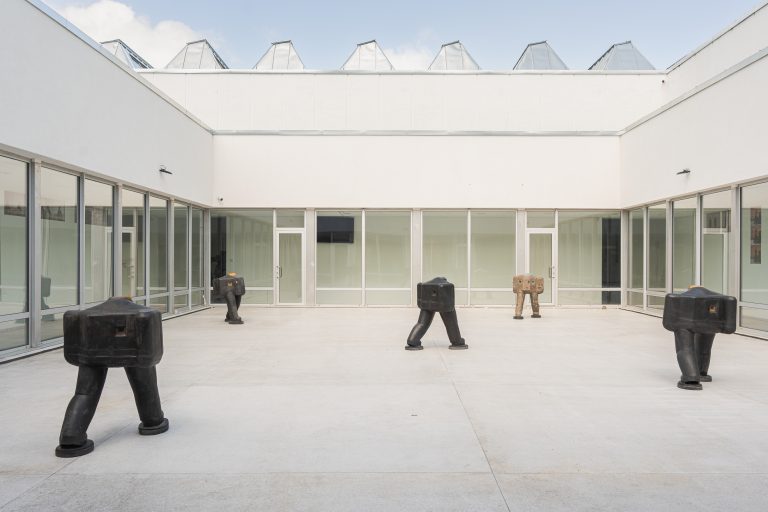
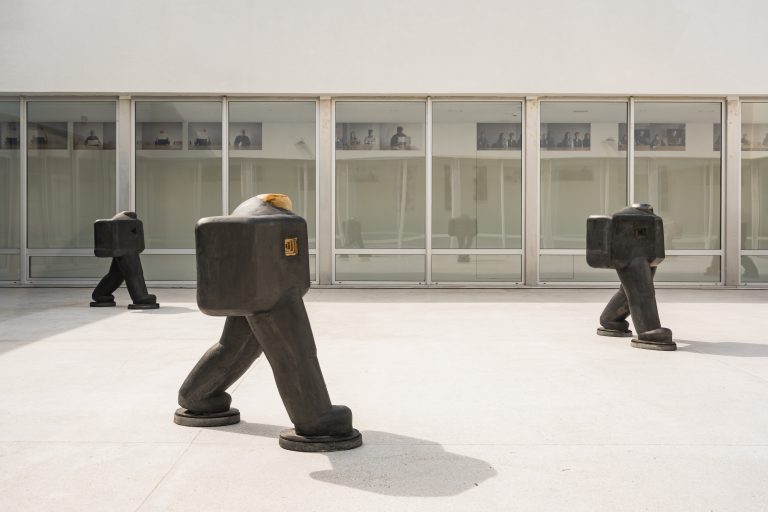
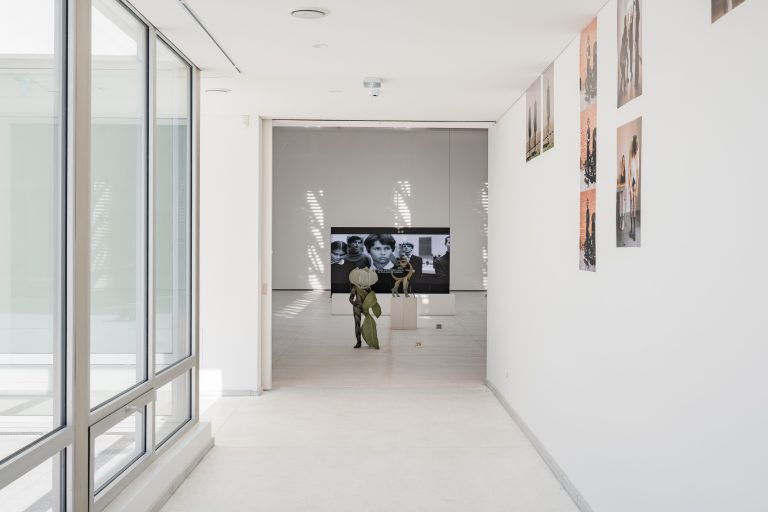
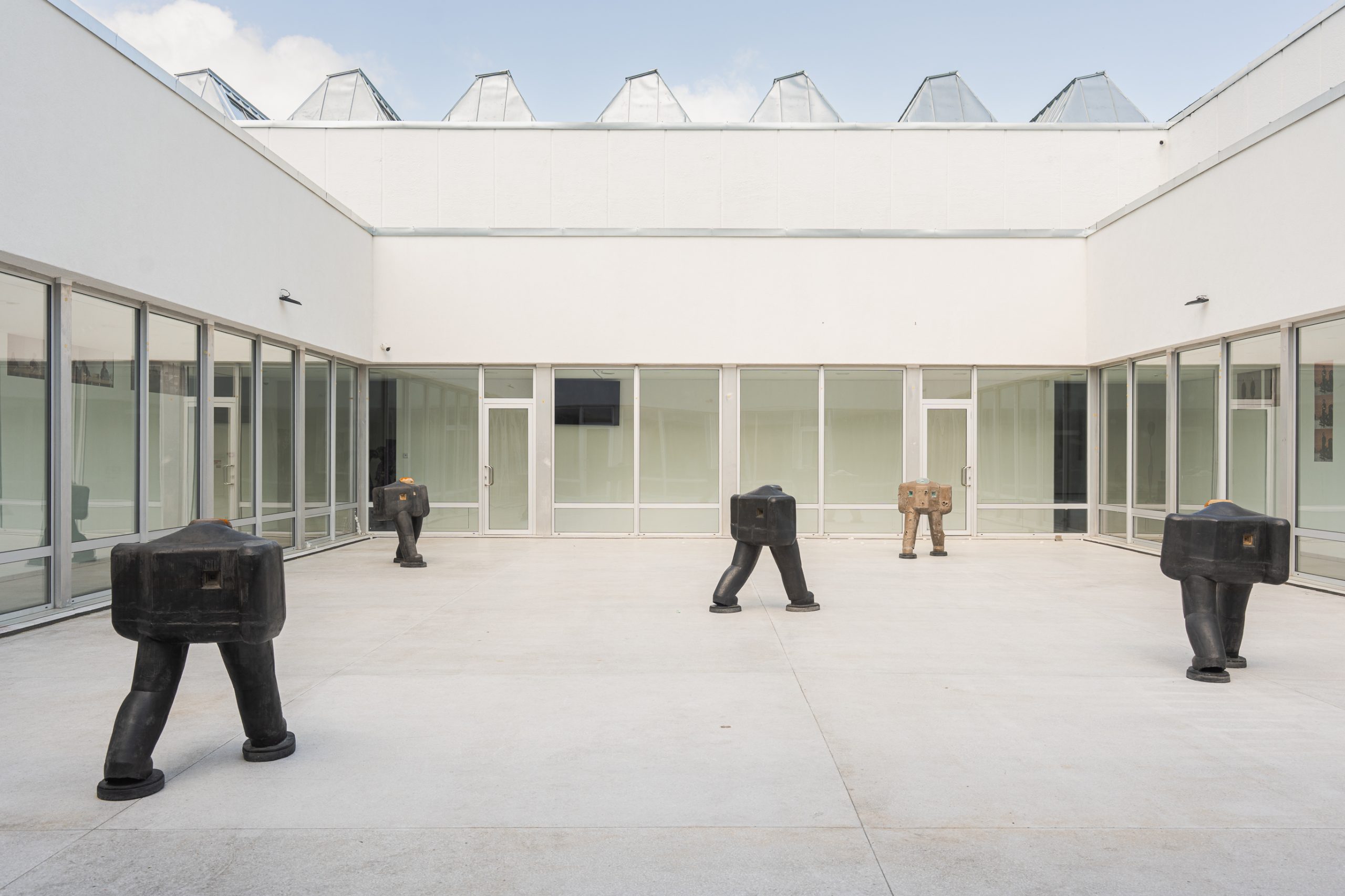
Martin Káňa, “Golem”, 2016. Fibreglass, five sculptures, 100 × 75 × 80 cm each. Courtesy of the artist. “Superglue, or Inventing the Friend”, Contemporary Art Centre, 2026. Photographer: Andrej Vasilenko
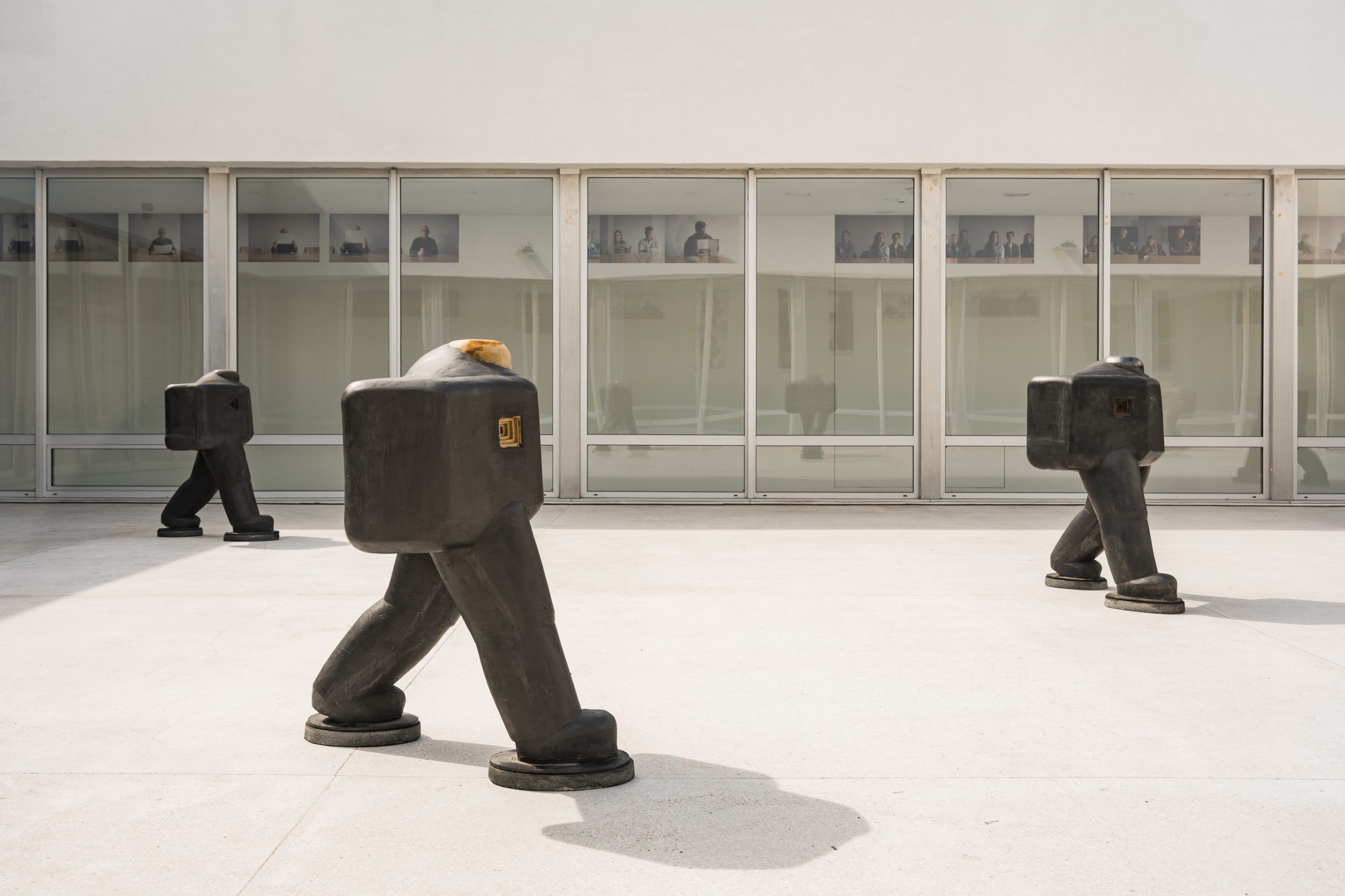
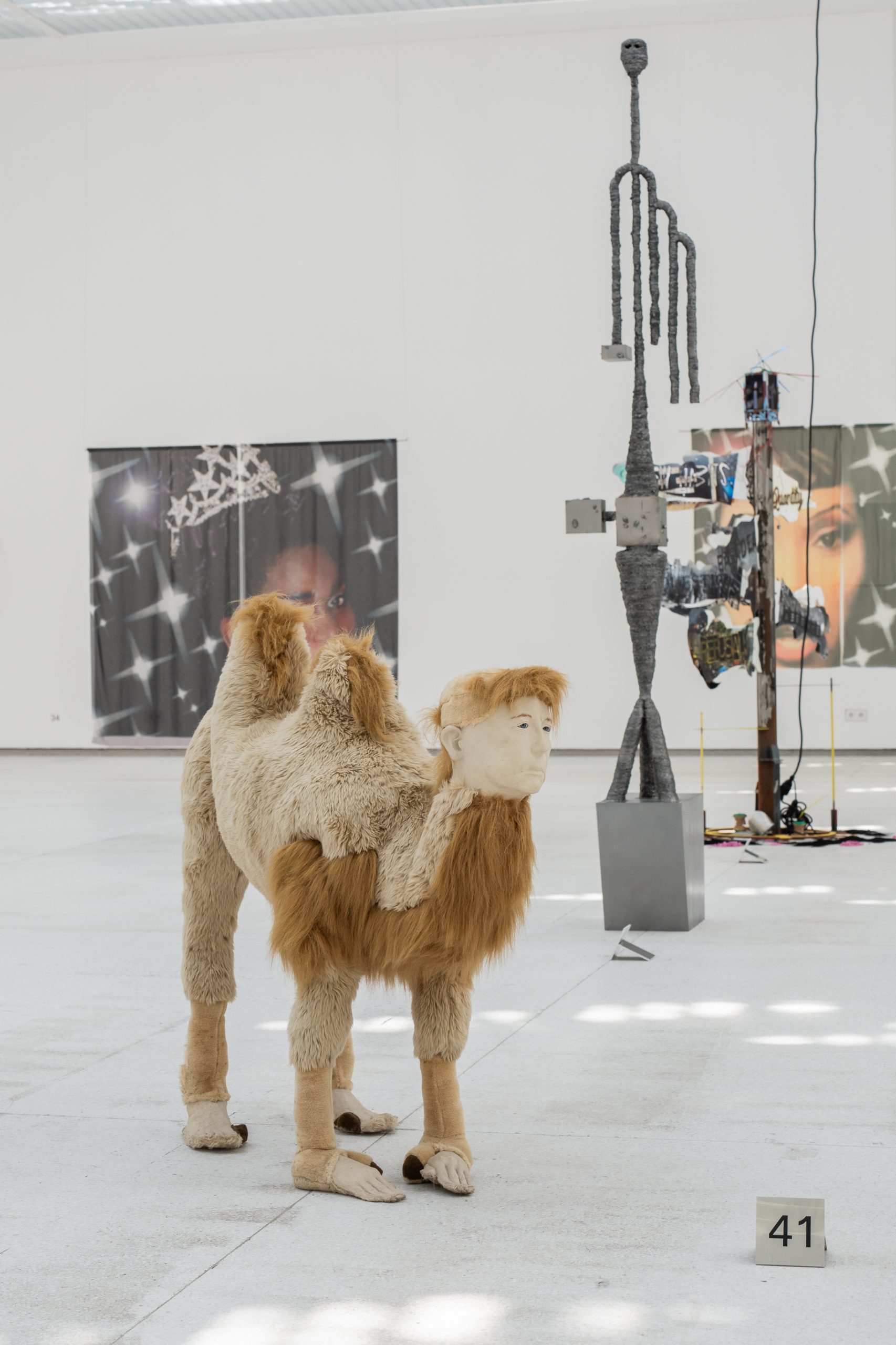
Martin Káňa, “Golem”, 2016. Fibreglass, five sculptures, 100 × 75 × 80 cm each. Courtesy of the artist. Artūras Raila, “Regularity”, 2000–2026. Photo and video installation, dimensions variable. Courtesy of the artist. “Superglue, or Inventing the Friend”, Contemporary Art Centre, 2026. Photographer: Andrej Vasilenko
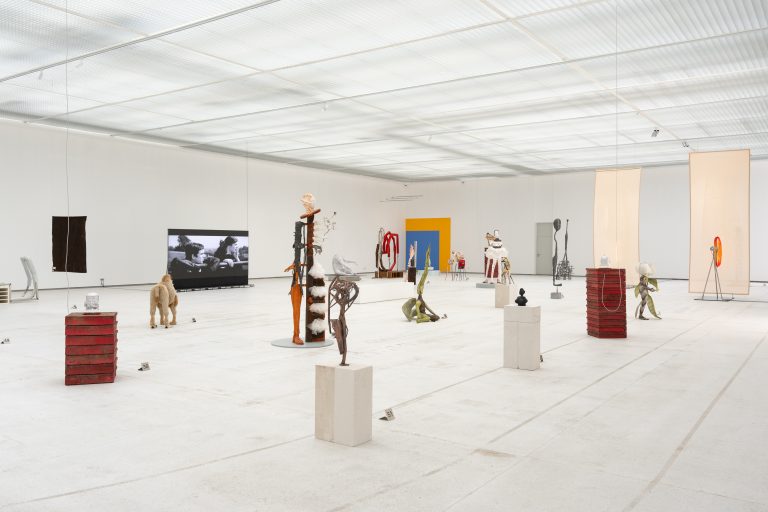
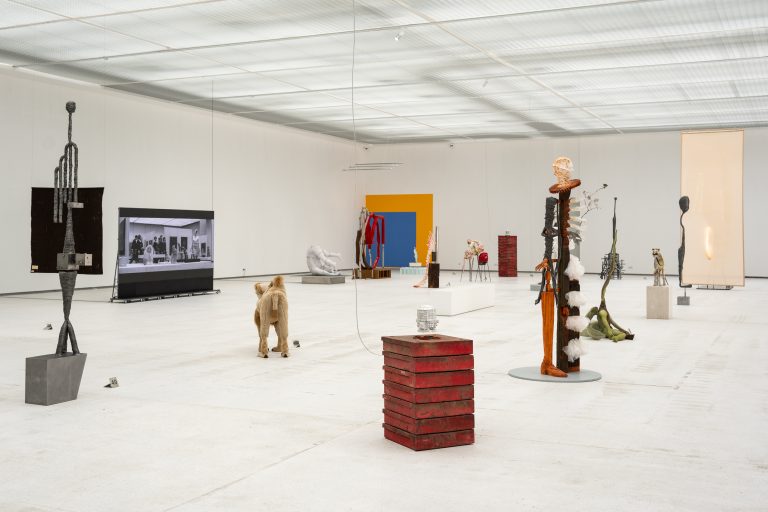
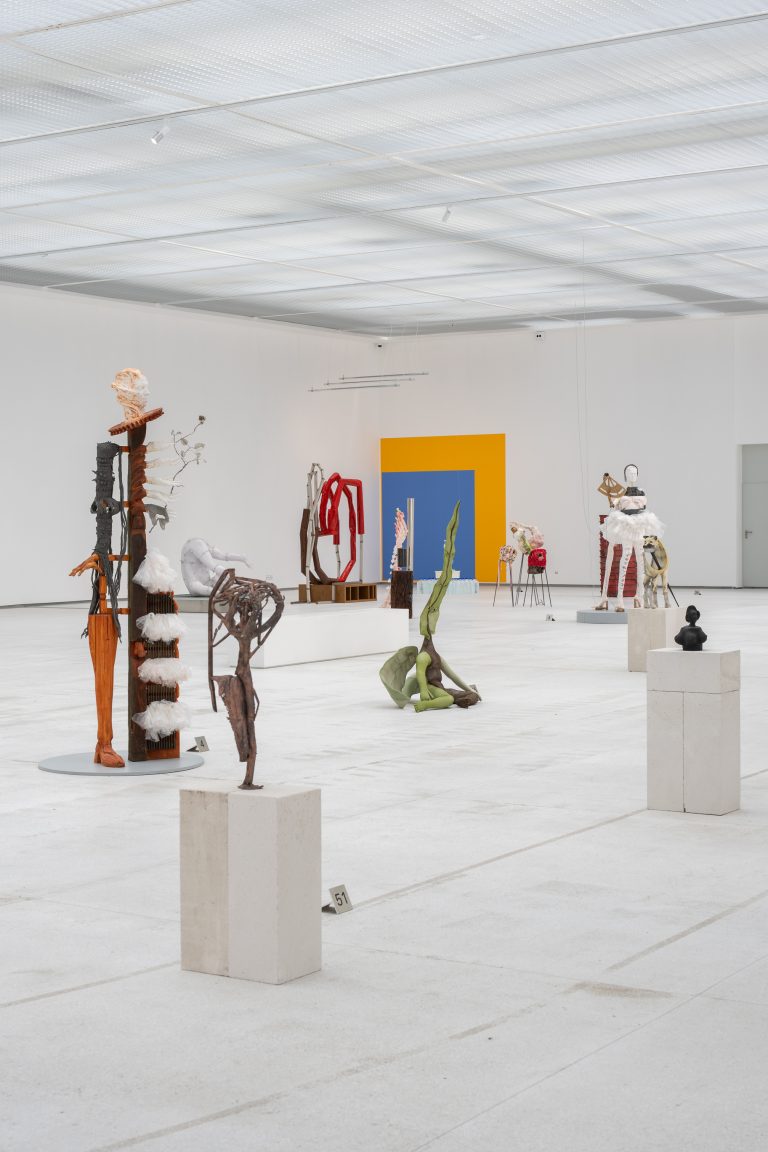
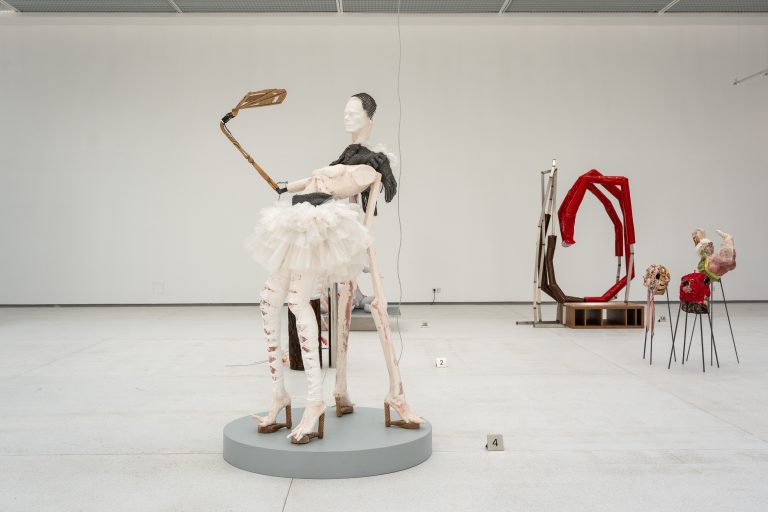
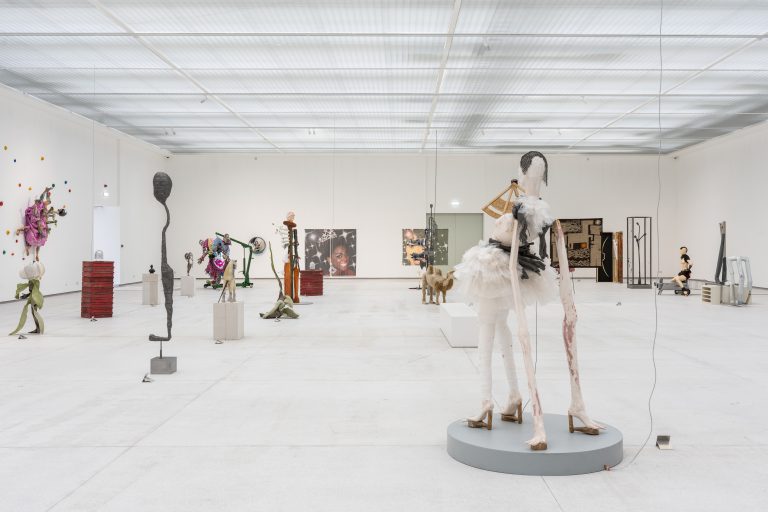
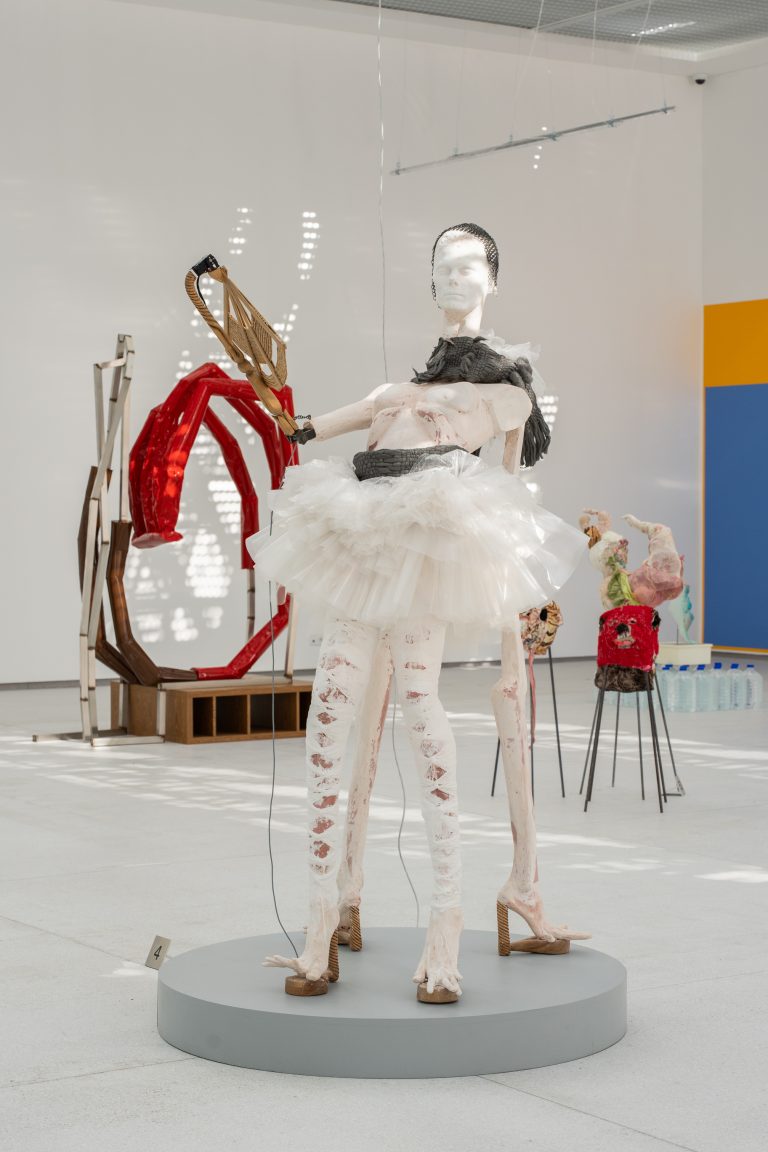
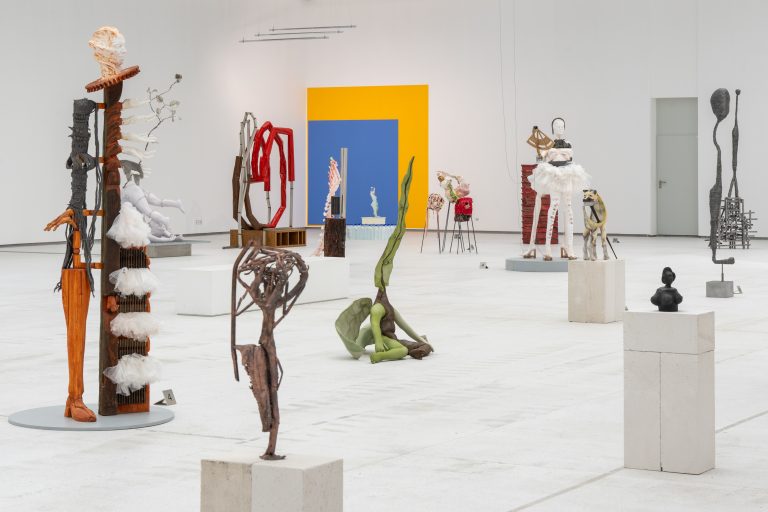
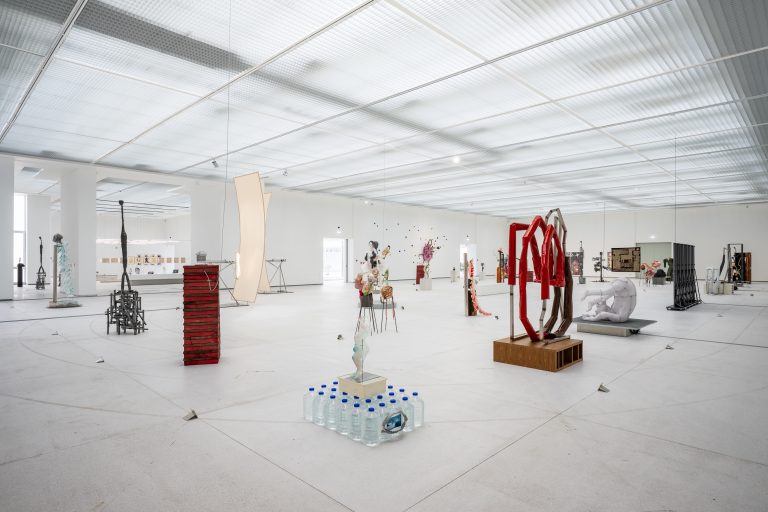
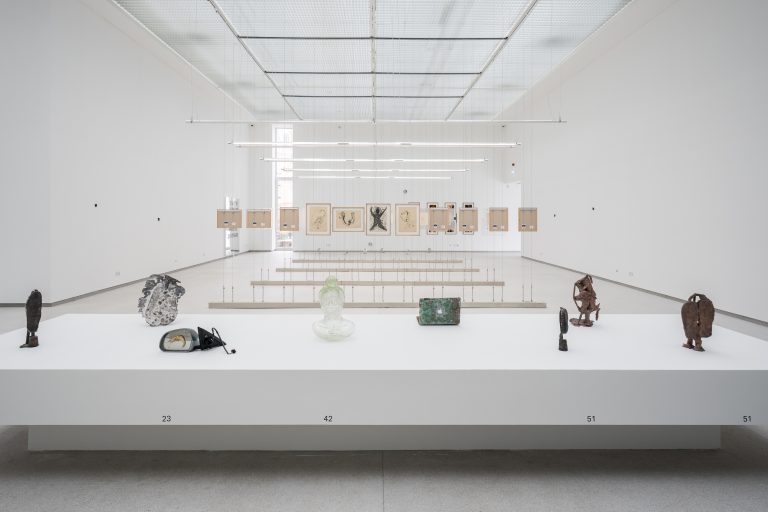
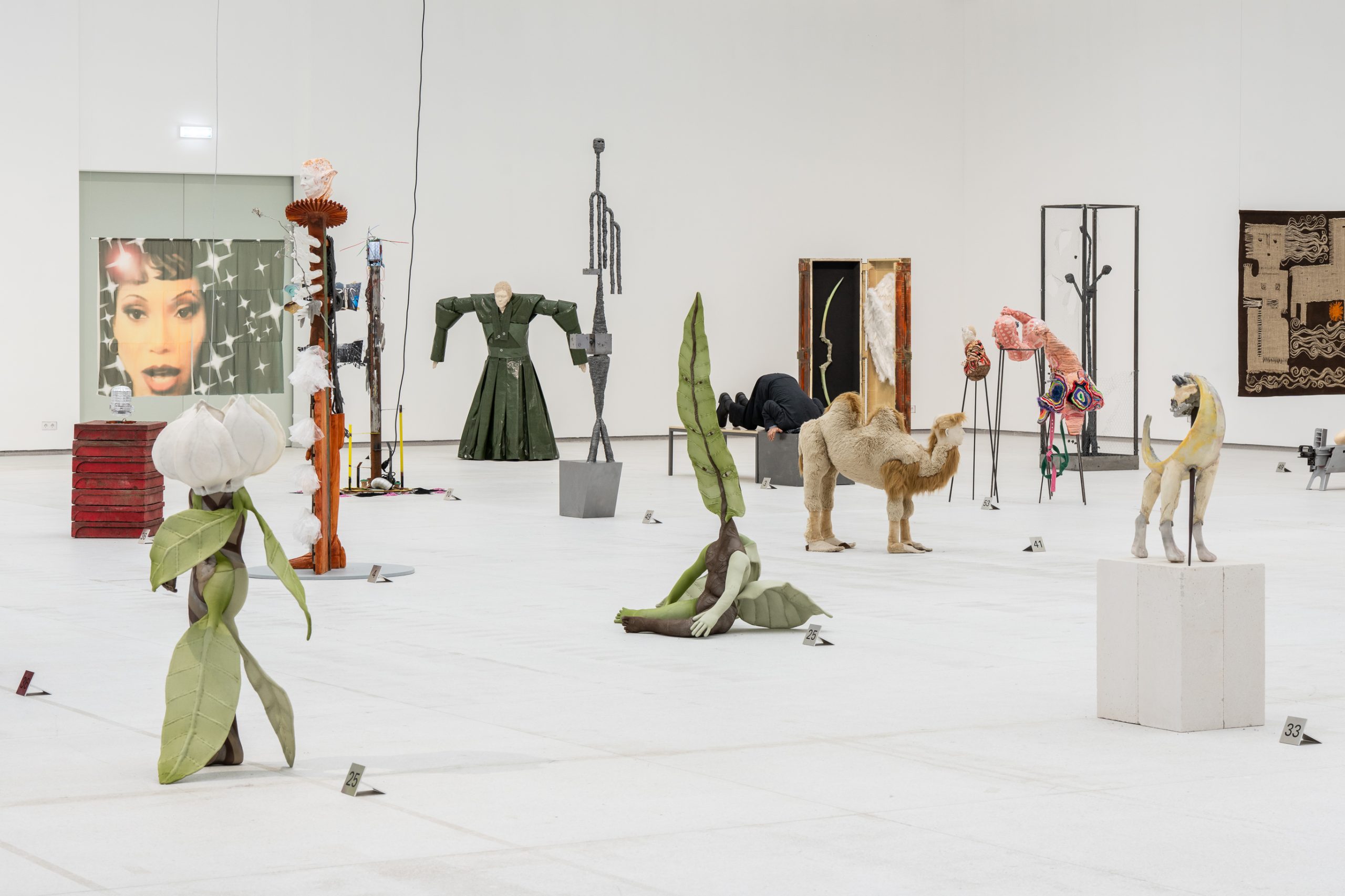
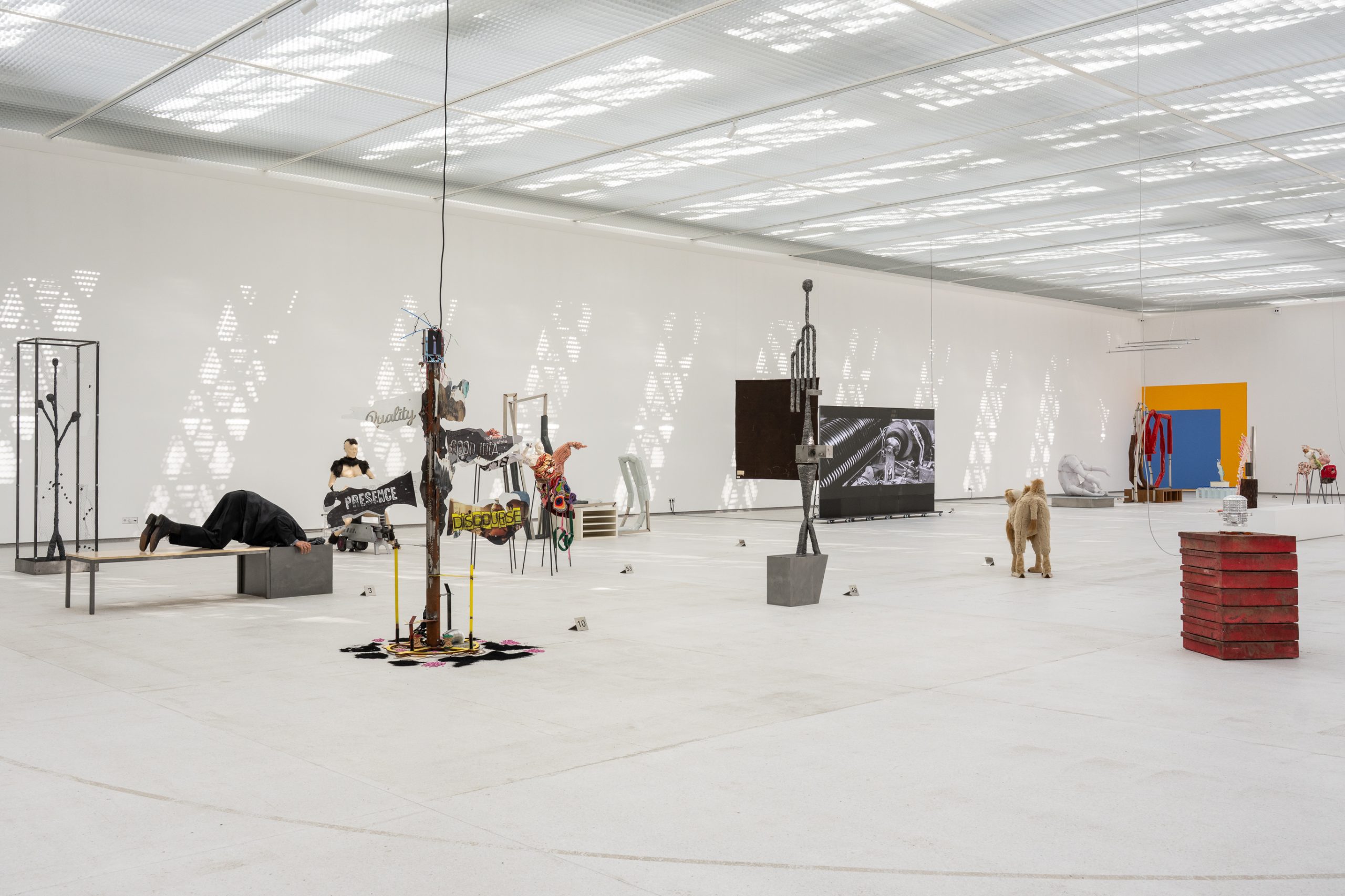
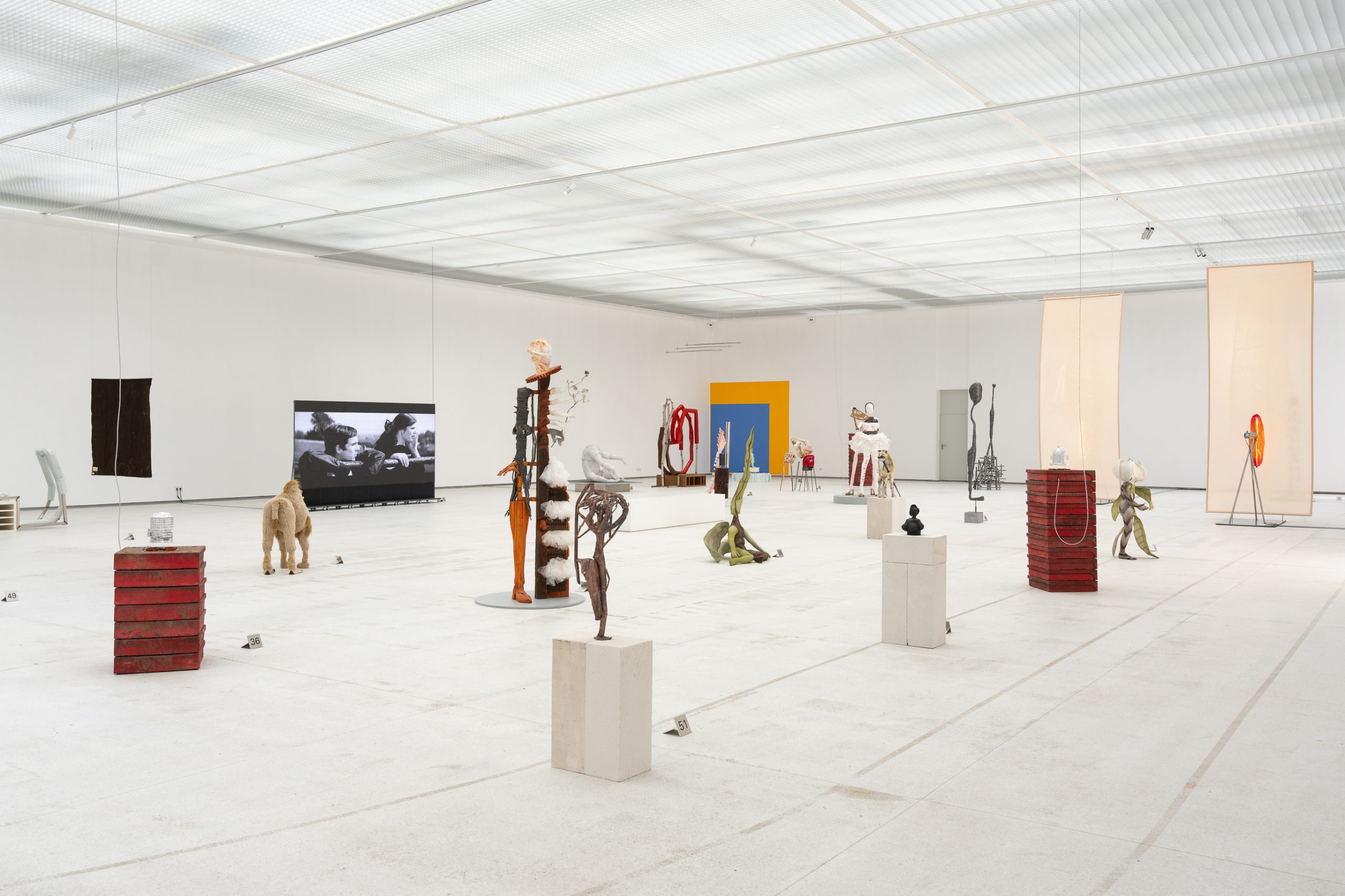
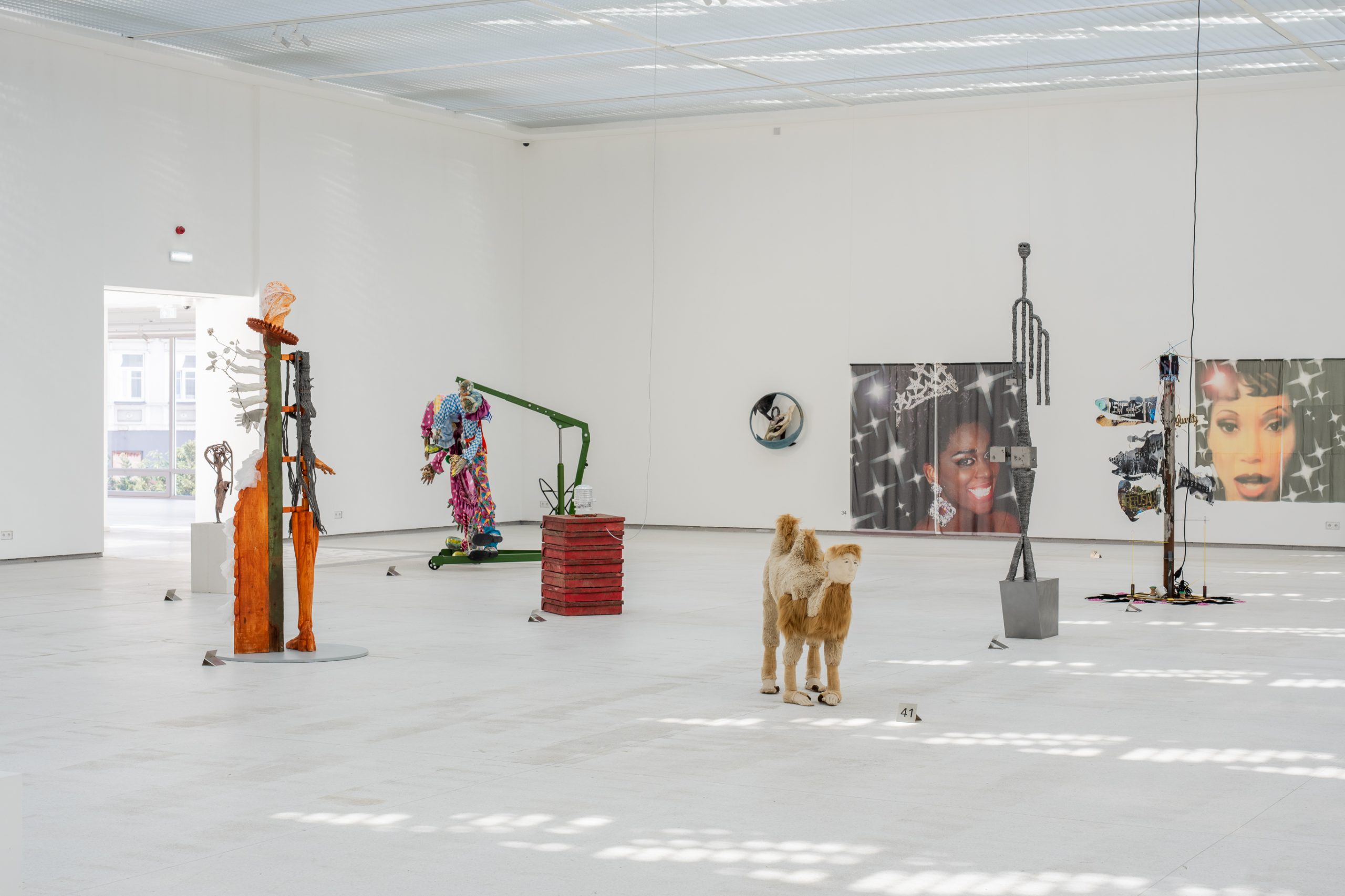
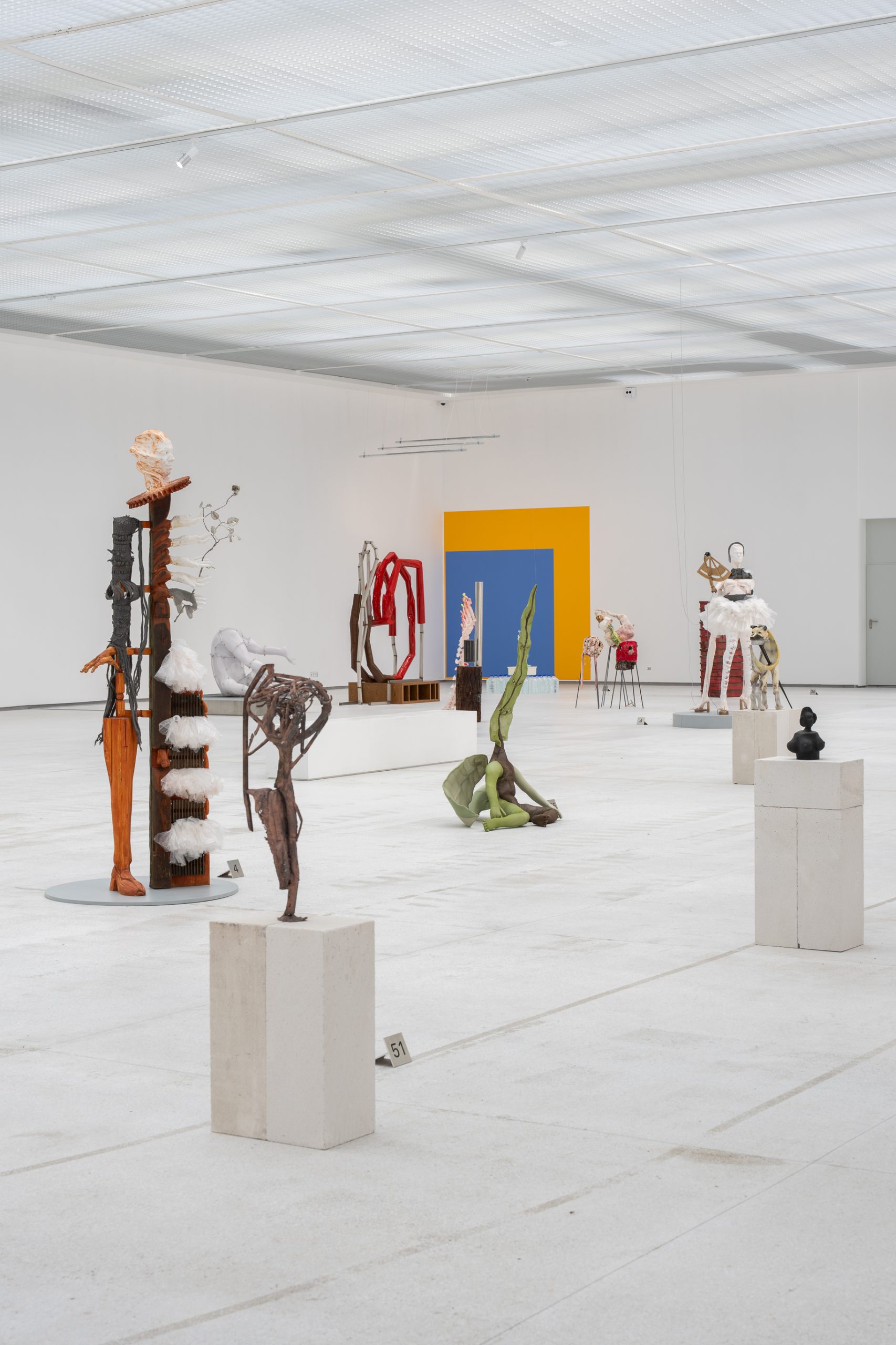
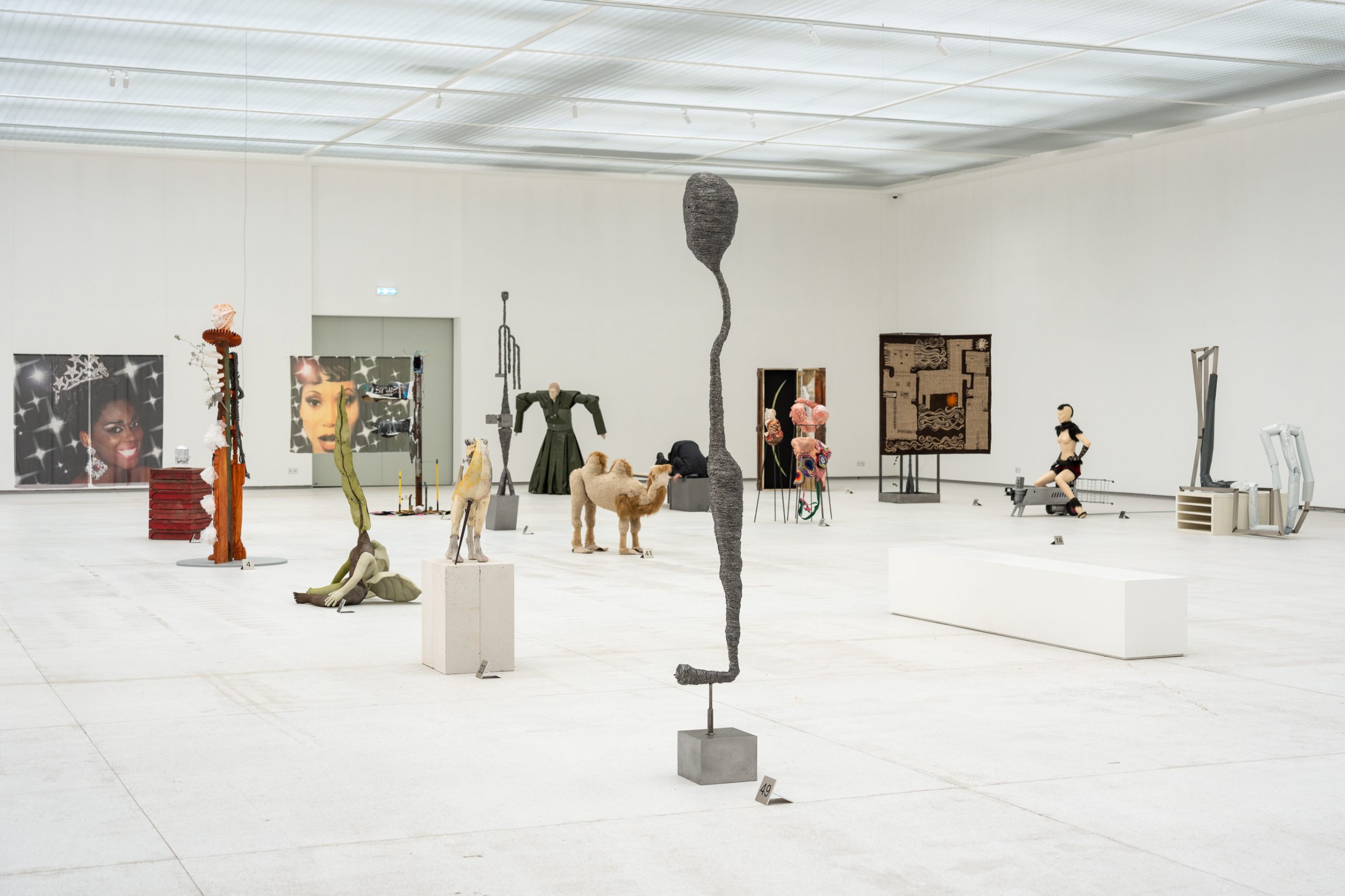
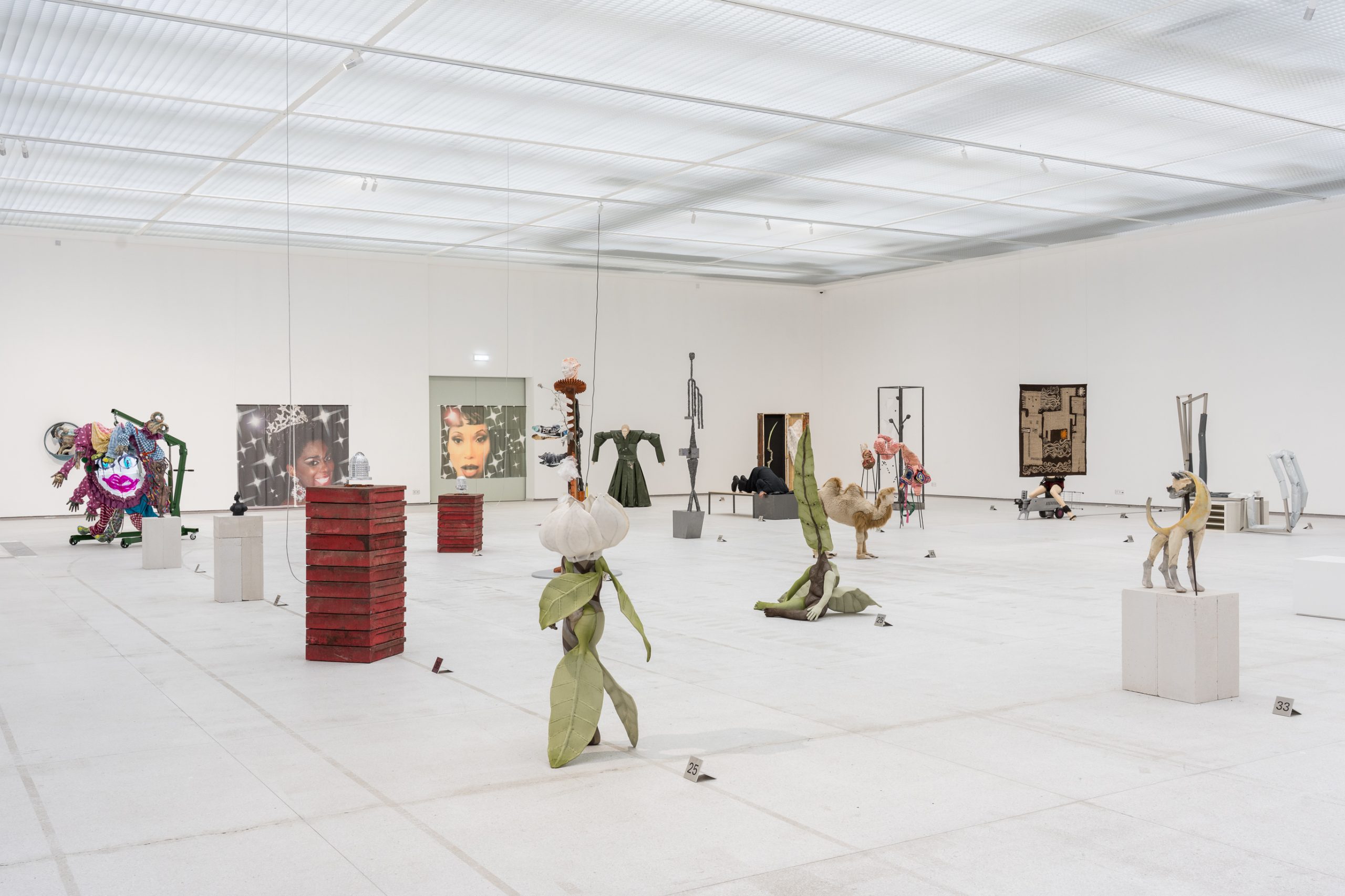
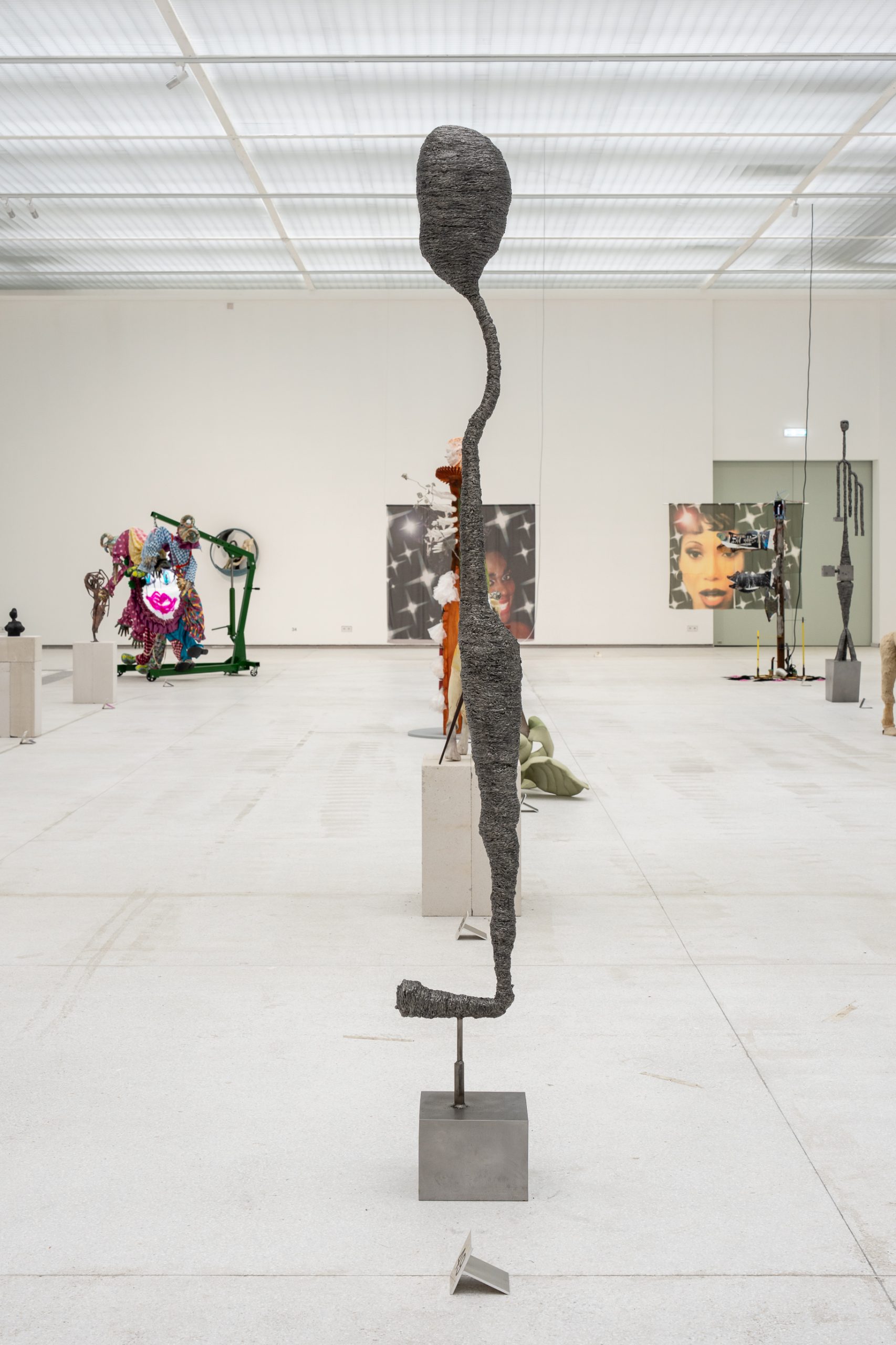
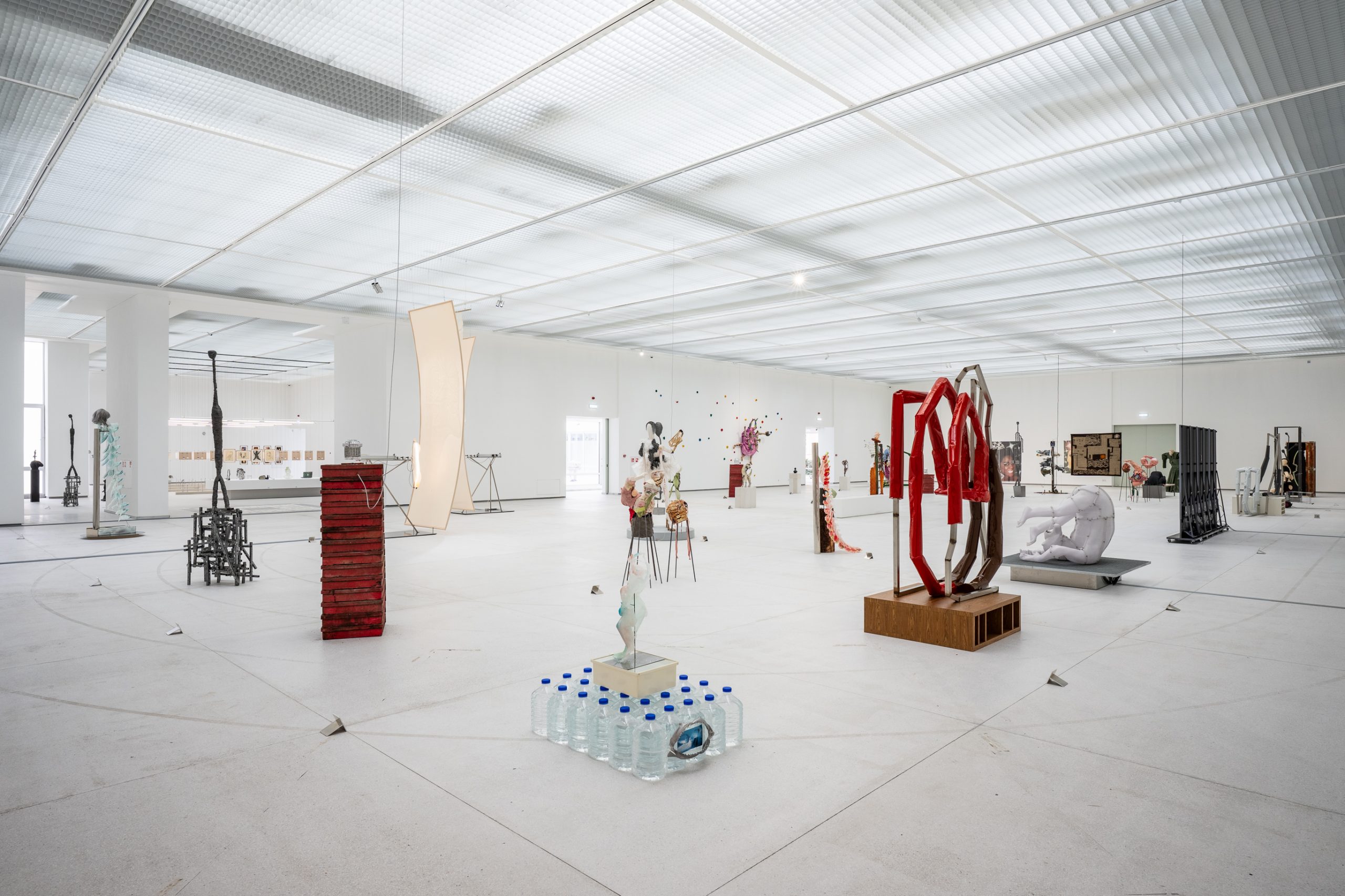
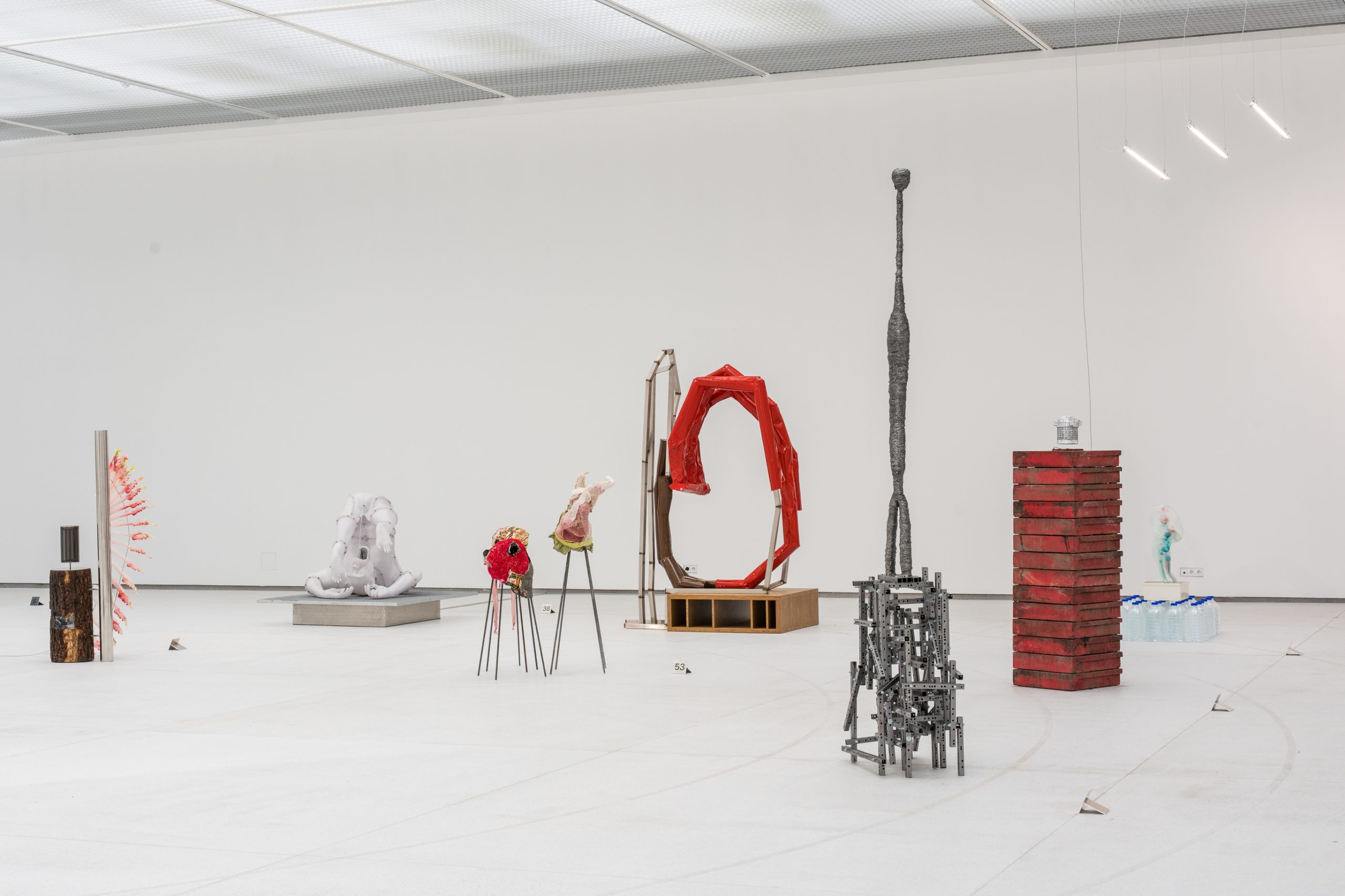
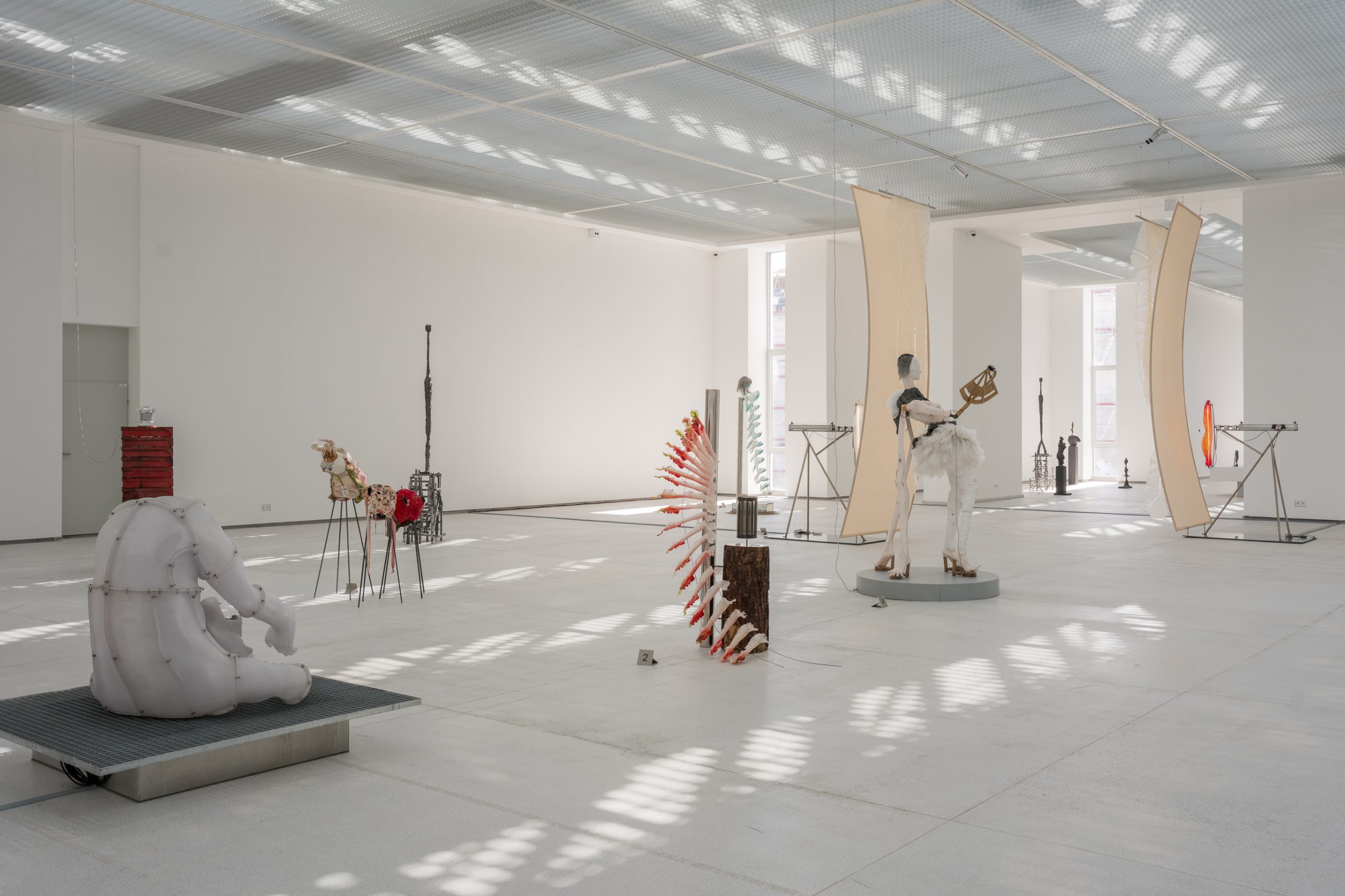
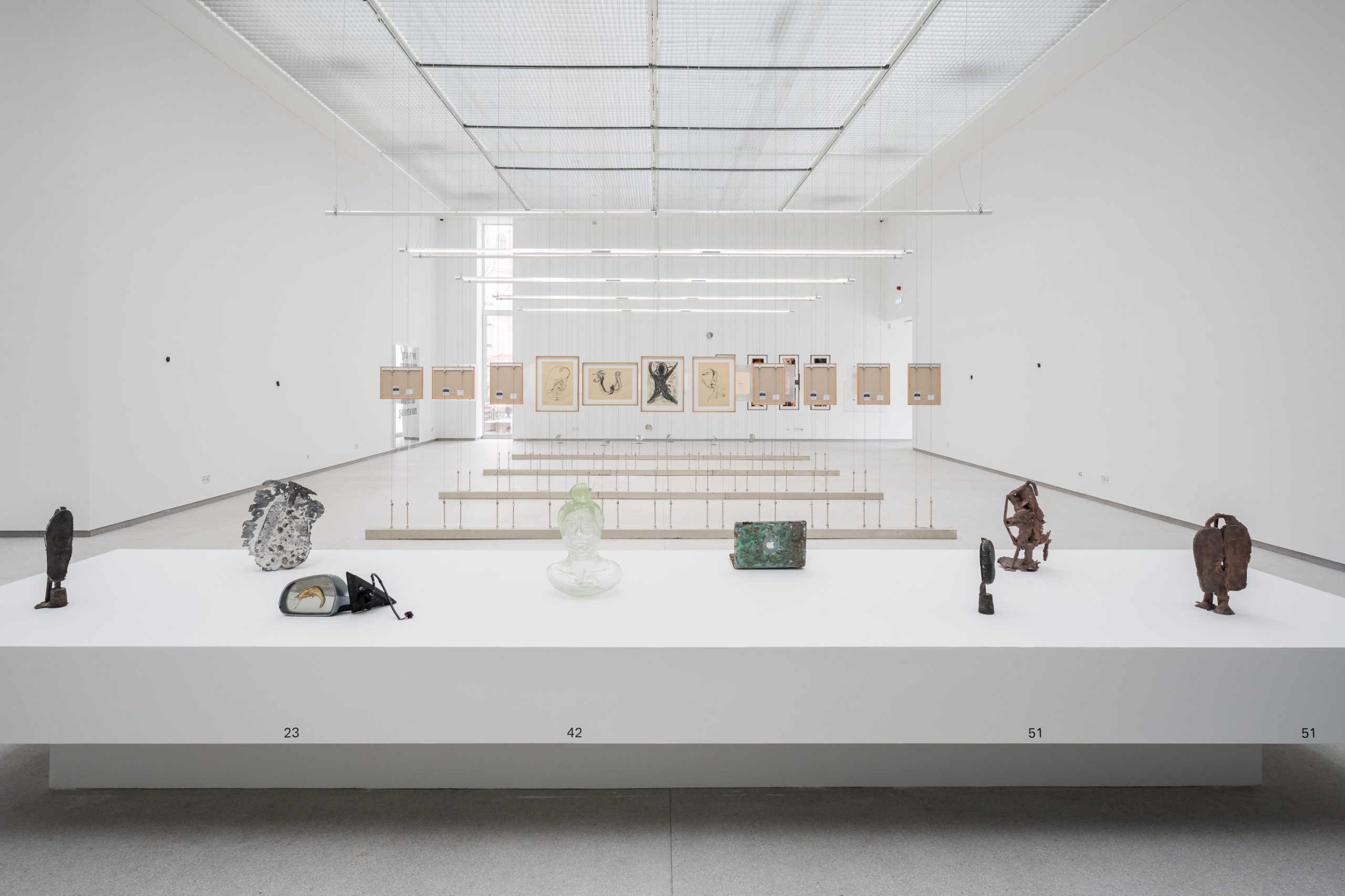
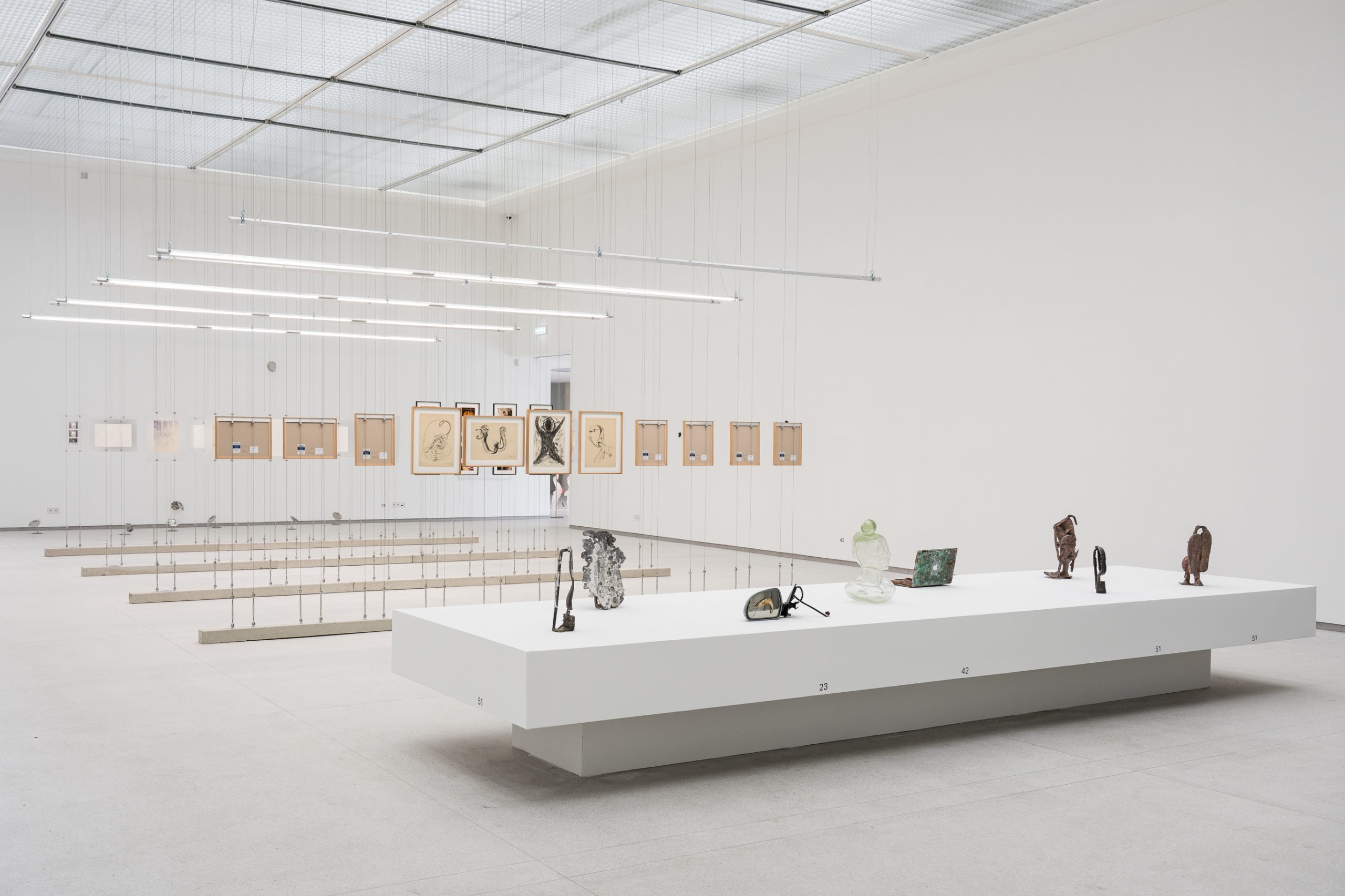
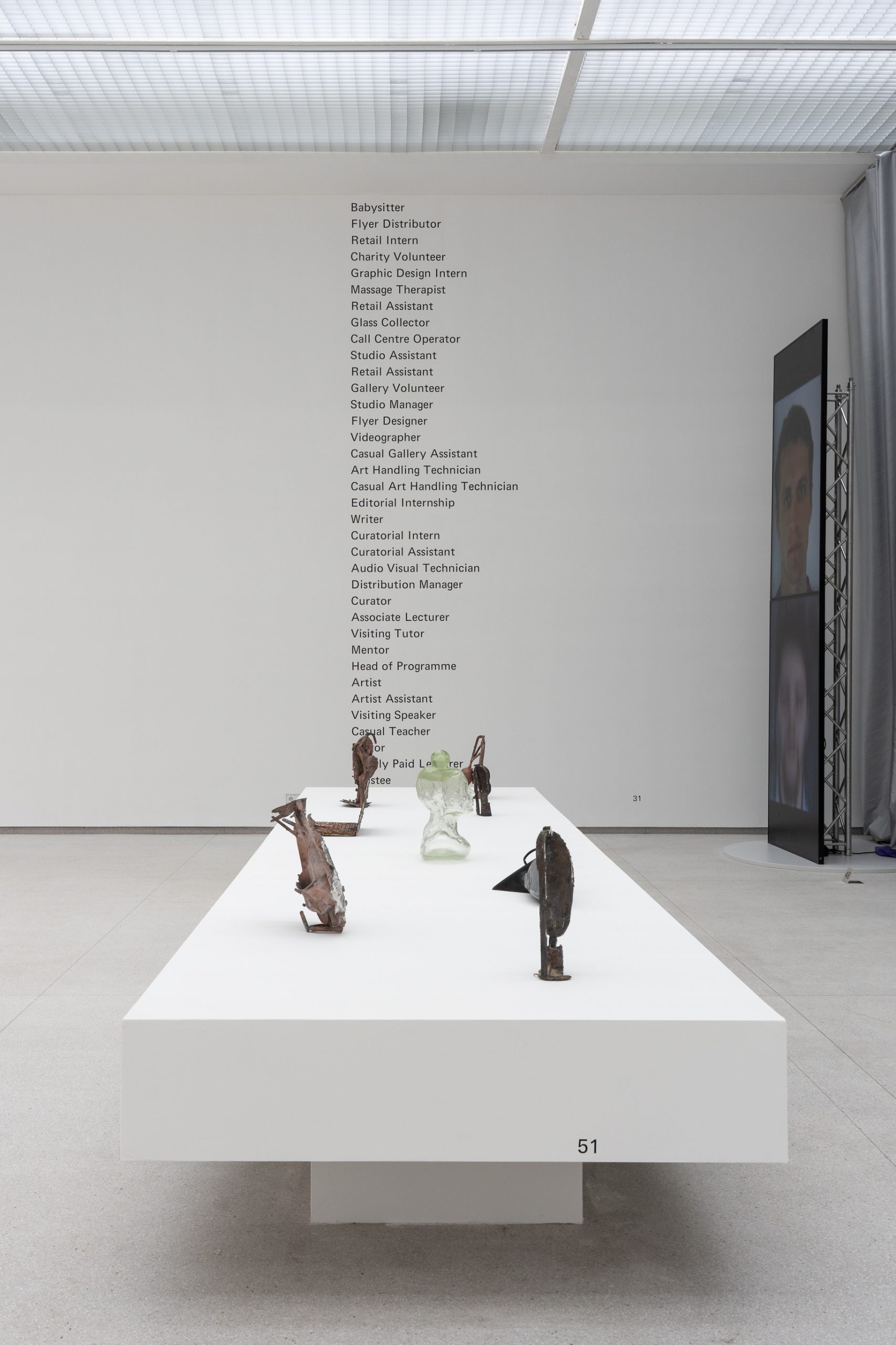
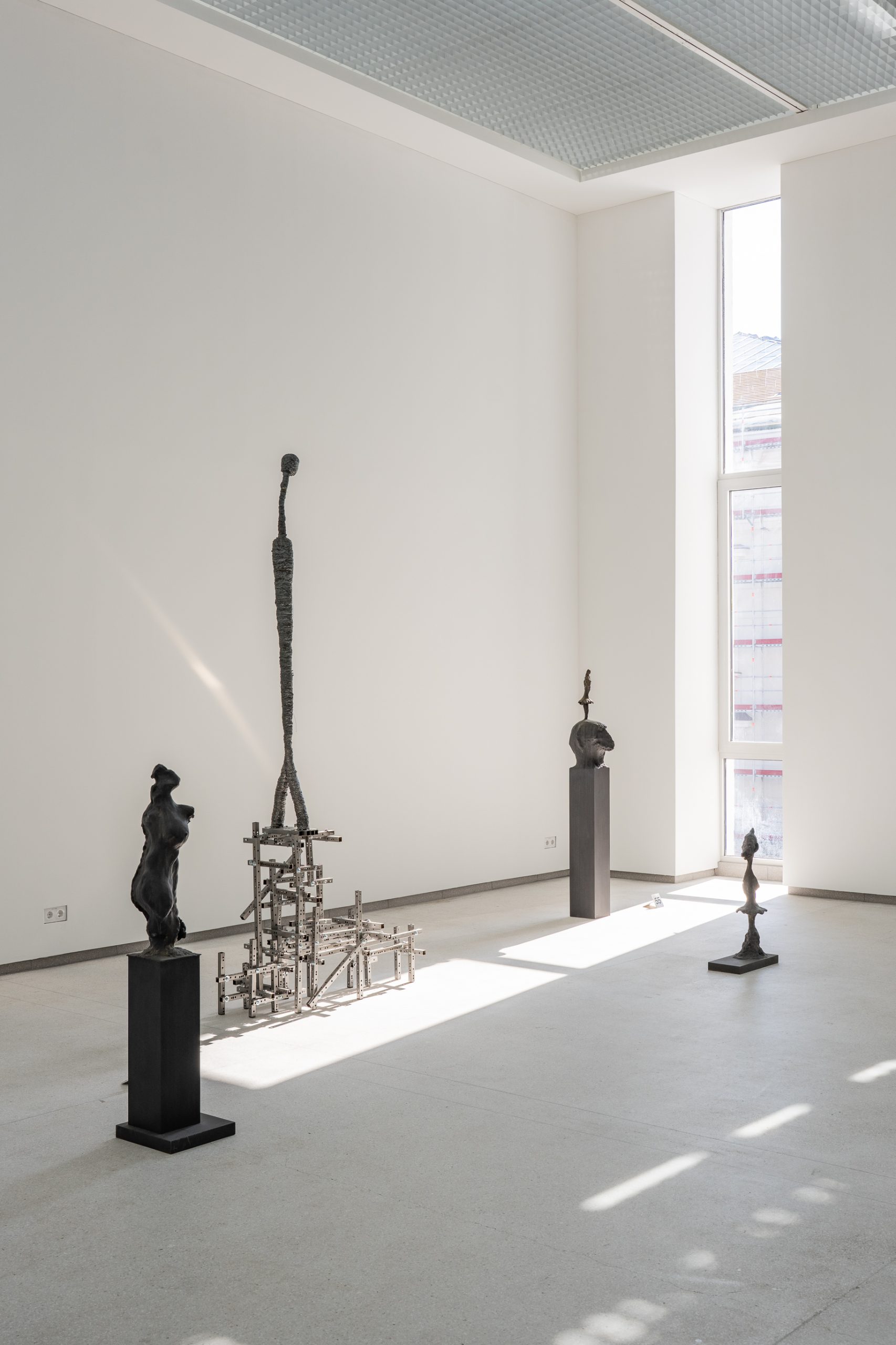
“Superglue, or Inventing the Friend”, exhibition view. Contemporary Art Centre, 2026. Curator: Valentinas Klimašauskas. Photographer: Andrej Vasilenko
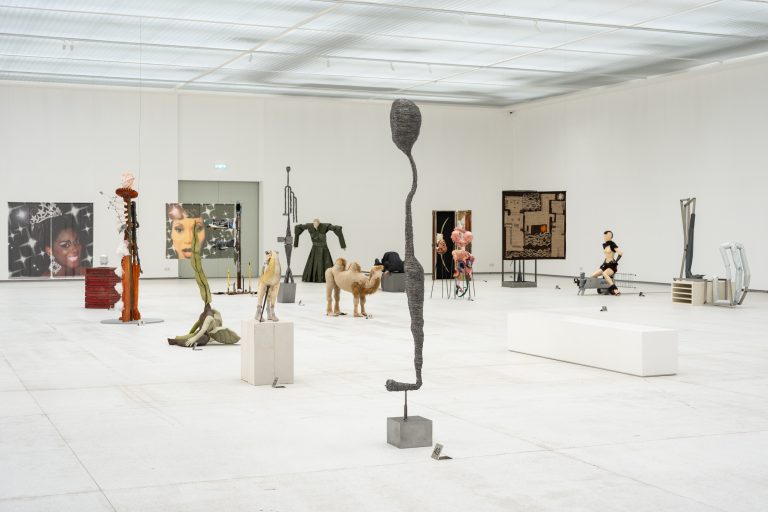
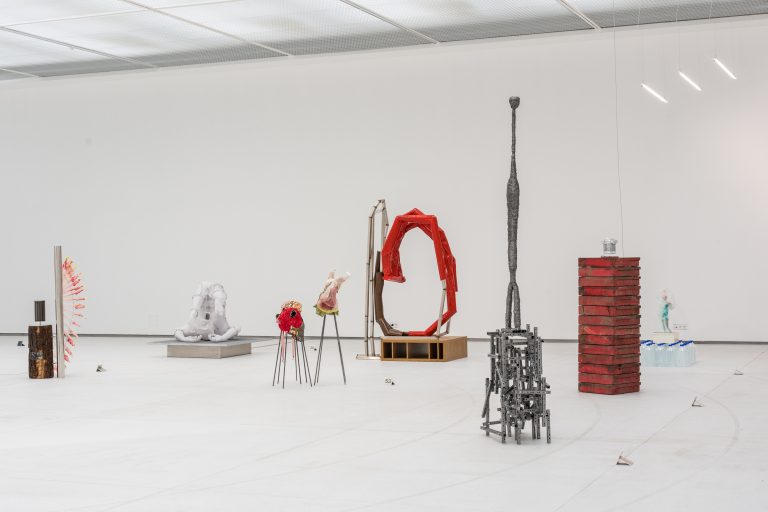
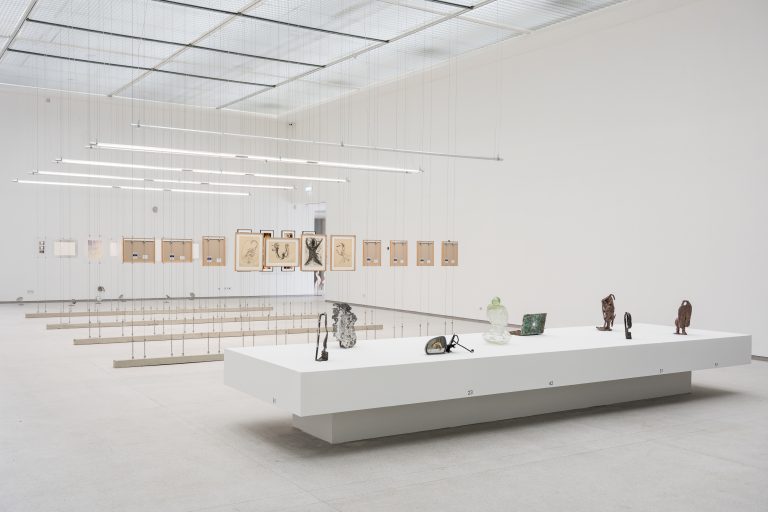
“Superglue, or Inventing the Friend”, exhibition view. Contemporary Art Centre, 2026. Curator: Valentinas Klimašauskas. Photographer: Andrej Vasilenko
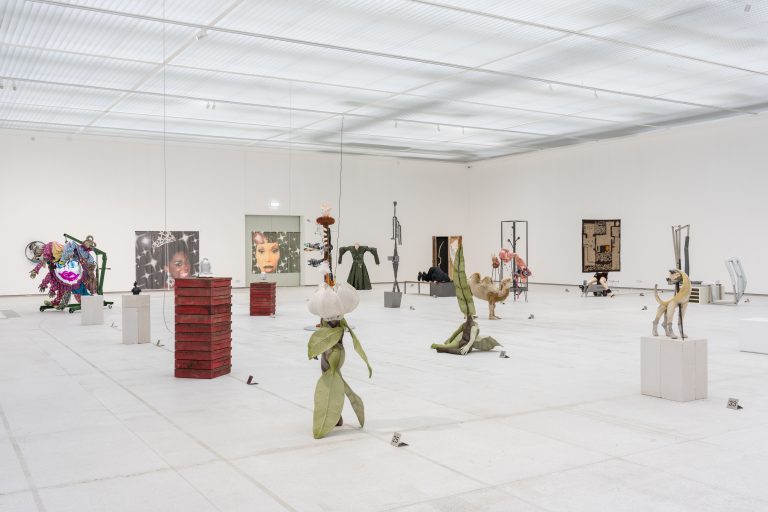
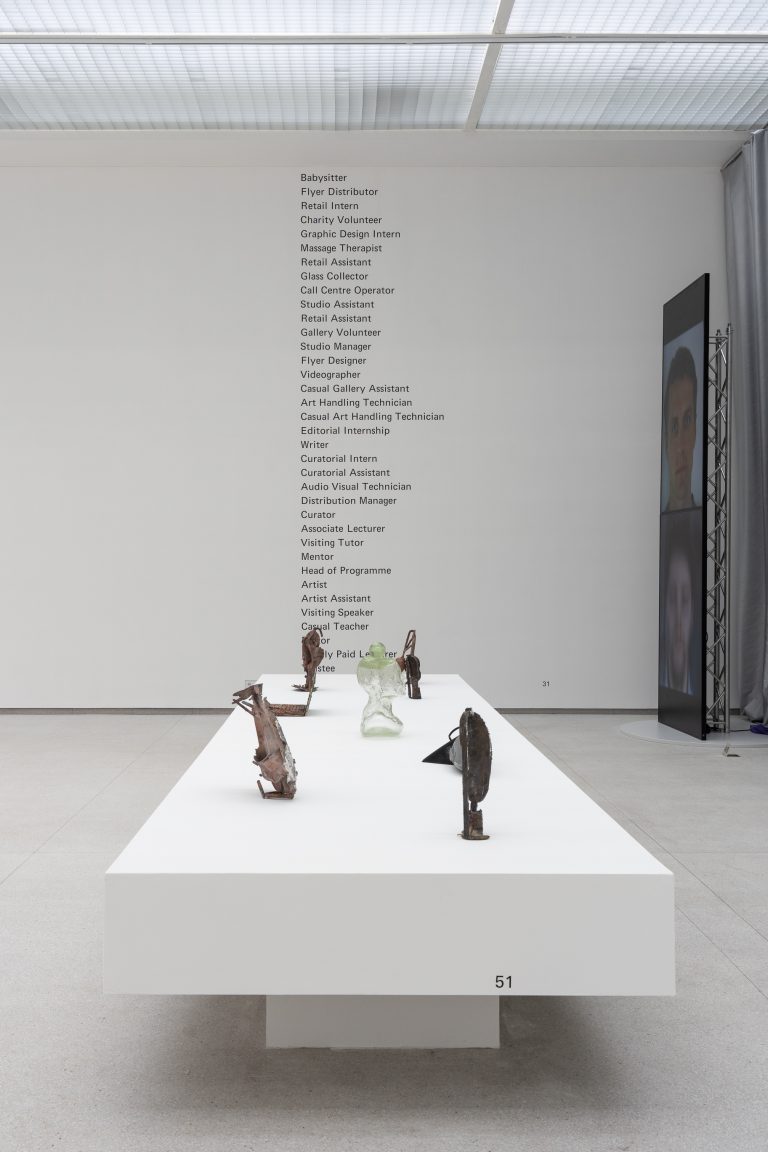
“Superglue, or Inventing the Friend”, exhibition view. Contemporary Art Centre, 2026. Curator: Valentinas Klimašauskas. Photographer: Andrej Vasilenko
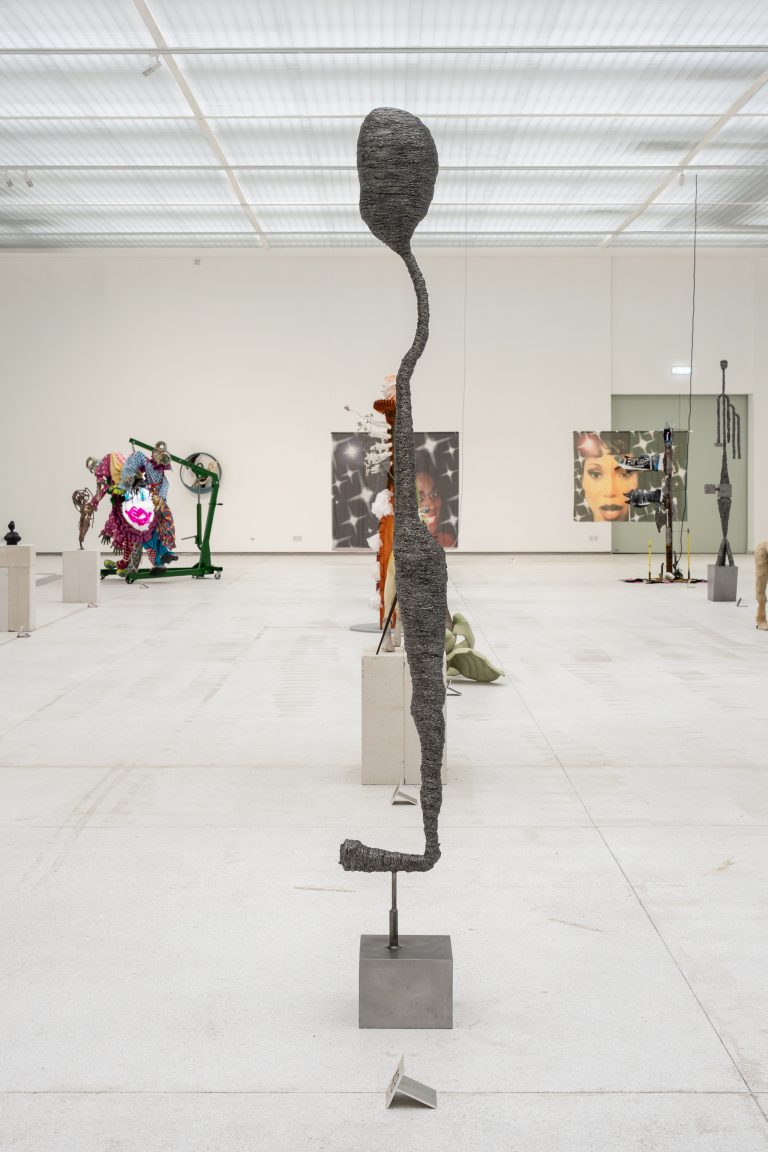
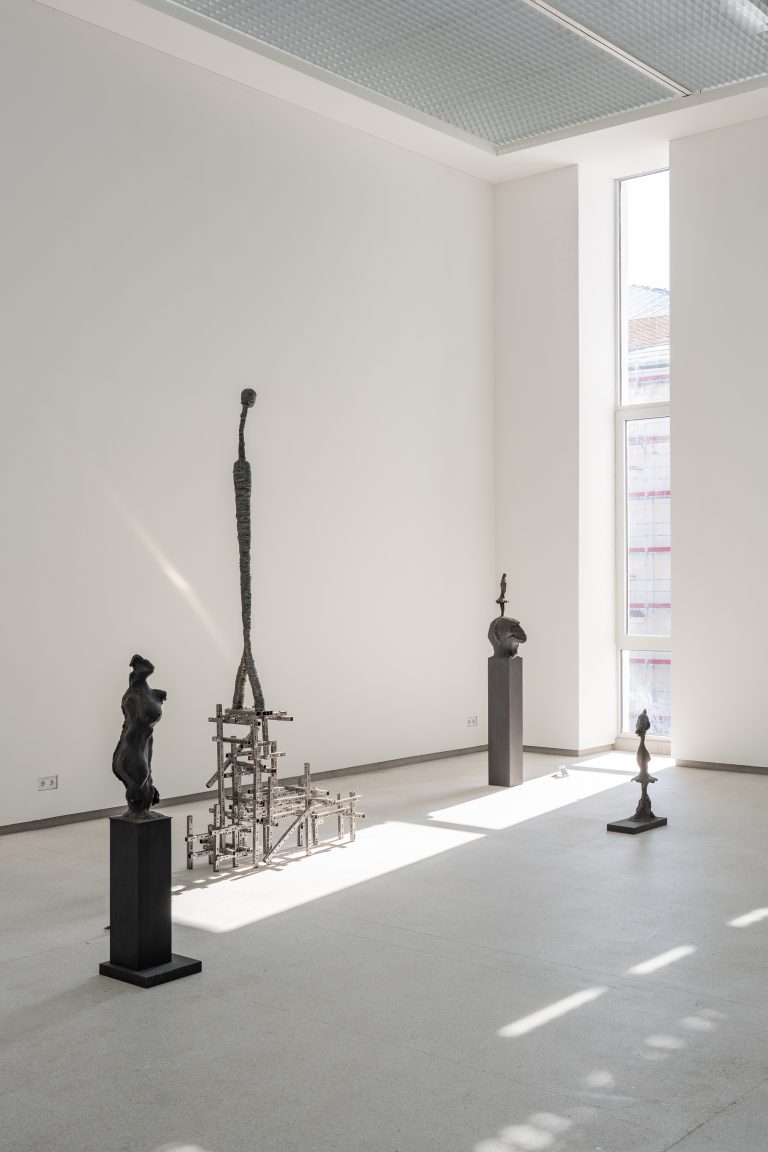
“Superglue, or Inventing the Friend”, exhibition view. Contemporary Art Centre, 2026. Curator: Valentinas Klimašauskas. Photographer: Andrej Vasilenko
“Superglue, or Inventing the Friend”, exhibition view. Contemporary Art Centre, 2026. Curator: Valentinas Klimašauskas. Photographer: Andrej Vasilenko
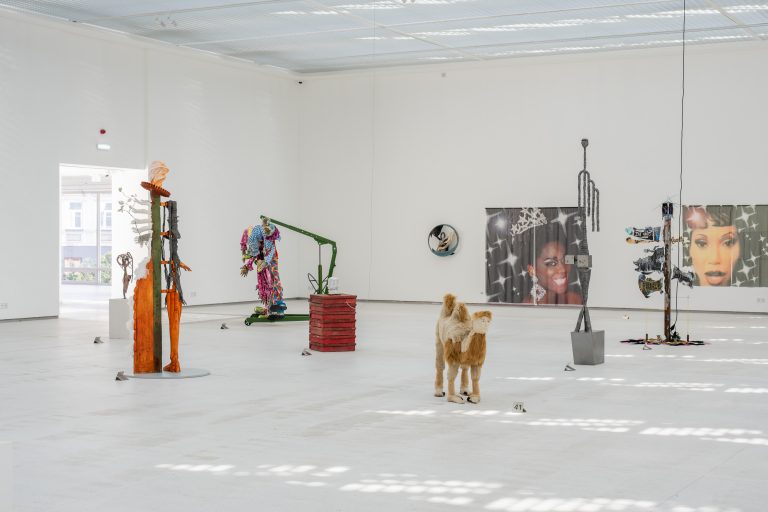
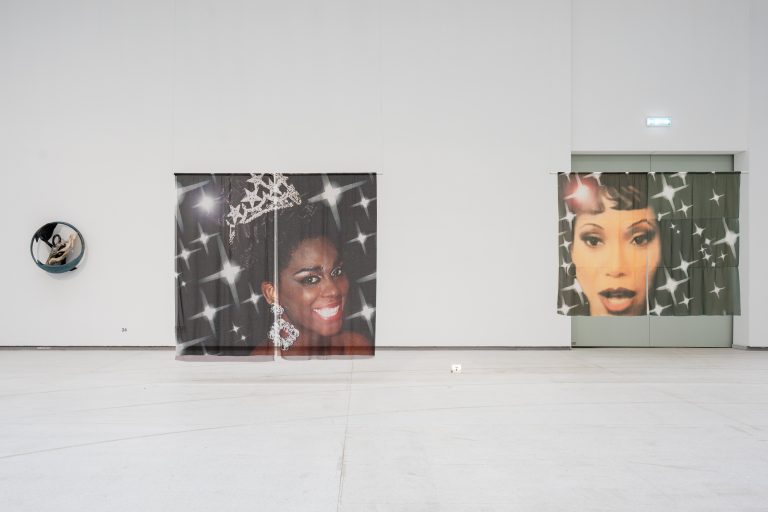
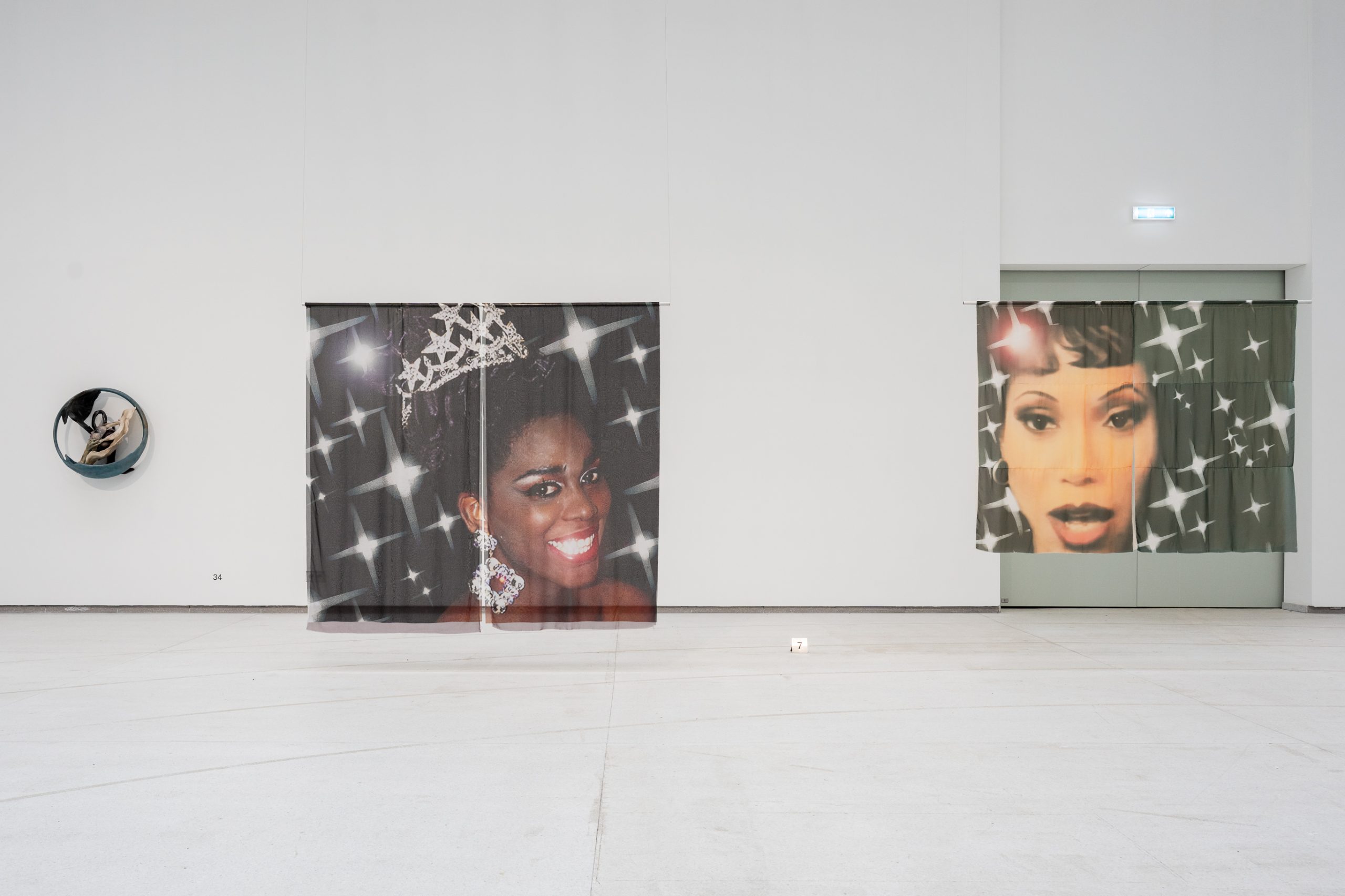
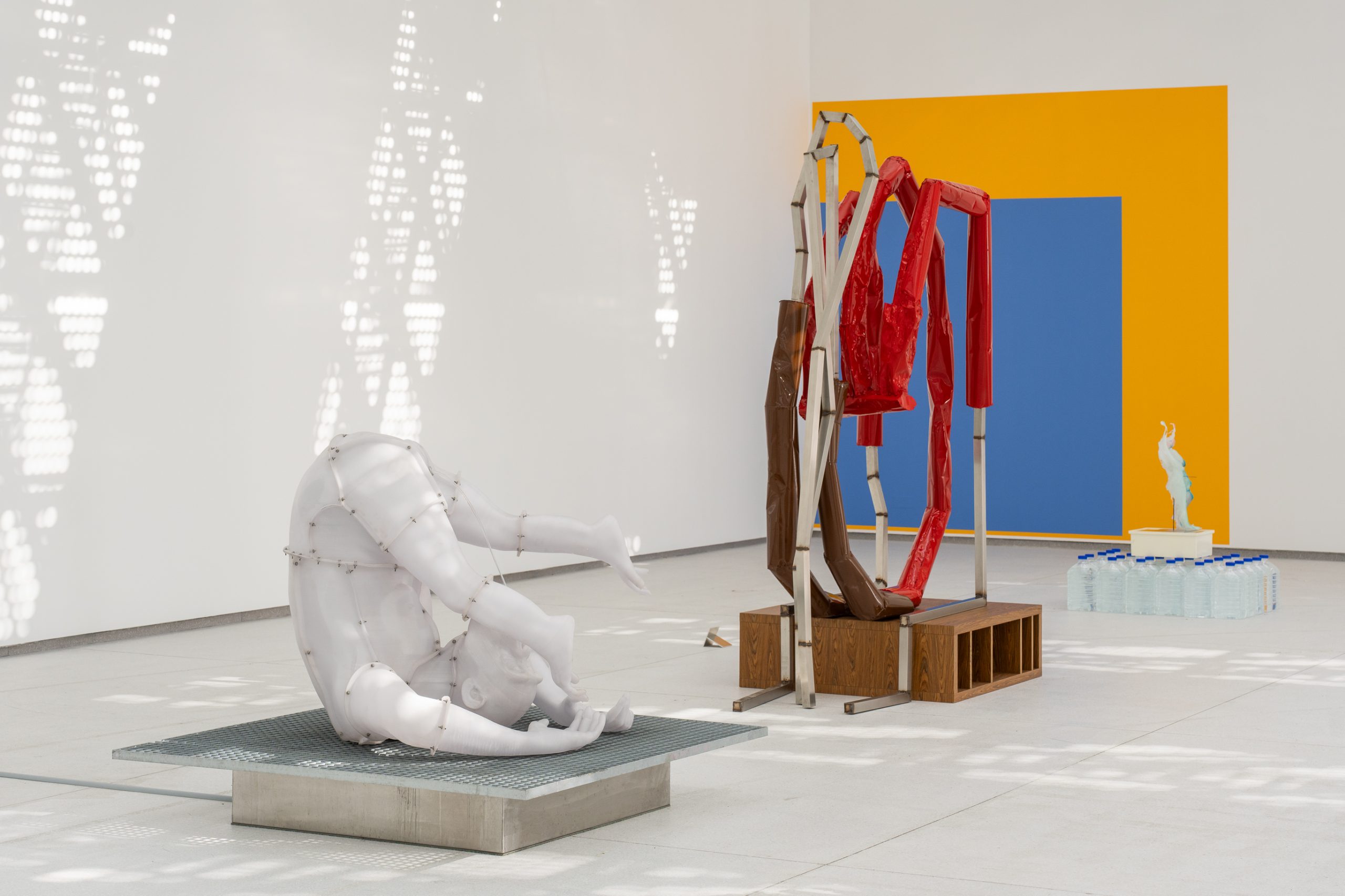
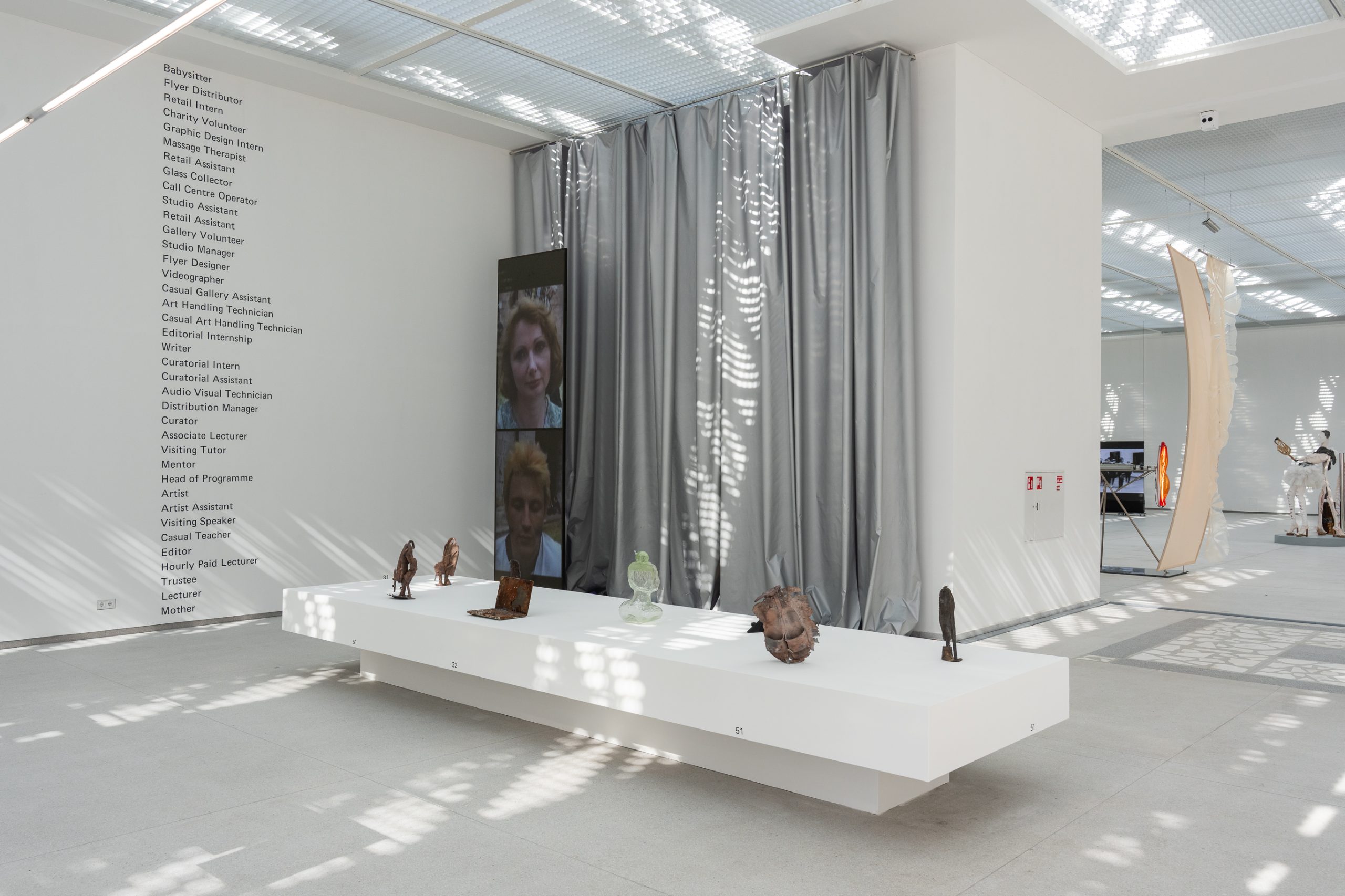
Isaac Lythgoe, “It takes 244 days to forget your name”, 2023. Oiled amaranth, plywood, epoxy resin, 3D prints, copper, carbon fibre, fibreglass, pigments, acrylic, fillers, automotive paint, lacquer, stainless steel, 78 × 50 × 26 cm. Courtesy of the artist and Piktogram, Warsaw. Maty Biayenda, “Serving Faces Act. 2 (Star)”, 2025. Series of works, dye-sublimation print on panels, embroidered beads and patches on synthetic muslin, 200 × 115 cm. Maty Biayenda, “Serving Faces Act. 1 (Octavia)”, 2023. Series of works, dye-sublimation print on panels, embroidered beads and patches on synthetic muslin, 150 × 100 cm. Courtesy of the artist and Double V Gallery, Marseille and Paris. “Superglue, or Inventing the Friend”, Contemporary Art Centre, 2026. Photographer: Andrej Vasilenko
“Superglue, or Inventing the Friend”, exhibition view. Contemporary Art Centre, 2026. Curator: Valentinas Klimašauskas. Photographer: Andrej Vasilenko
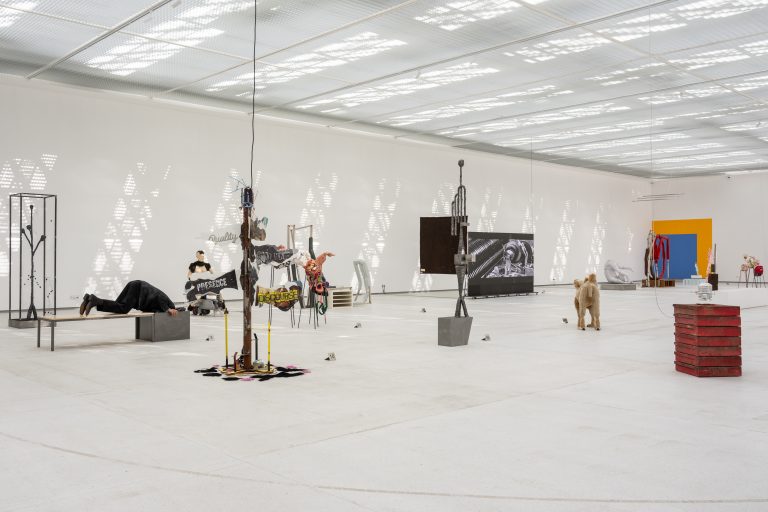
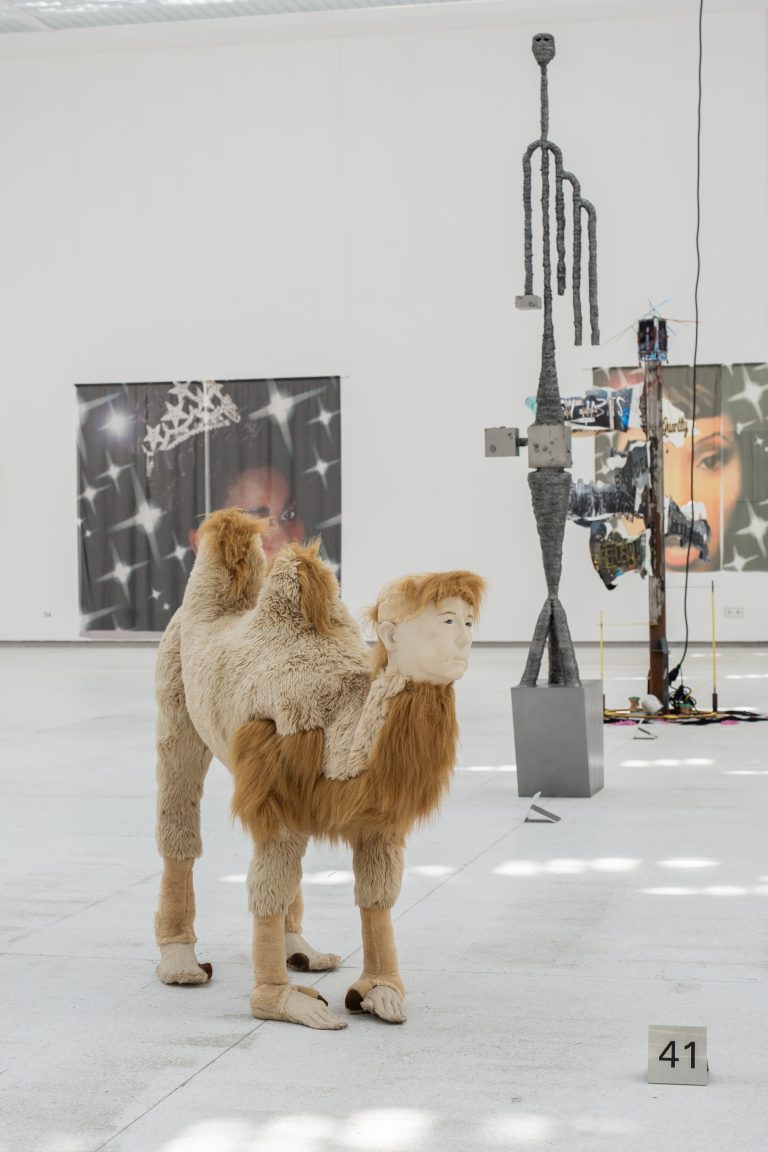
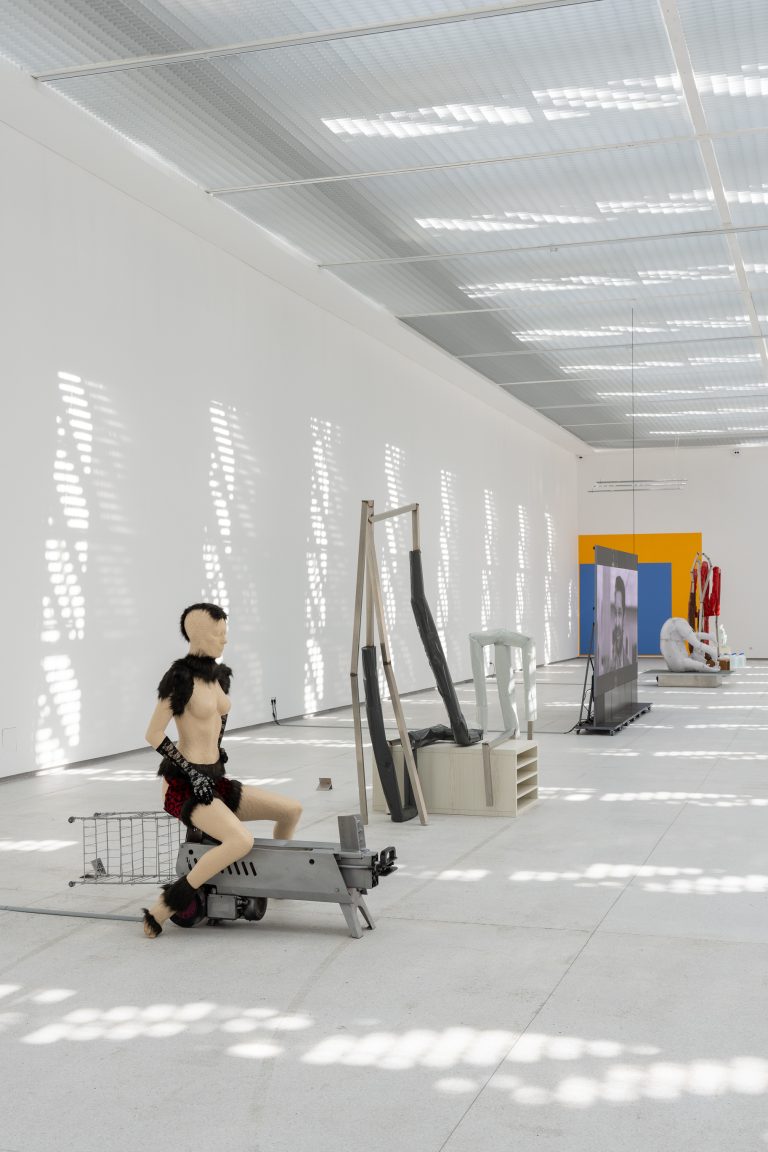
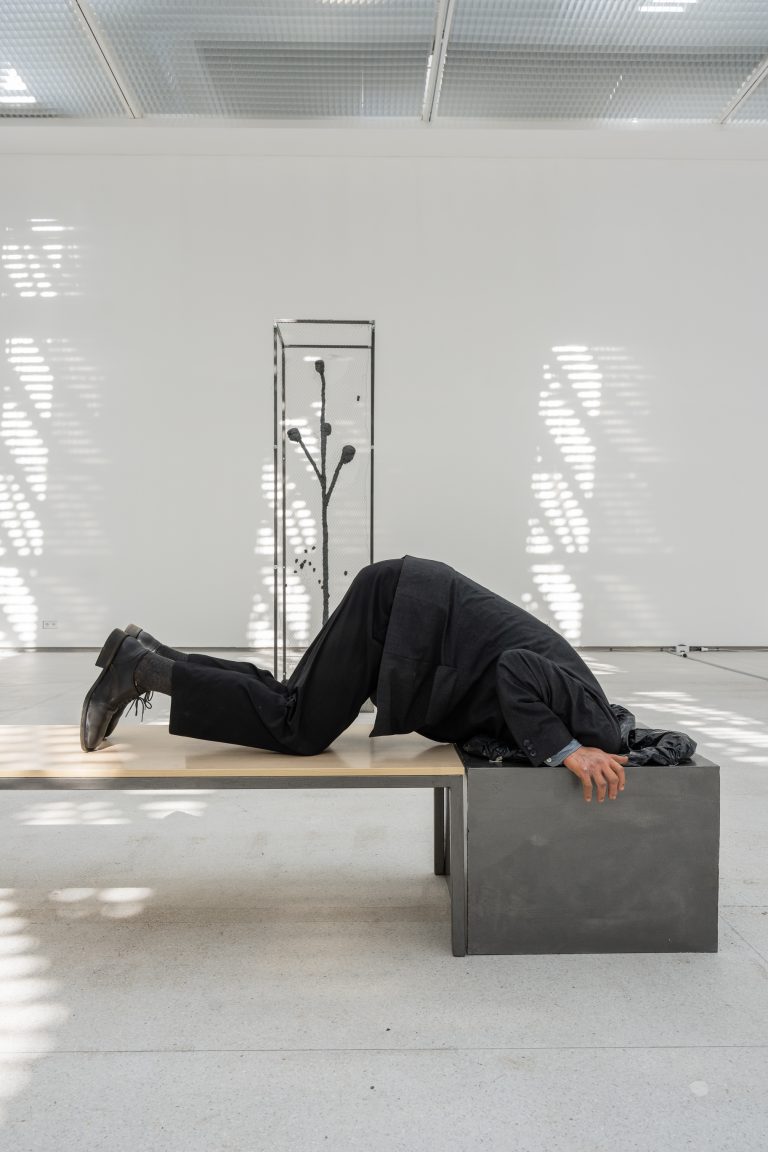
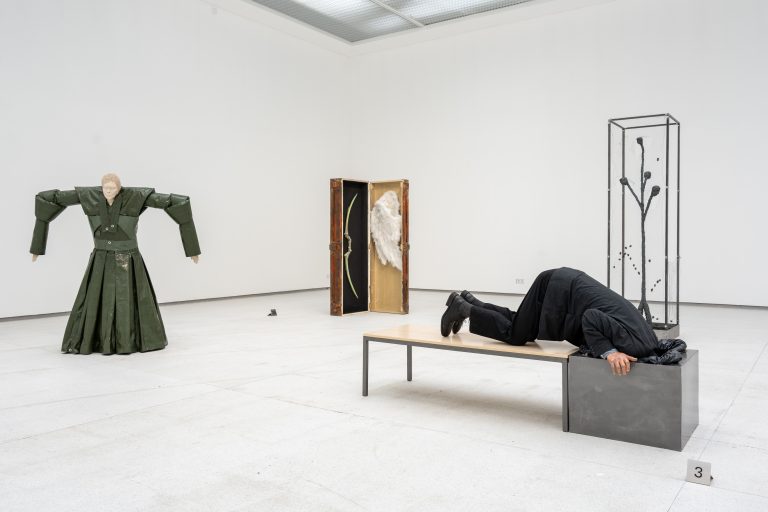
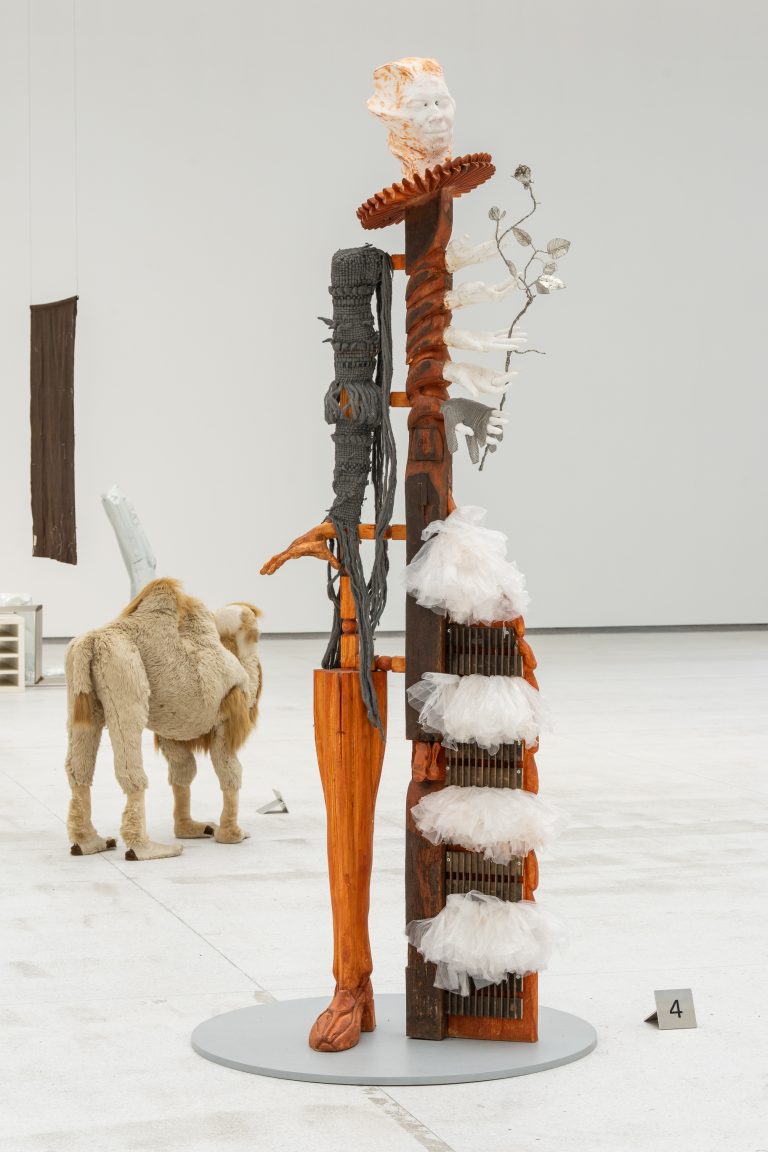
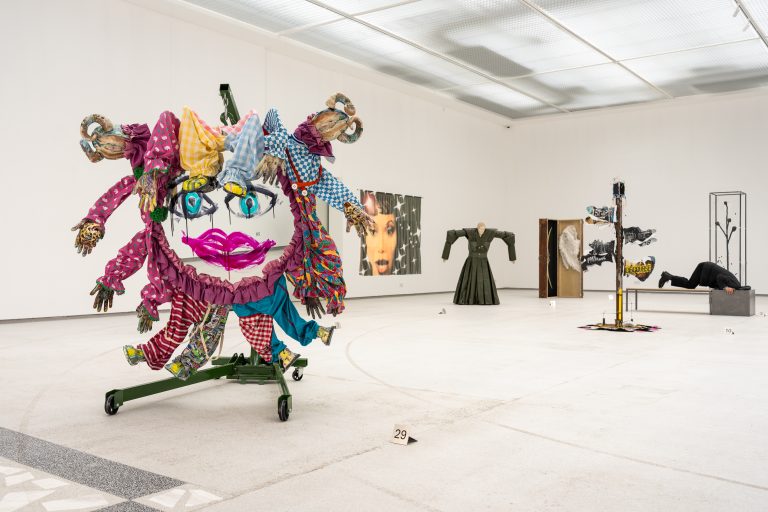
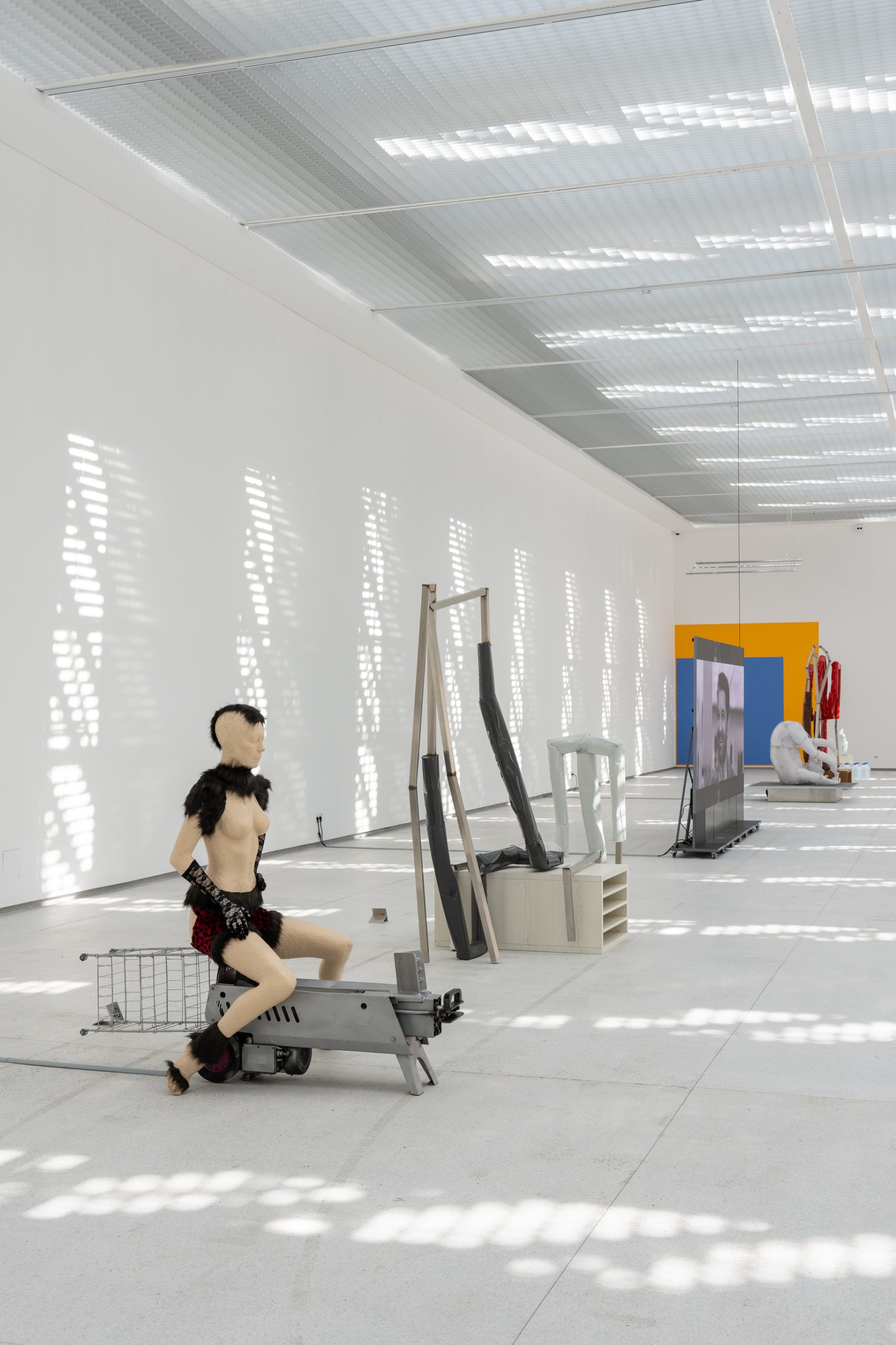
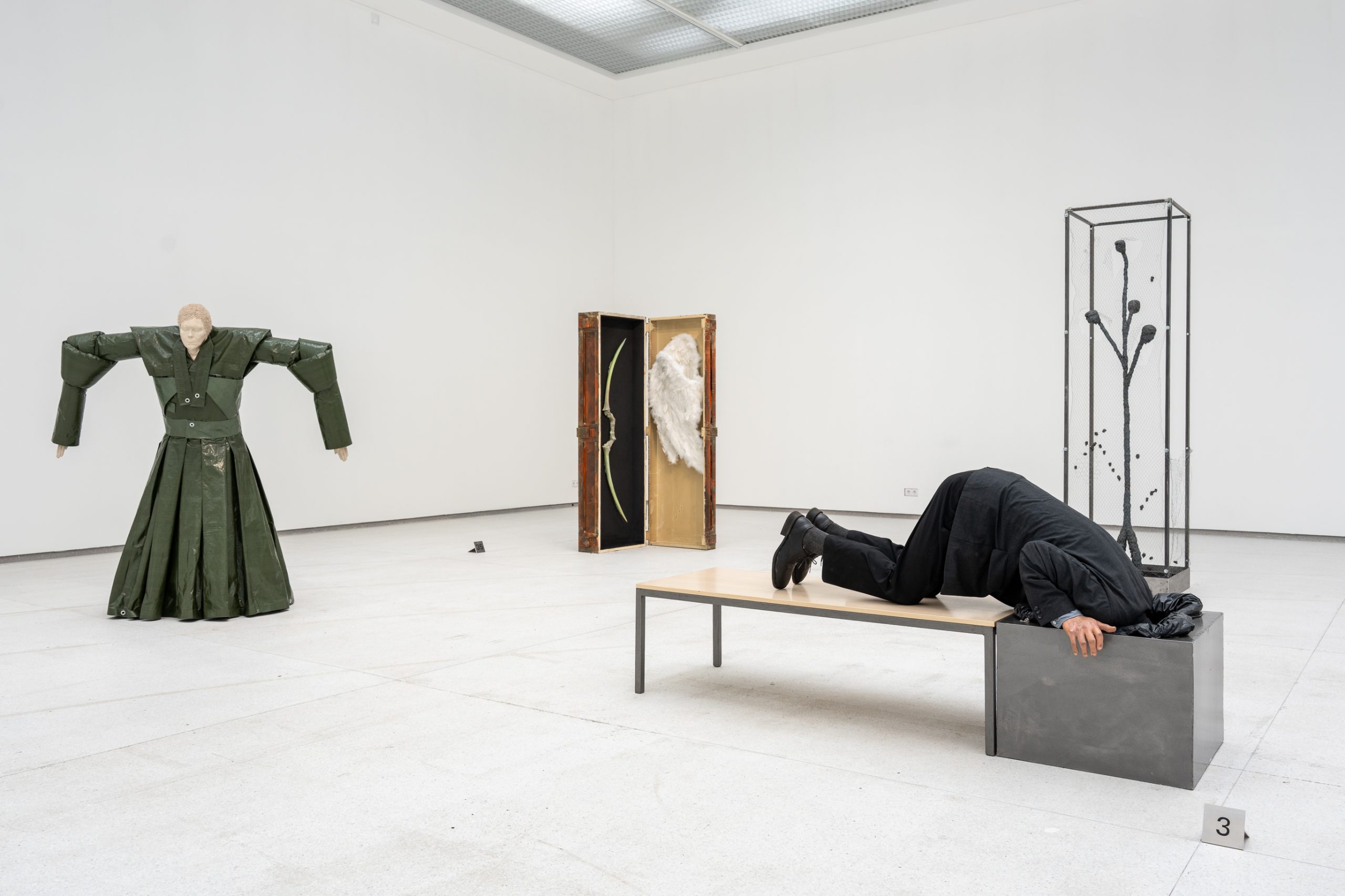
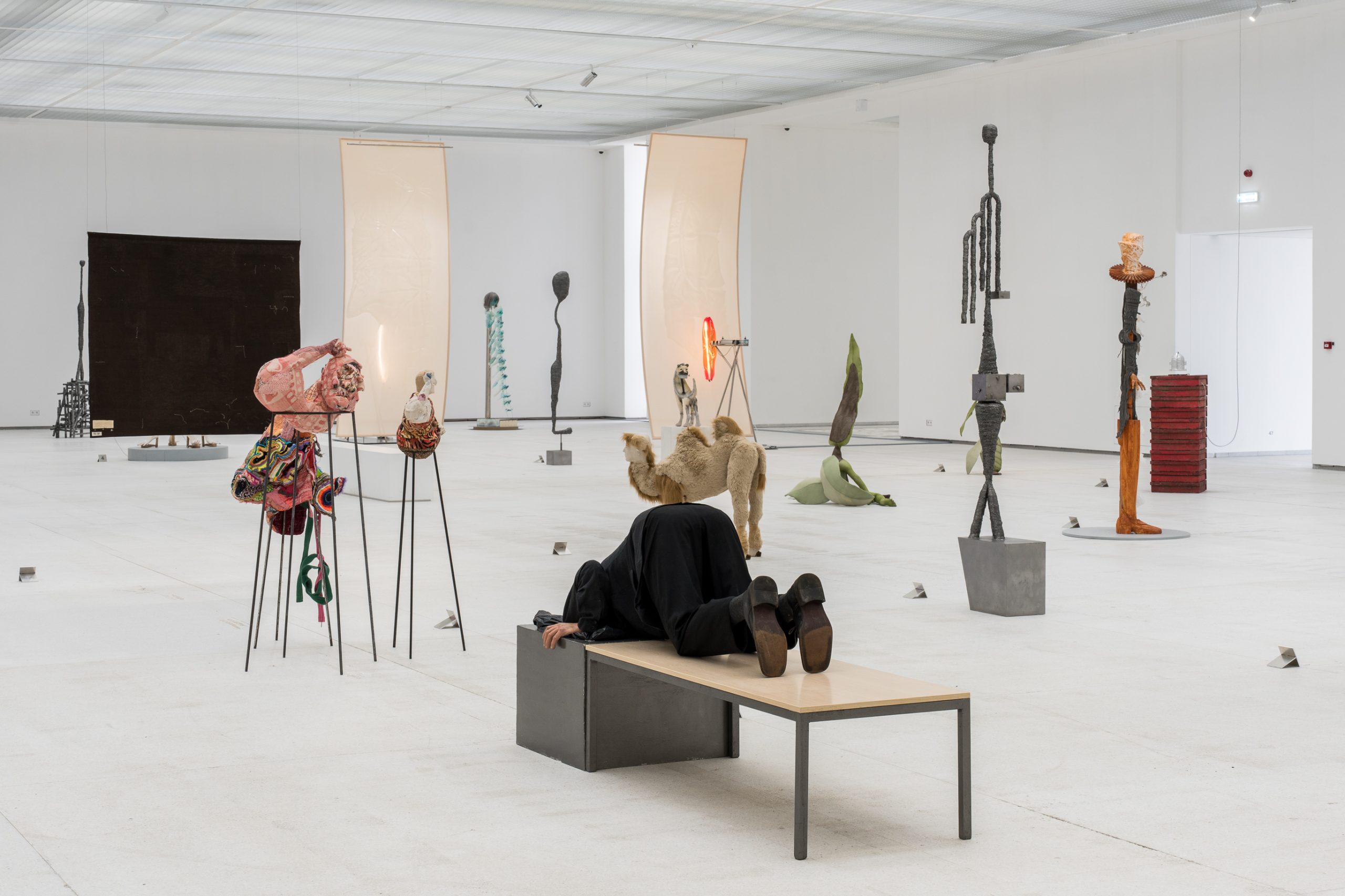
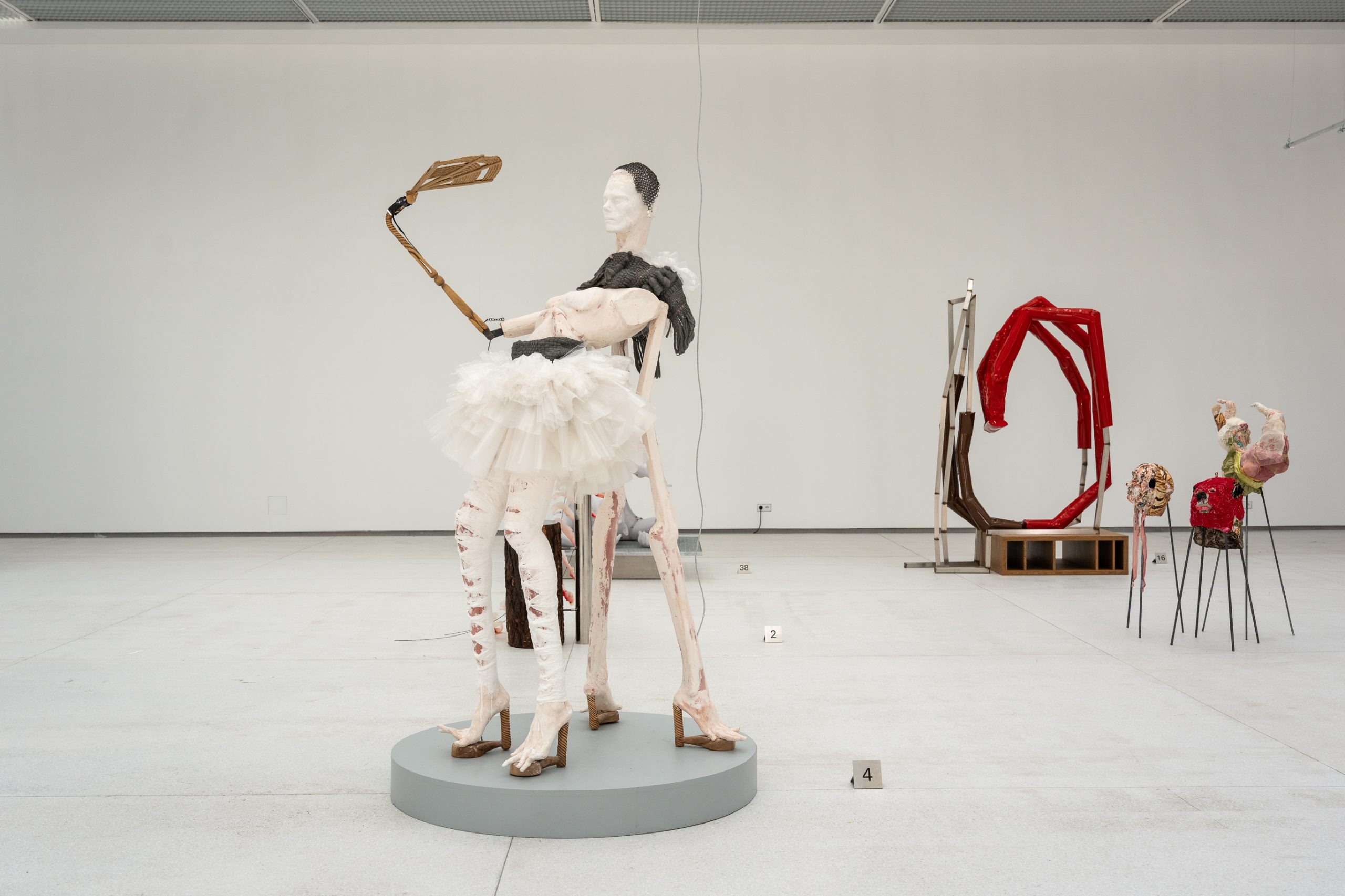
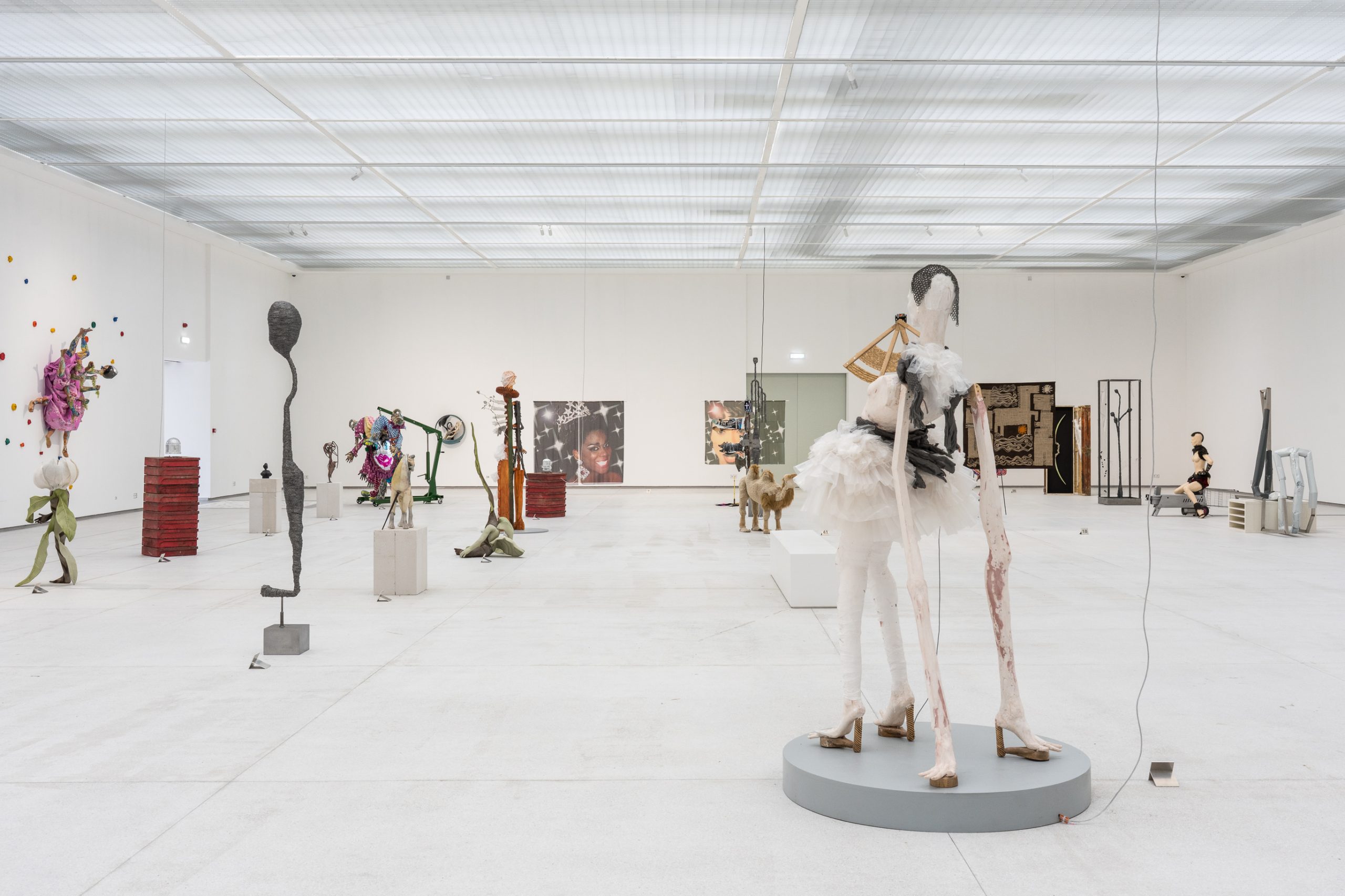
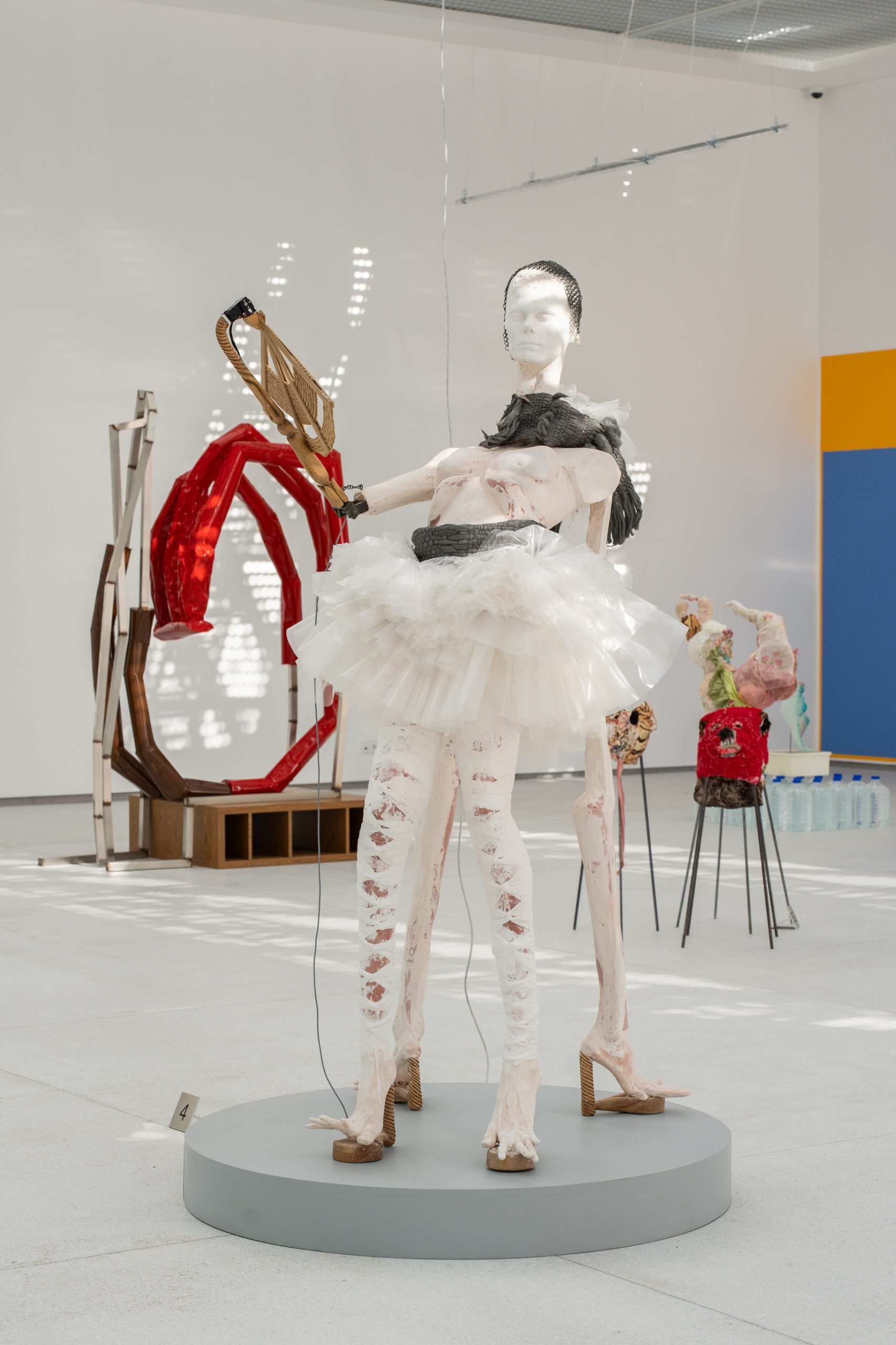
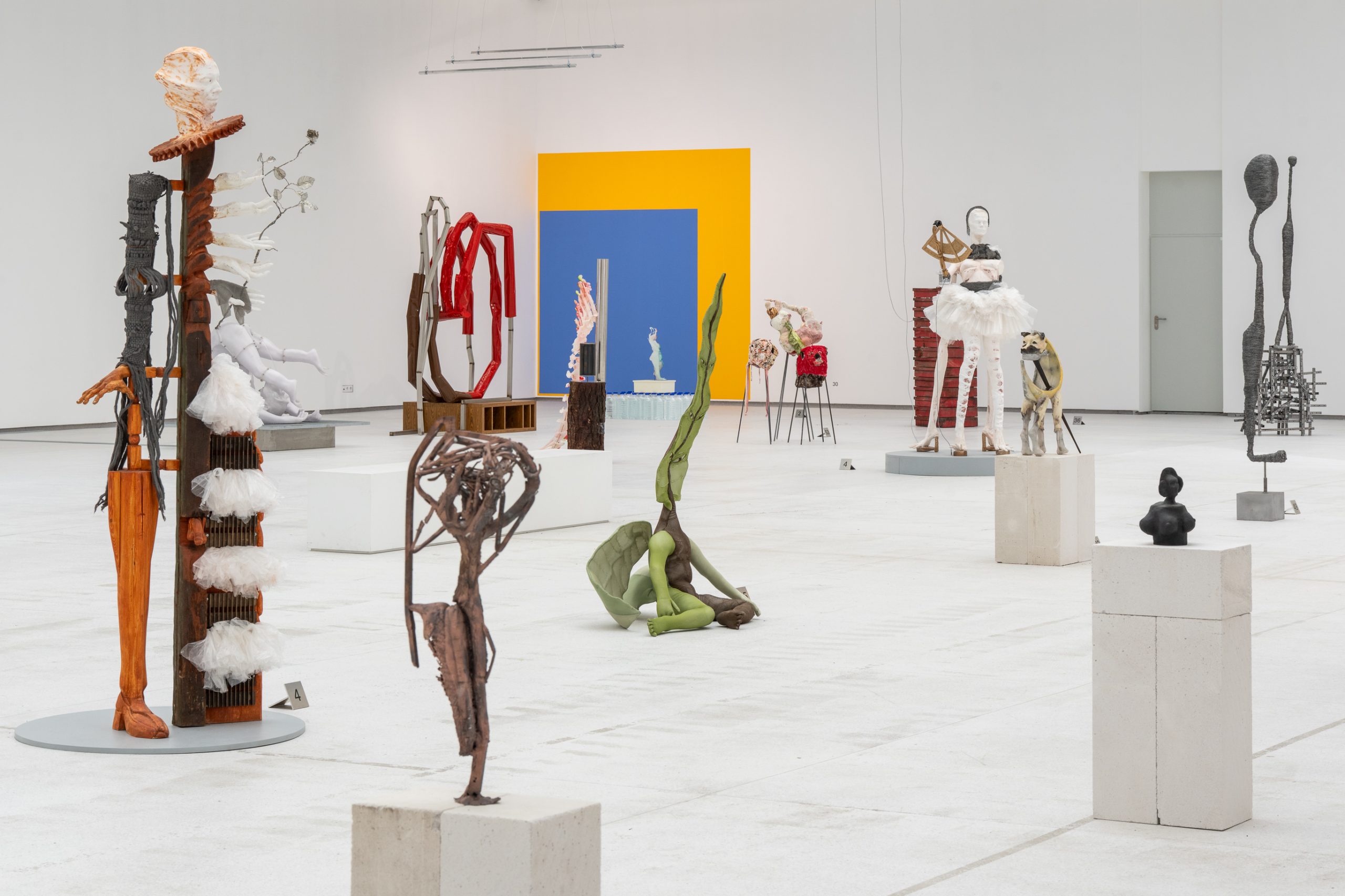
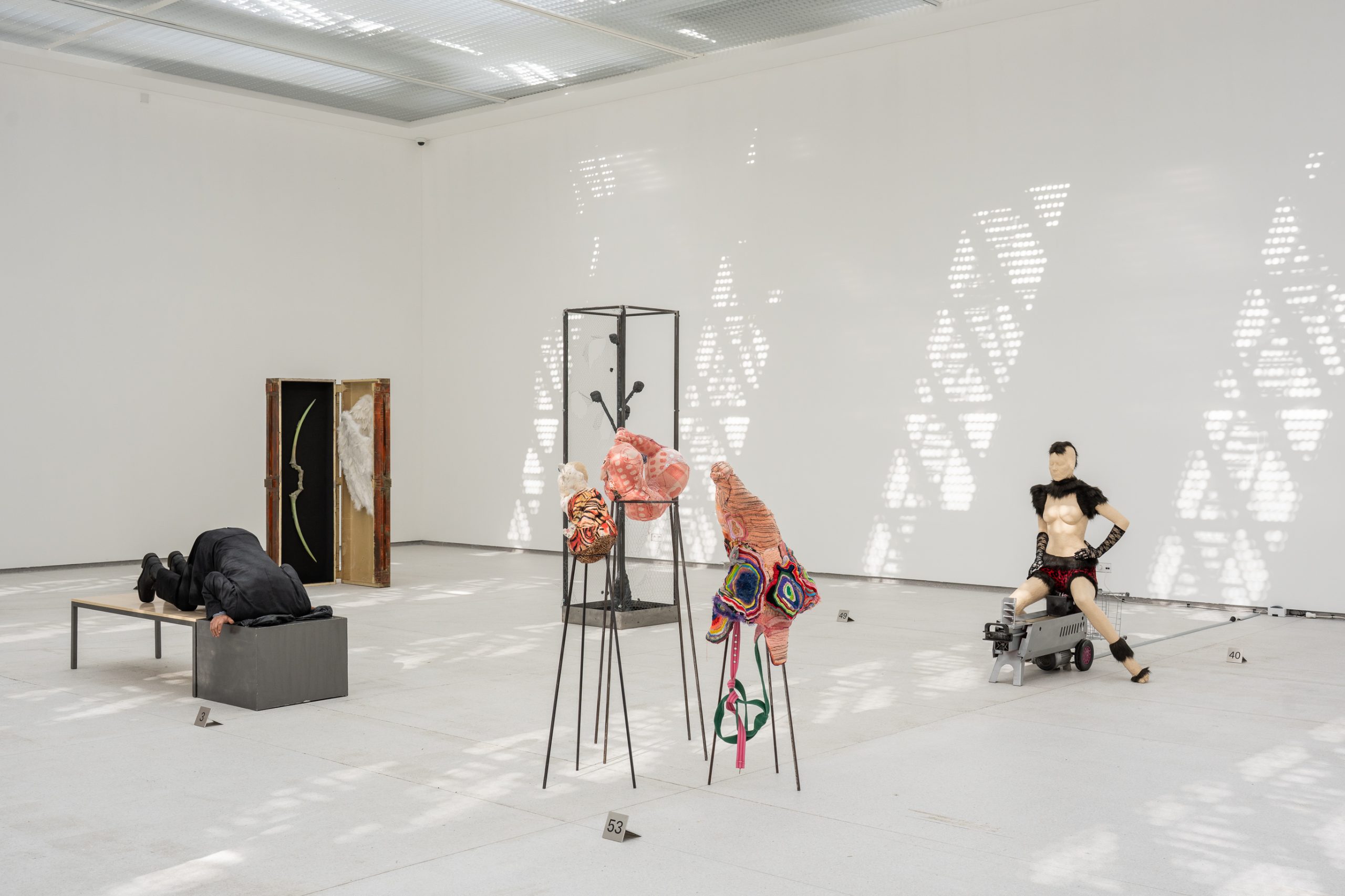
Danas Aleksa, “Danas Aleksa”, 2010. Metal, metal paint, expanding foam, polyethylene, clothing and footwear, human hair, silicone, rubbish bin, dimensions variable. Courtesy of the artist. Tomáš Roubal, “Prey”, 2024. Steel, 250 × 67 × 65 cm. Courtesy of the artist. “Superglue, or Inventing the Friend”, Contemporary Art Centre, 2026. Photographer: Andrej Vasilenko
Jakub Choma, “Distractor”, 2021–2024. Acrylic, carved wood, UV print on plastic, metal structure, UV resin, screens, metal components, 230 × 100 × 100 cm. Courtesy of the artist. Danas Aleksa, “Danas Aleksa”, 2010. Metal, metal paint, expanding foam, polyethylene, clothing and footwear, human hair, silicone, rubbish bin, dimensions variable. Courtesy of the artist. Tomáš Roubal, “Prey”, 2024. Steel, 250 × 67 × 65 cm. Courtesy of the artist. “Superglue, or Inventing the Friend”, Contemporary Art Centre, 2026. Photographer: Andrej Vasilenko
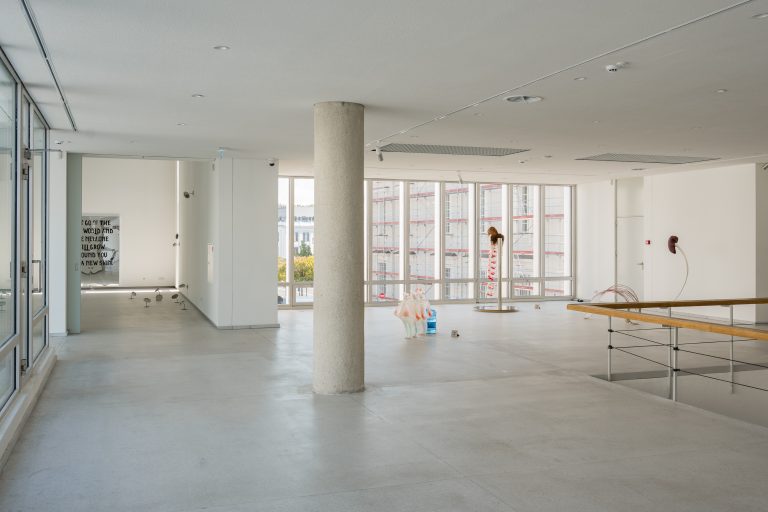
“Superglue, or Inventing the Friend”, exhibition view. Contemporary Art Centre, 2026. Curator: Valentinas Klimašauskas. Photographer: Andrej Vasilenko
“Superglue, or Inventing the Friend”, exhibition view. Contemporary Art Centre, 2026. Curator: Valentinas Klimašauskas. Photographer: Andrej Vasilenko
“Superglue, or Inventing the Friend”, exhibition view. Contemporary Art Centre, 2026. Curator: Valentinas Klimašauskas. Photographer: Andrej Vasilenko
“Superglue, or Inventing the Friend”, exhibition view. Contemporary Art Centre, 2026. Curator: Valentinas Klimašauskas. Photographer: Andrej Vasilenko
“Superglue, or Inventing the Friend”, exhibition view. Contemporary Art Centre, 2026. Curator: Valentinas Klimašauskas. Photographer: Andrej Vasilenko
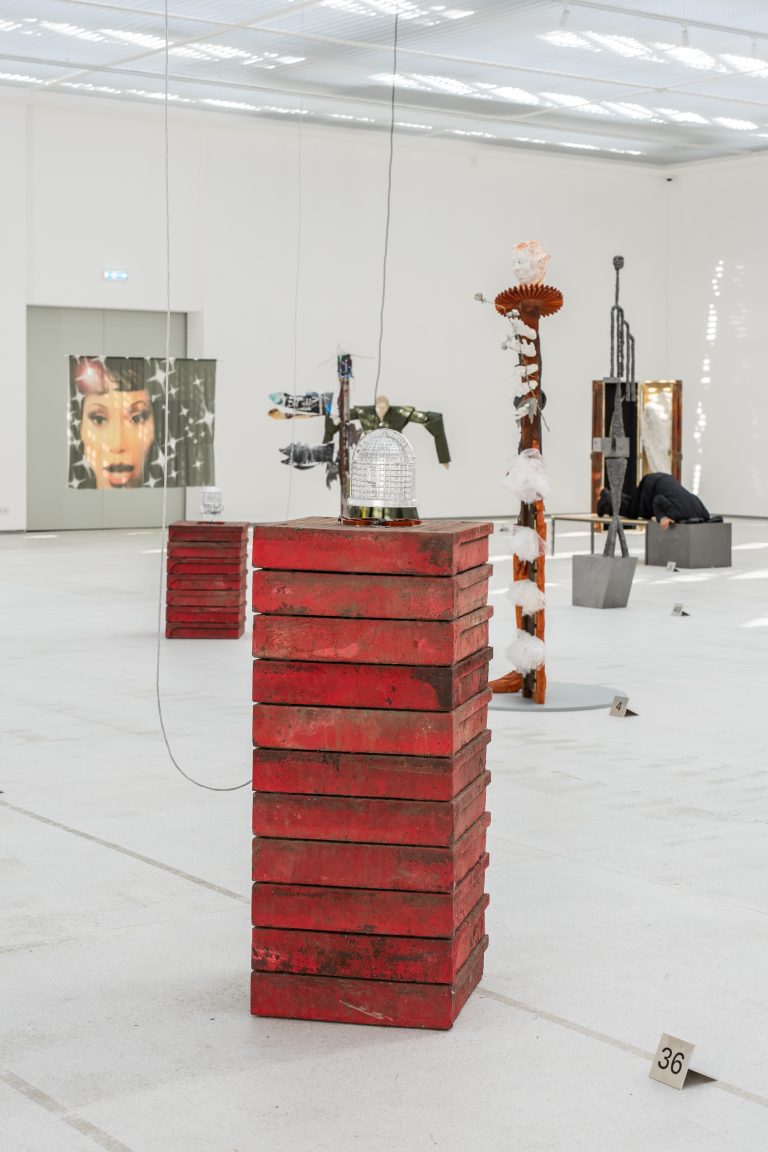
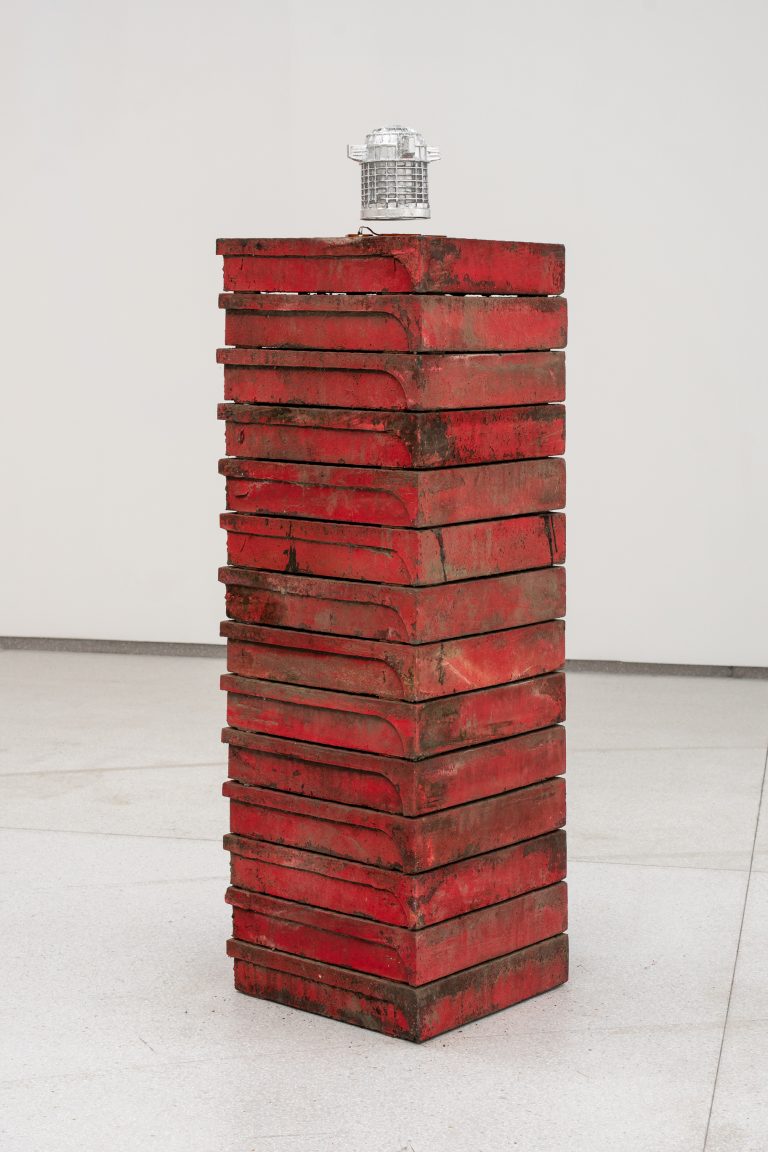
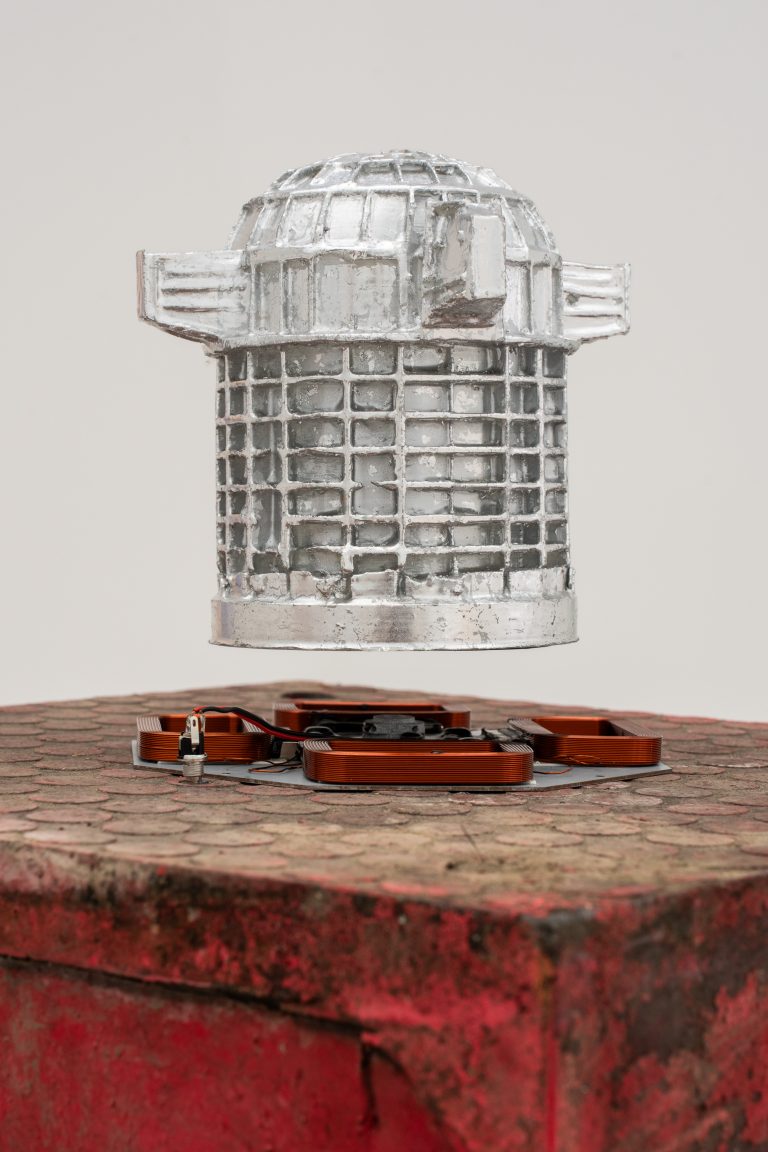
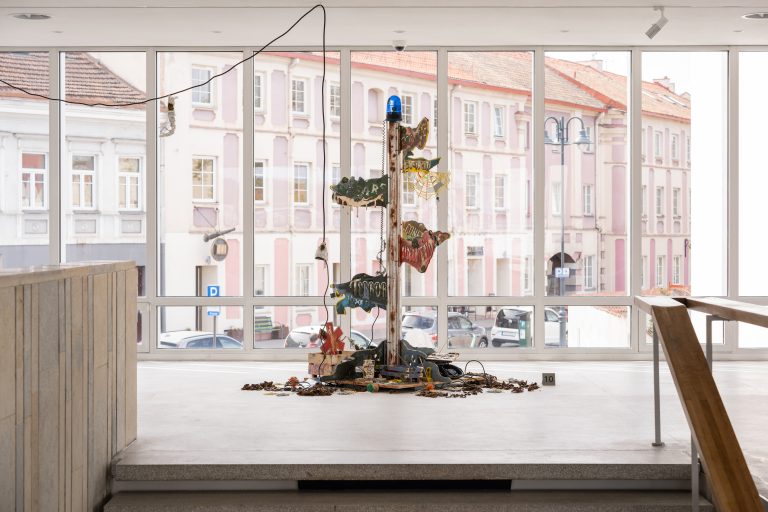
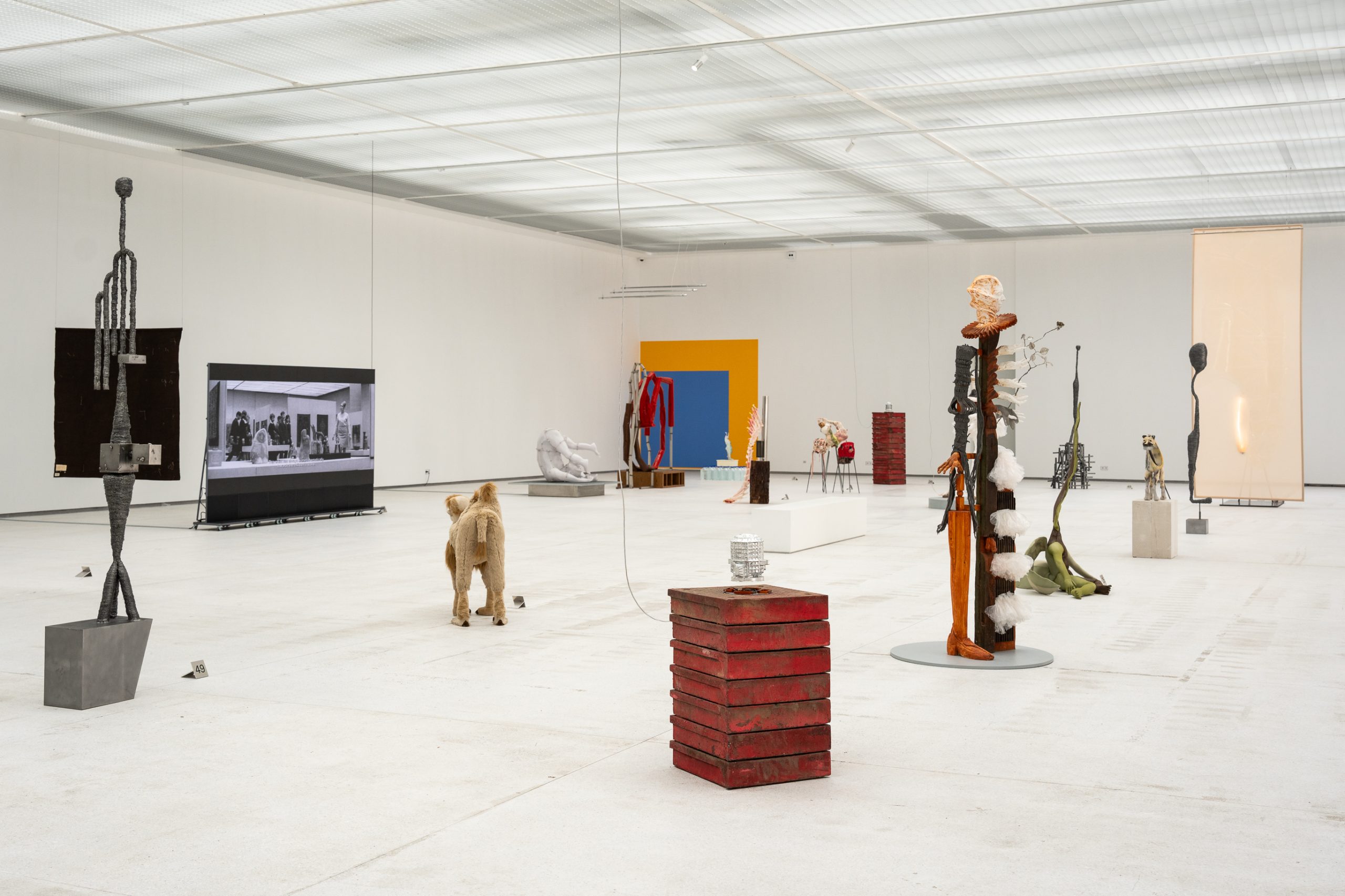
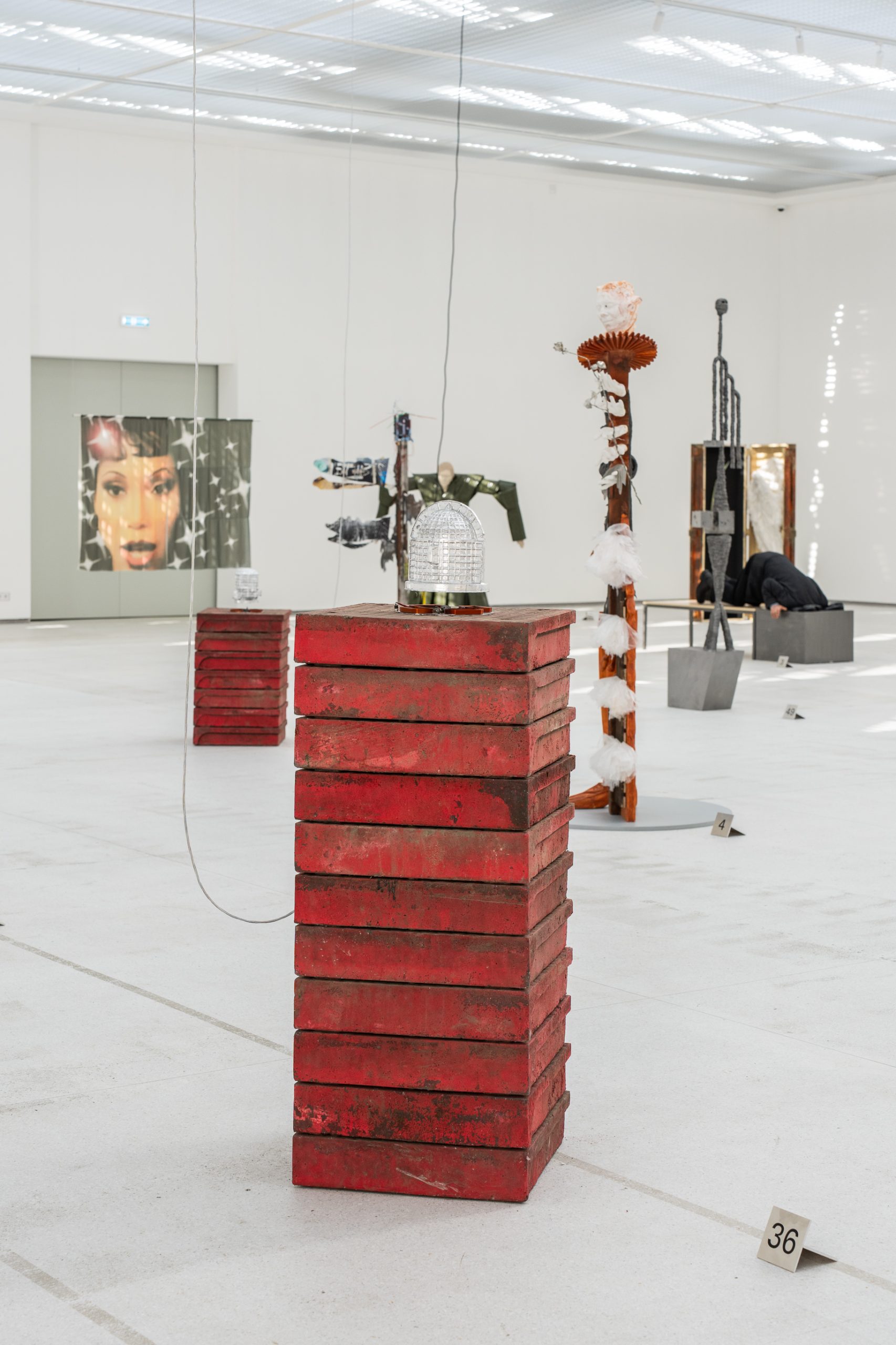
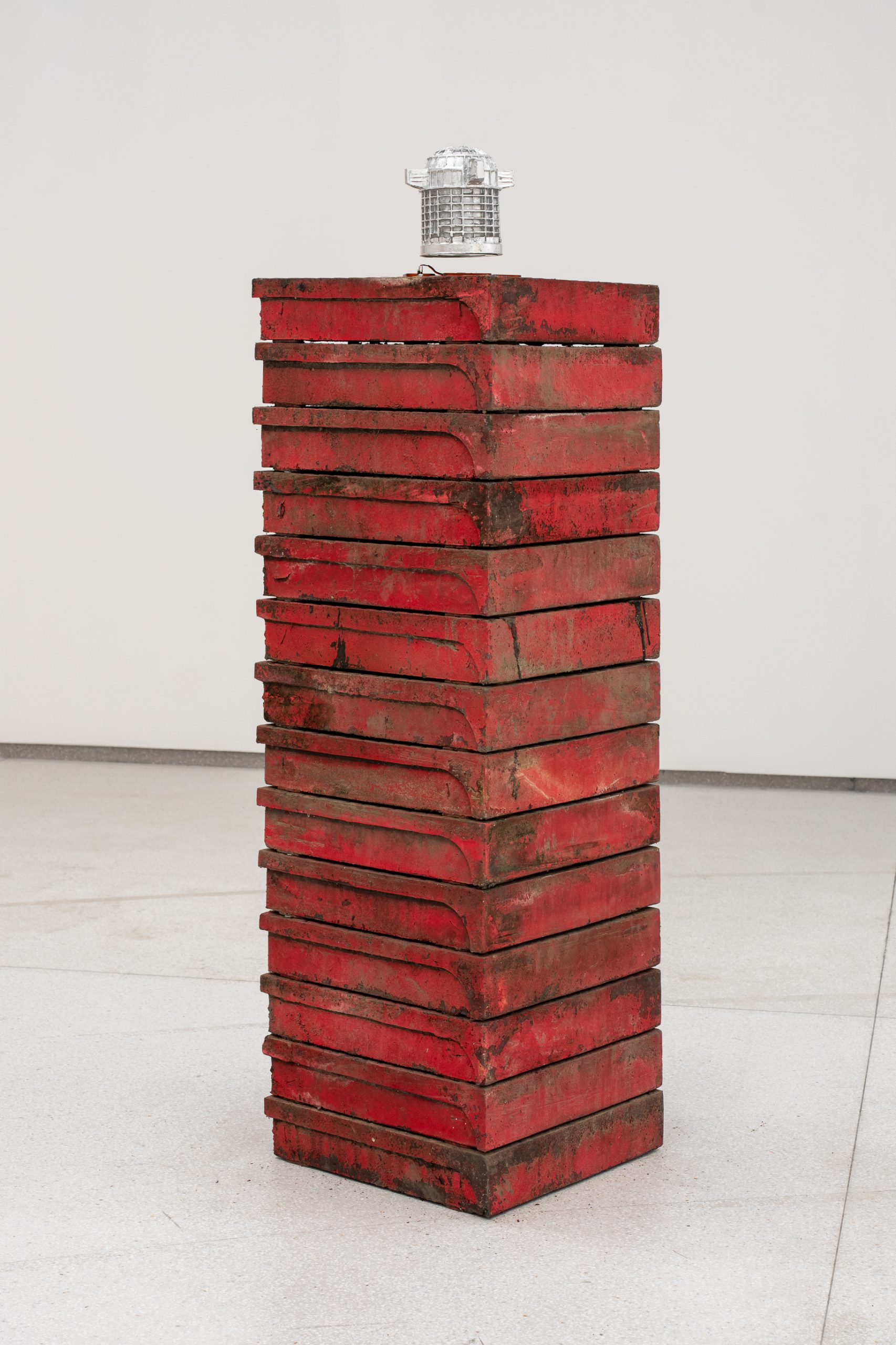
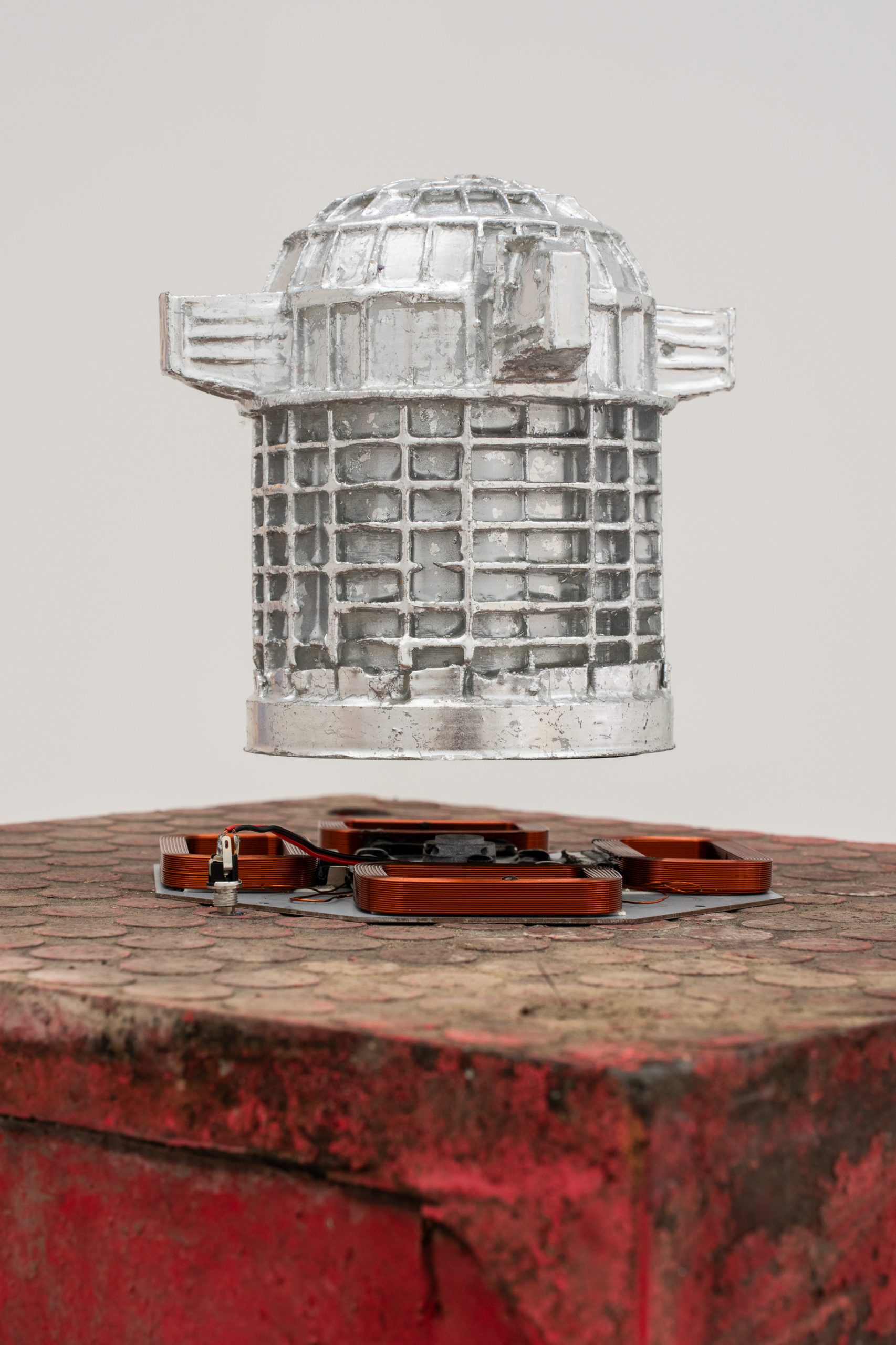
Tomas Martišauskis, “Upgrade”, 2025. Traffic island elements, electromagnet, 3D printing, gilding, dimensions variable. Courtesy of the artist. “Superglue, or Inventing the Friend”, Contemporary Art Centre, 2026. Photographer: Andrej Vasilenko
Tomas Martišauskis, “Upgrade”, 2025. Traffic island elements, electromagnet, 3D printing, gilding, dimensions variable. Courtesy of the artist. “Superglue, or Inventing the Friend”, Contemporary Art Centre, 2026. Photographer: Andrej Vasilenko
“Superglue, or Inventing the Friend”, exhibition view. Contemporary Art Centre, 2026. Curator: Valentinas Klimašauskas. Photographer: Andrej Vasilenko
“Superglue, or Inventing the Friend”, exhibition view. Contemporary Art Centre, 2026. Curator: Valentinas Klimašauskas. Photographer: Andrej Vasilenko
“Superglue, or Inventing the Friend”, exhibition view. Contemporary Art Centre, 2026. Curator: Valentinas Klimašauskas. Photographer: Andrej Vasilenko
“Superglue, or Inventing the Friend”, exhibition view. Contemporary Art Centre, 2026. Curator: Valentinas Klimašauskas. Photographer: Andrej Vasilenko
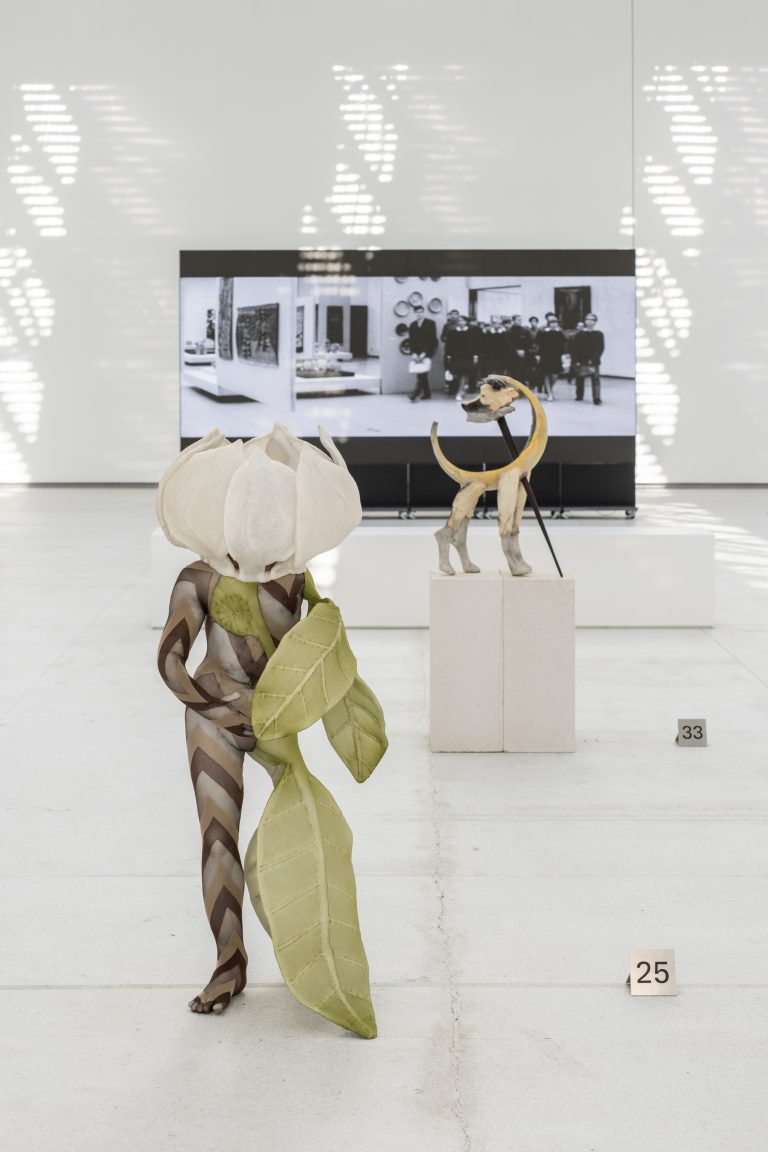
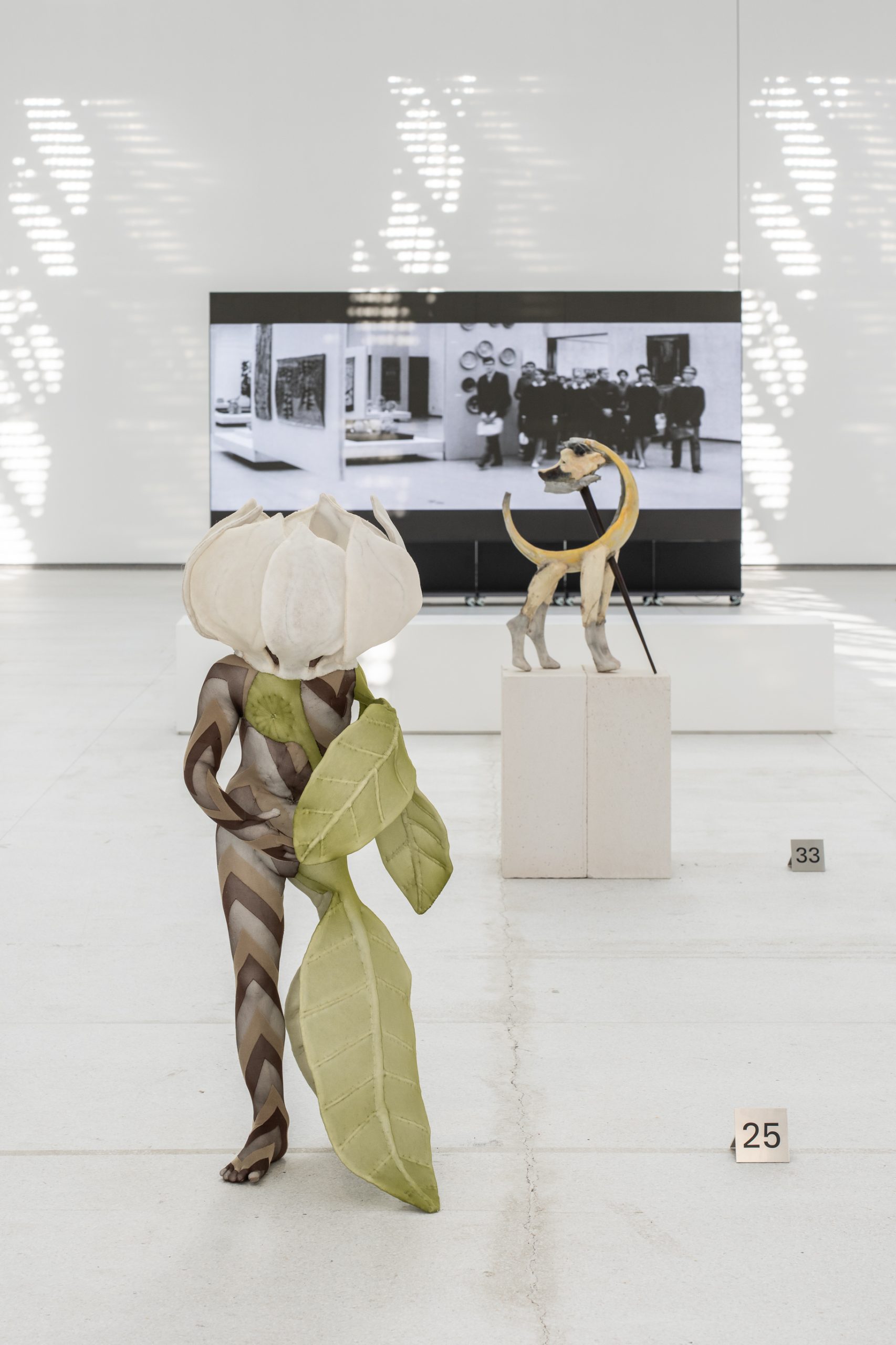
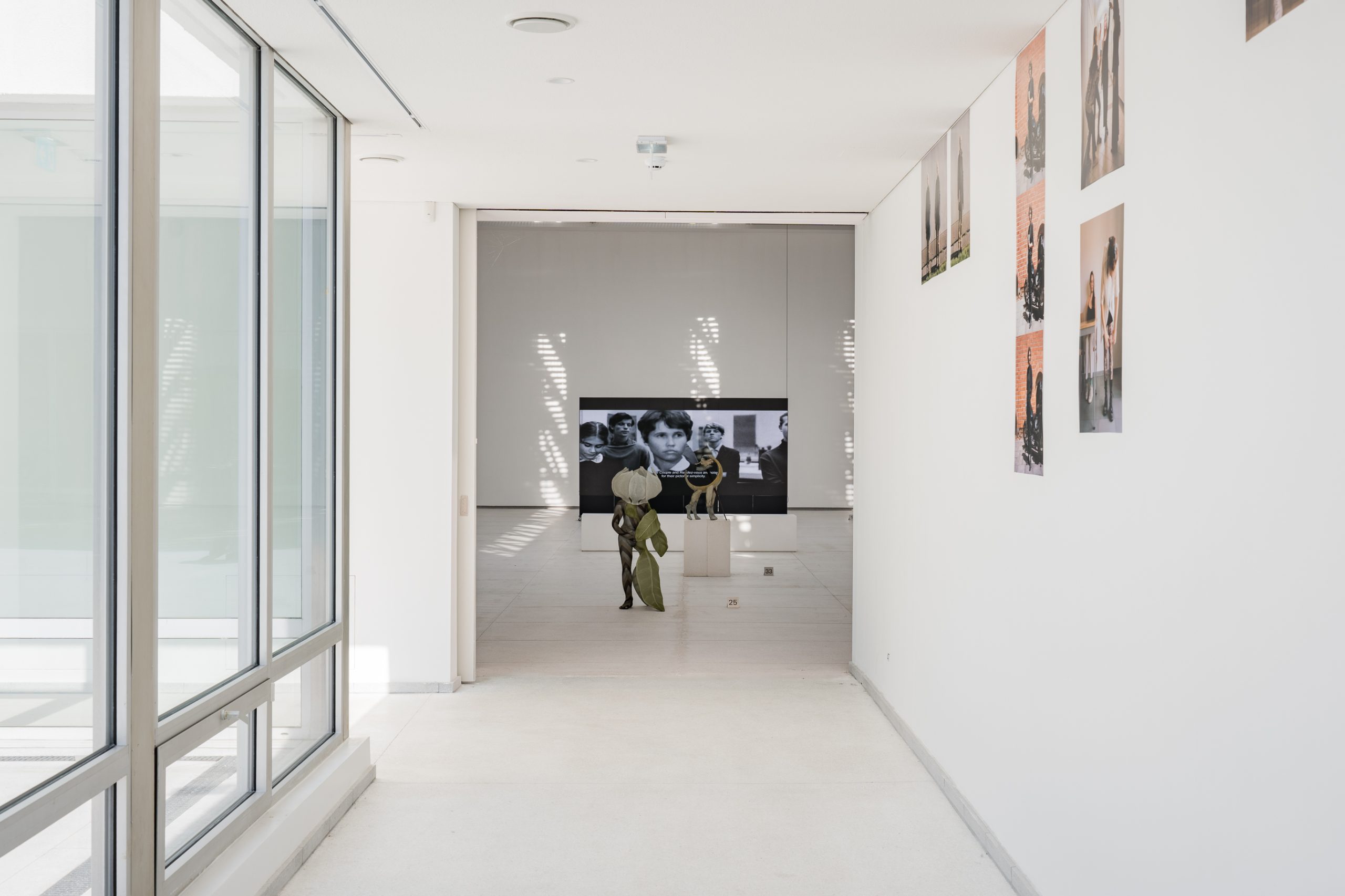
Jūratė Kazakevičiūtė, “Magnolia / Closed”, 2013 (2021). Wire, thread, nylon, non-woven fabric, 130 × 55 × 55 cm. Courtesy of the artist. Isaac Lythgoe, “You only need eyes to see, you only need a tongue to tell the difference”, 2024. Epoxy resin, fibreglass, pigments, polyethylene terephthalate, cast aluminium, scarab, ebonised oak, walnut, amaranth, epoxy clay, stainless steel, acrylic, lacquer, 78 × 50 × 26 cm. Courtesy of the artist and Piktogram, Warsaw. Algirdas Araminas (1931–1999), “When I Was a Child”, 1968. Film excerpt (7 min. 47 sec.). Courtesy of the Lithuanian Film Centre. “Superglue, or Inventing the Friend”, Contemporary Art Centre, 2026. Photographer: Andrej Vasilenko
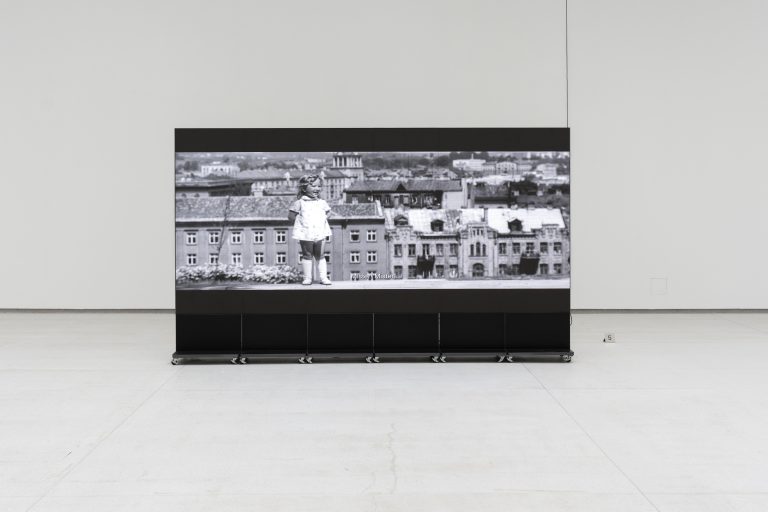
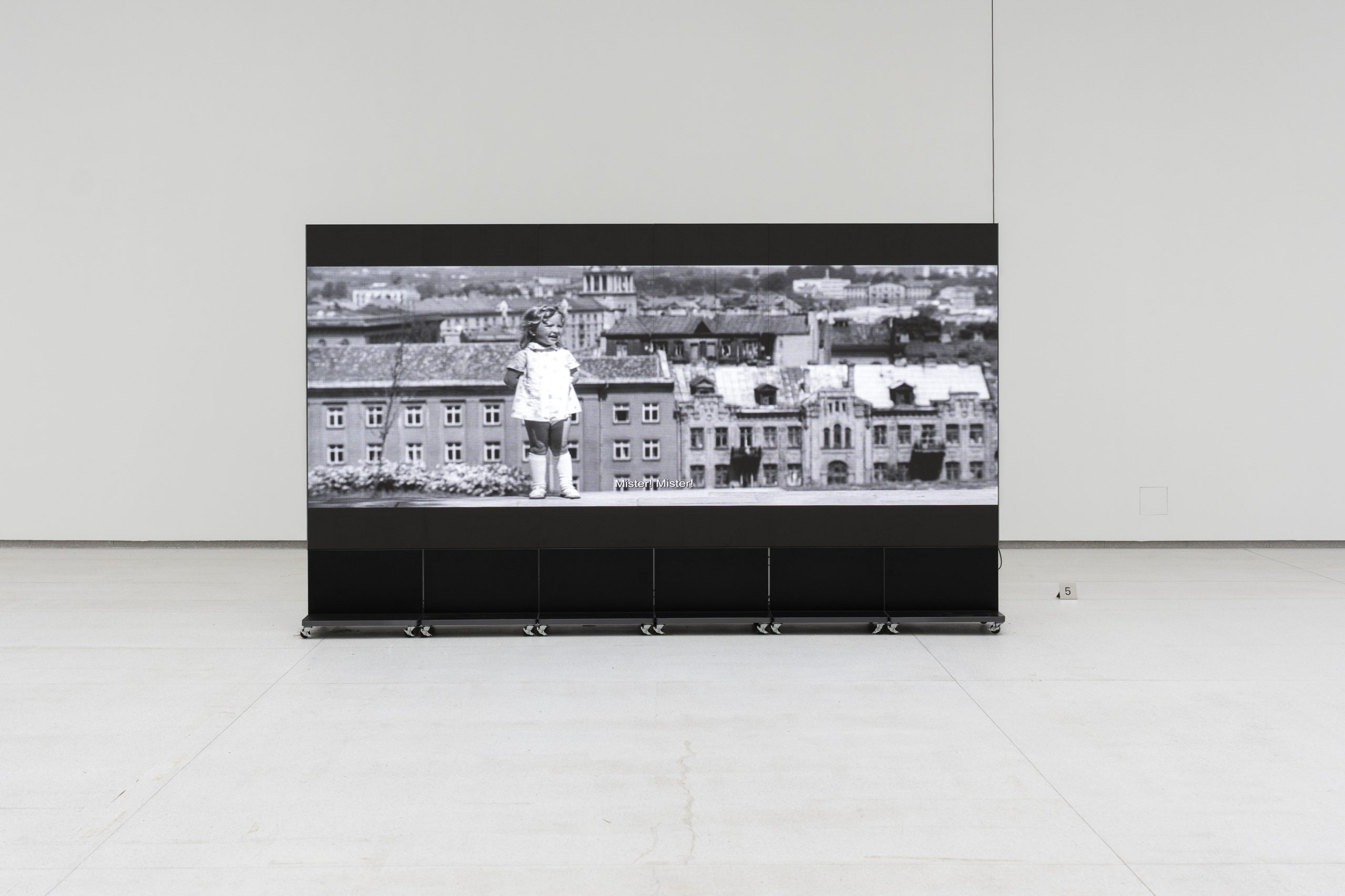
Algirdas Araminas (1931–1999), “When I Was a Child”, 1968. Film excerpt (7 min. 47 sec.). Courtesy of the Lithuanian Film Centre. “Superglue, or Inventing the Friend”, Contemporary Art Centre, 2026. Photographer: Andrej Vasilenko
“Superglue, or Inventing the Friend”, exhibition view. Contemporary Art Centre, 2026. Curator: Valentinas Klimašauskas. Photographer: Andrej Vasilenko
“Superglue, or Inventing the Friend”, exhibition view. Contemporary Art Centre, 2026. Curator: Valentinas Klimašauskas. Photographer: Andrej Vasilenko
“Superglue, or Inventing the Friend”, exhibition view. Contemporary Art Centre, 2026. Curator: Valentinas Klimašauskas. Photographer: Andrej Vasilenko
“Superglue, or Inventing the Friend”, exhibition view. Contemporary Art Centre, 2026. Curator: Valentinas Klimašauskas. Photographer: Andrej Vasilenko
“Superglue, or Inventing the Friend”, exhibition view. Contemporary Art Centre, 2026. Curator: Valentinas Klimašauskas. Photographer: Andrej Vasilenko
“Superglue, or Inventing the Friend”, exhibition view. Contemporary Art Centre, 2026. Curator: Valentinas Klimašauskas. Photographer: Andrej Vasilenko
“Superglue, or Inventing the Friend”, exhibition view. Contemporary Art Centre, 2026. Curator: Valentinas Klimašauskas. Photographer: Andrej Vasilenko
“Superglue, or Inventing the Friend”, exhibition view. Contemporary Art Centre, 2026. Curator: Valentinas Klimašauskas. Photographer: Andrej Vasilenko
“Superglue, or Inventing the Friend”, exhibition view. Contemporary Art Centre, 2026. Curator: Valentinas Klimašauskas. Photographer: Andrej Vasilenko
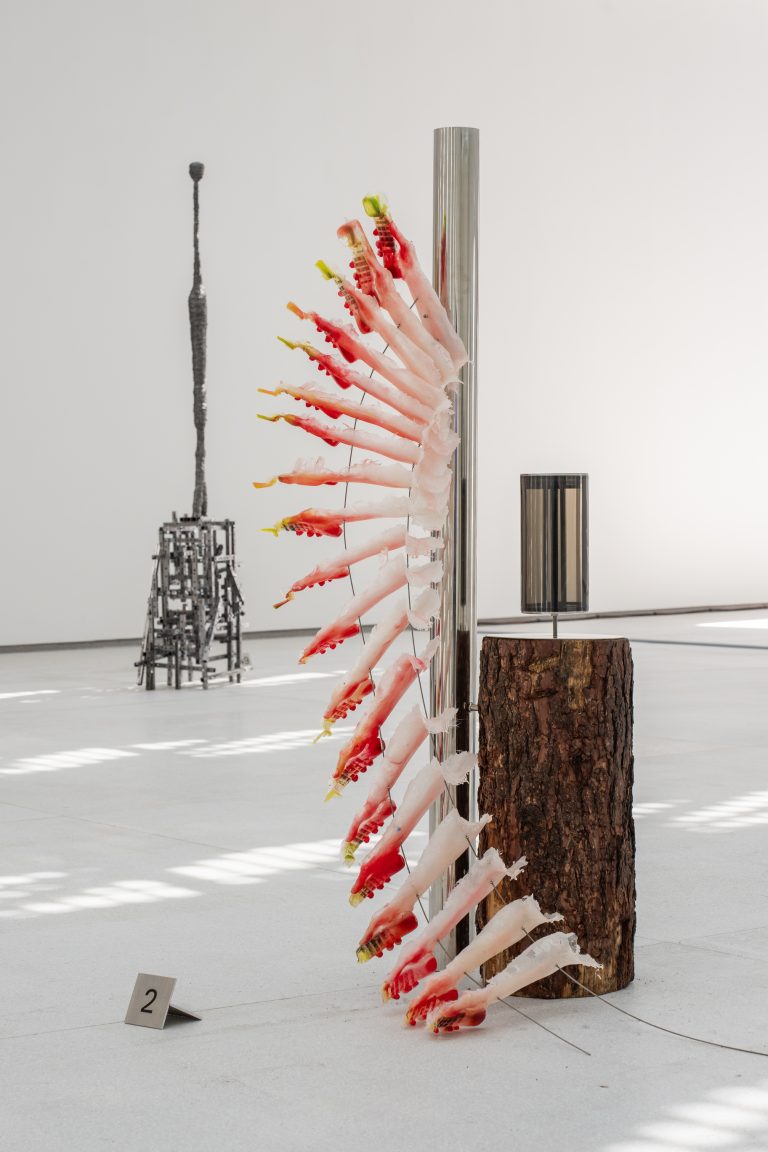
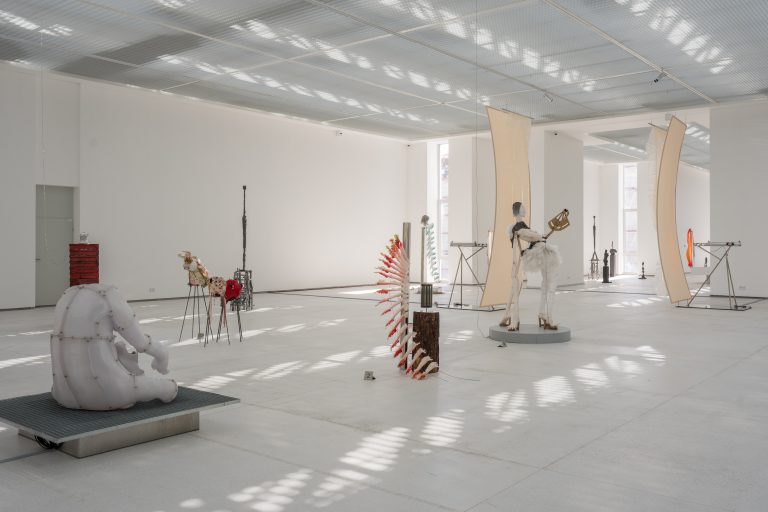
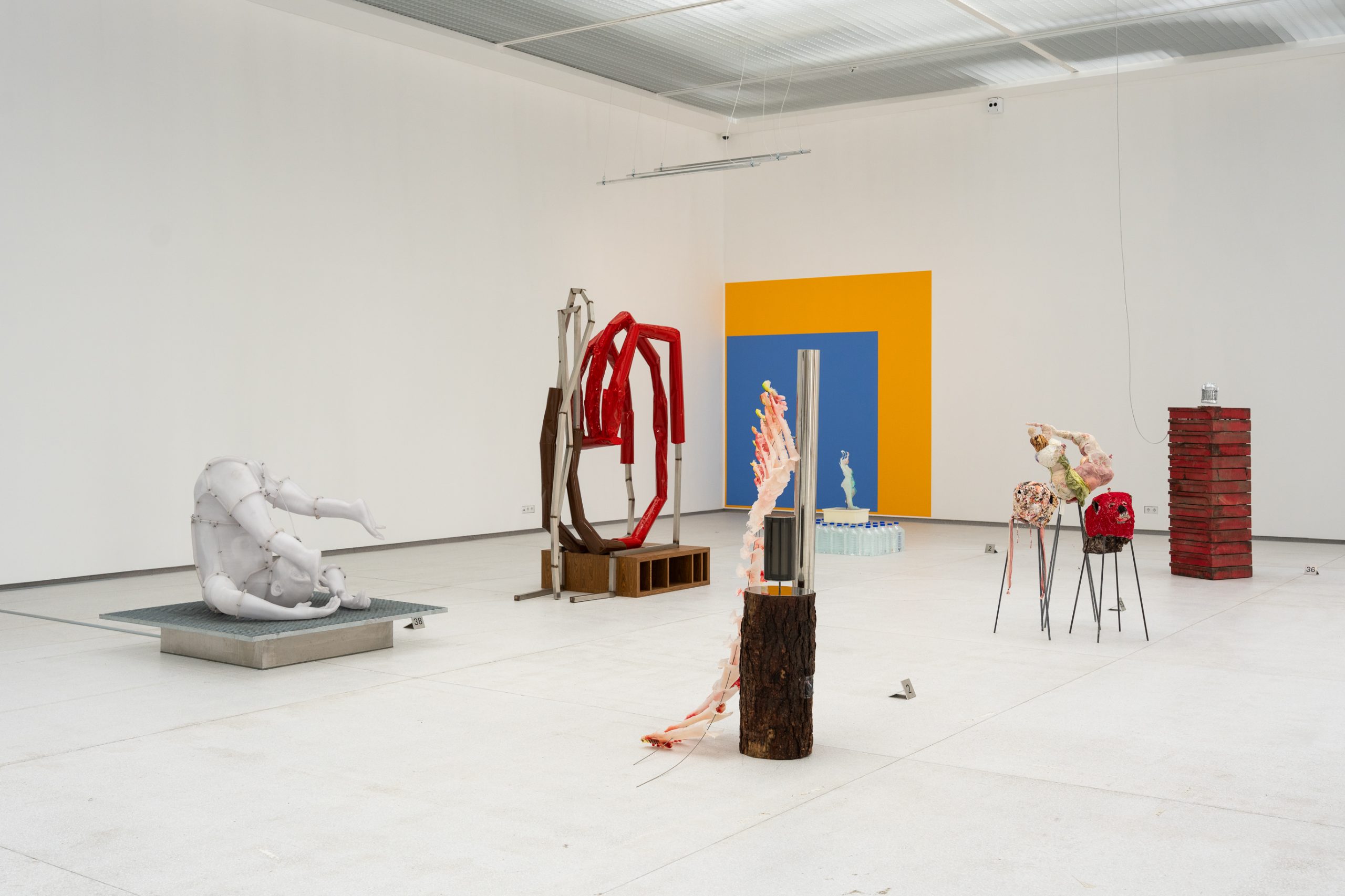
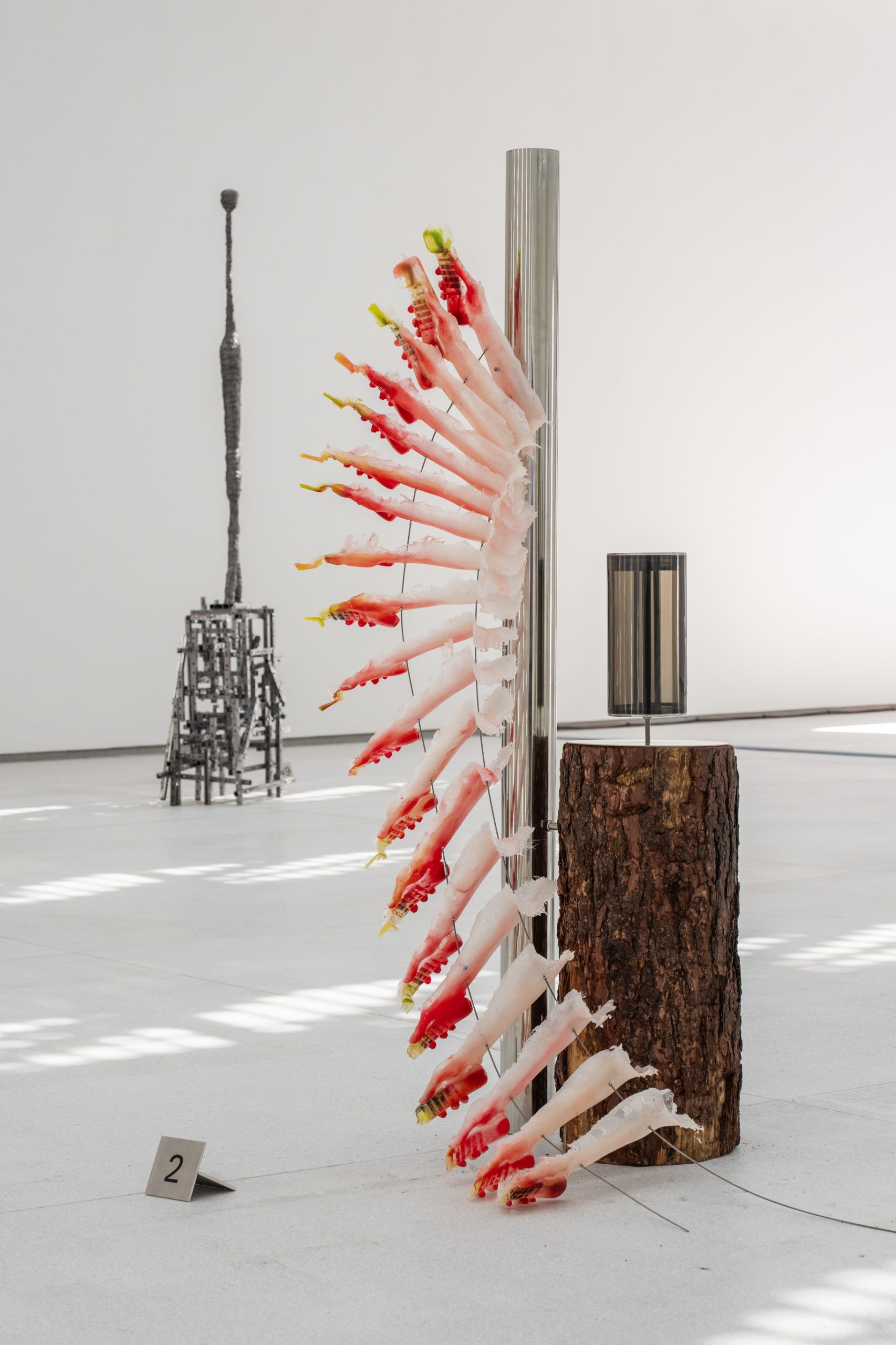
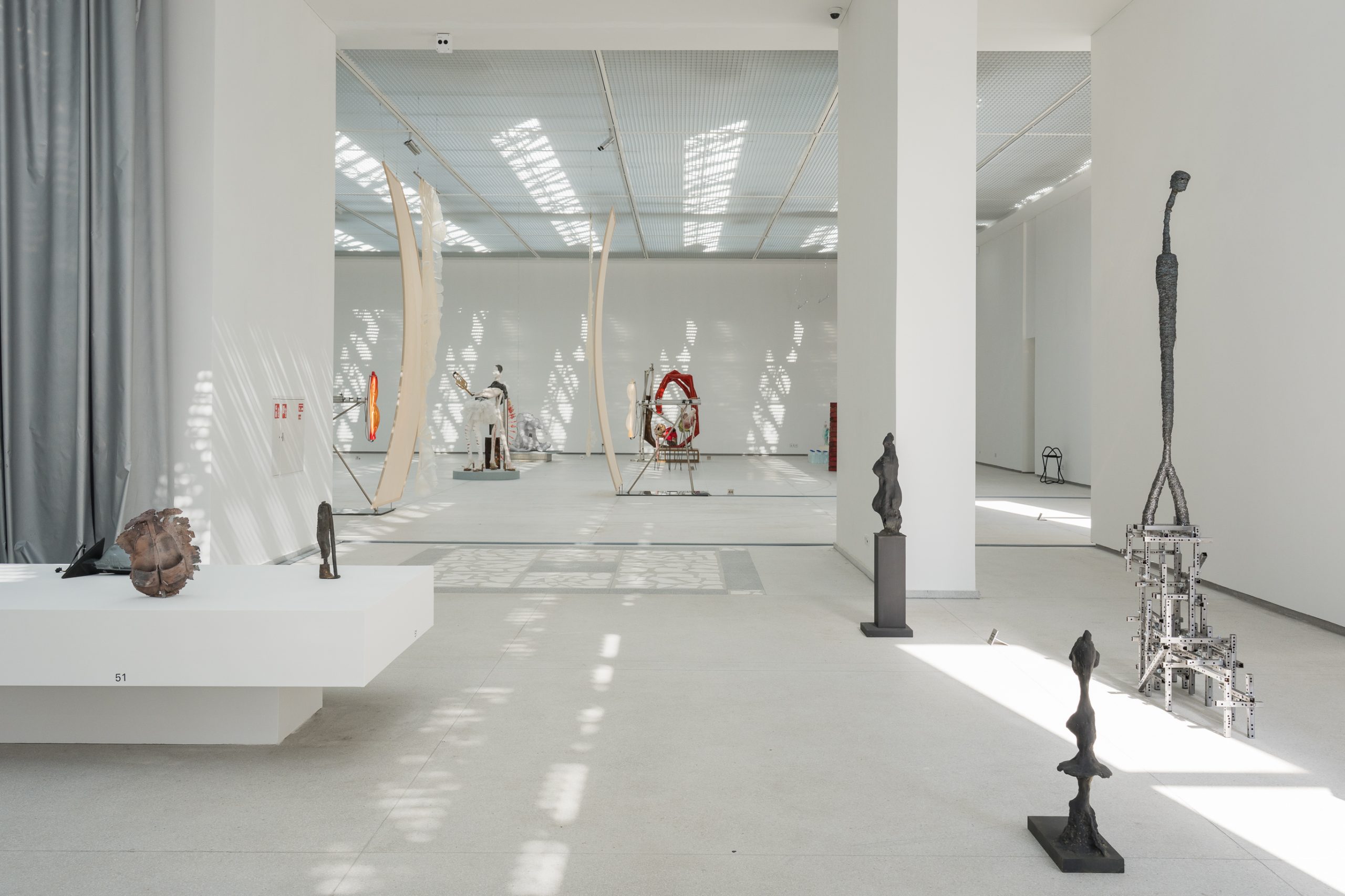
Rebecca Ackroyd, “Separation Anxiety”, 2024. Epoxy resin casts, threaded bars, mirrored steel, stainless steel, colour film, tree trunk, printed image, 180 × 76 × 141 cm. Courtesy of the artist. Tomáš Roubal, “Web #3”, 2024. Steel, 226 × 55 × 31 cm. Courtesy of the artist. “Superglue, or Inventing the Friend”, Contemporary Art Centre, 2026. Photographer: Andrej Vasilenko
“Superglue, or Inventing the Friend”, exhibition view. Contemporary Art Centre, 2026. Curator: Valentinas Klimašauskas. Photographer: Andrej Vasilenko
“Superglue, or Inventing the Friend”, exhibition view. Contemporary Art Centre, 2026. Curator: Valentinas Klimašauskas. Photographer: Andrej Vasilenko
“Superglue, or Inventing the Friend”, exhibition view. Contemporary Art Centre, 2026. Curator: Valentinas Klimašauskas. Photographer: Andrej Vasilenko
“Superglue, or Inventing the Friend”, exhibition view. Contemporary Art Centre, 2026. Curator: Valentinas Klimašauskas. Photographer: Andrej Vasilenko
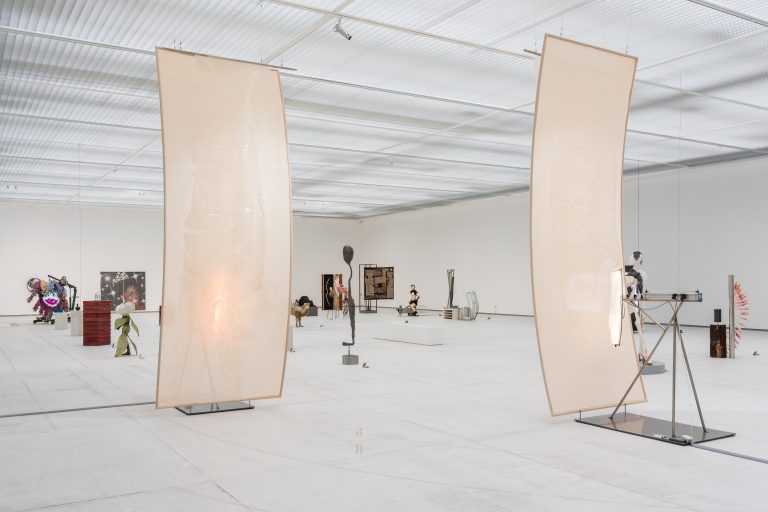
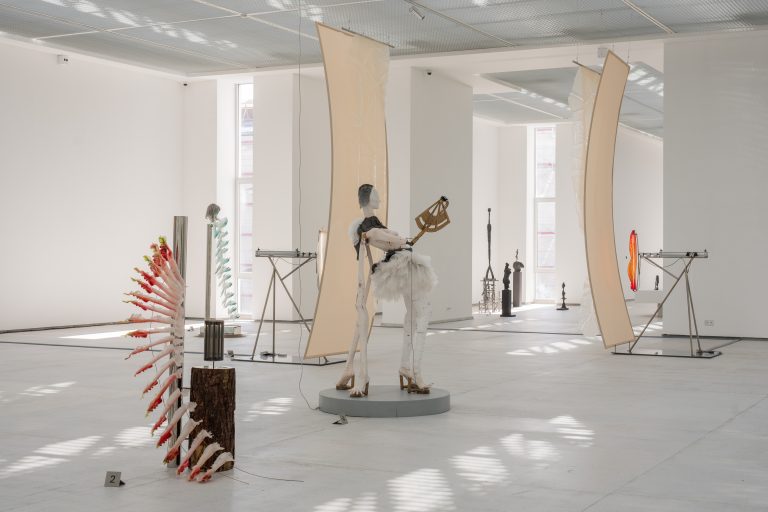
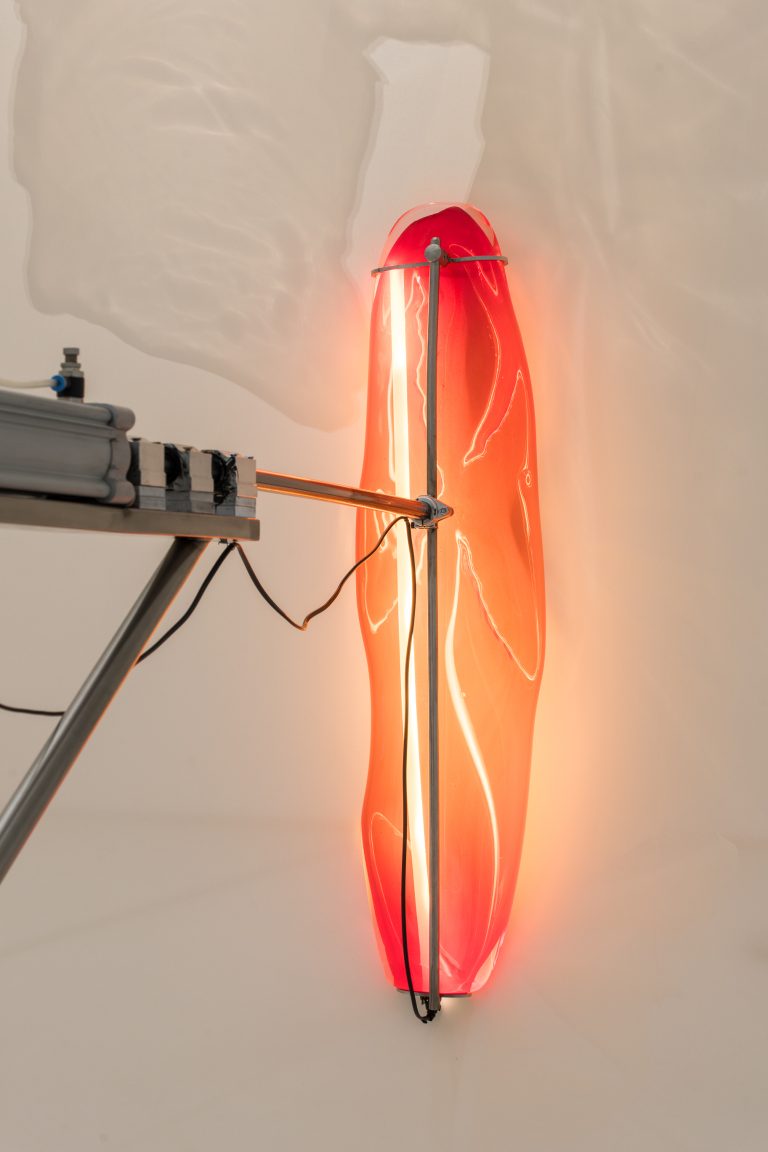
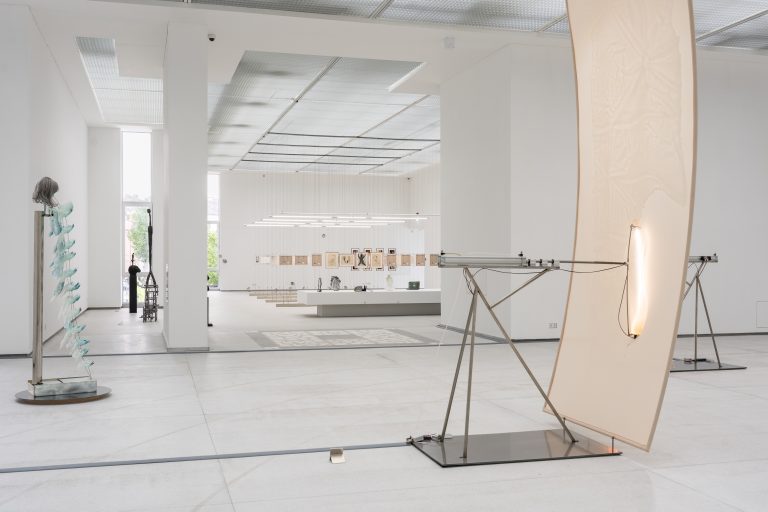
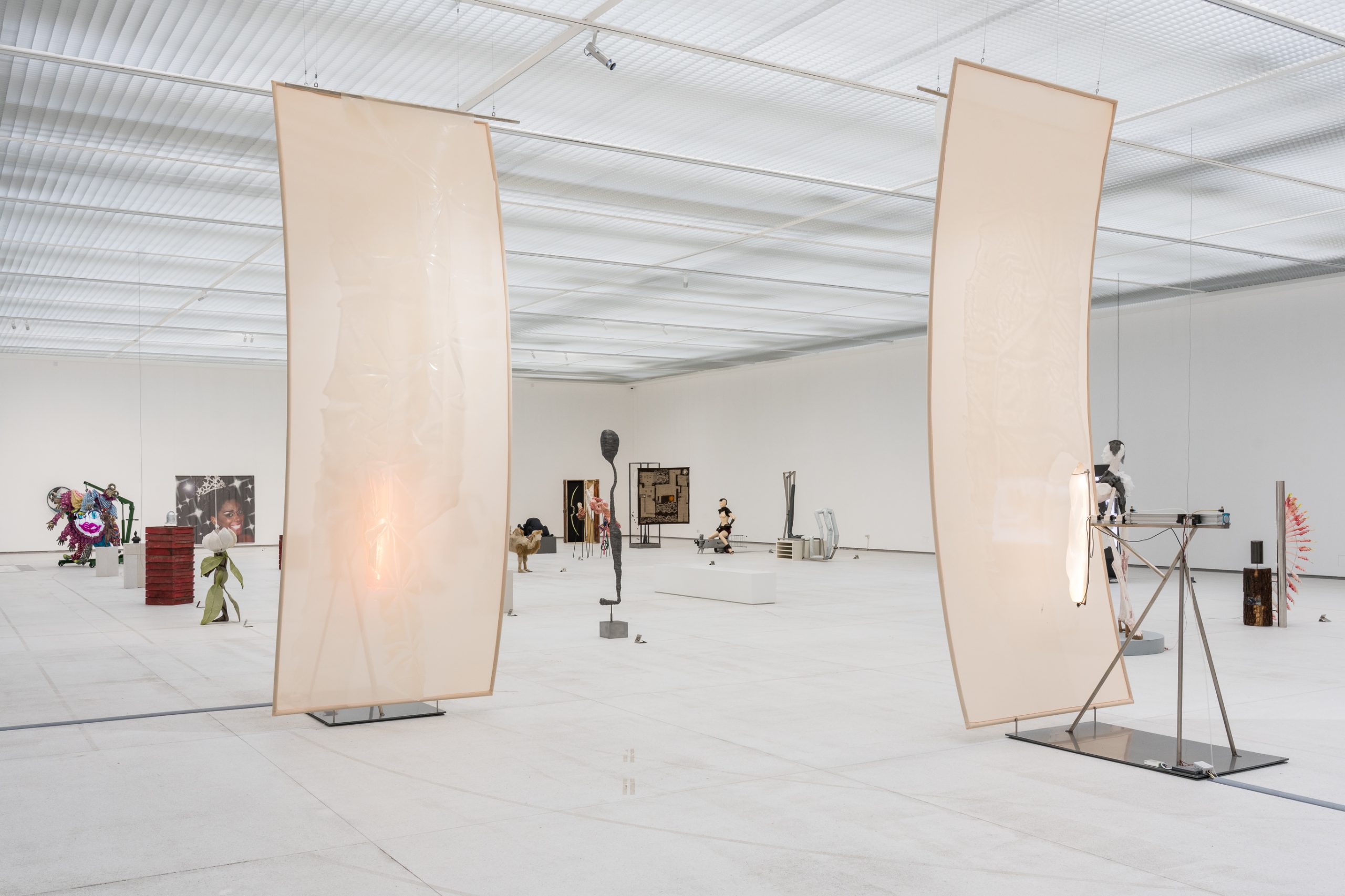
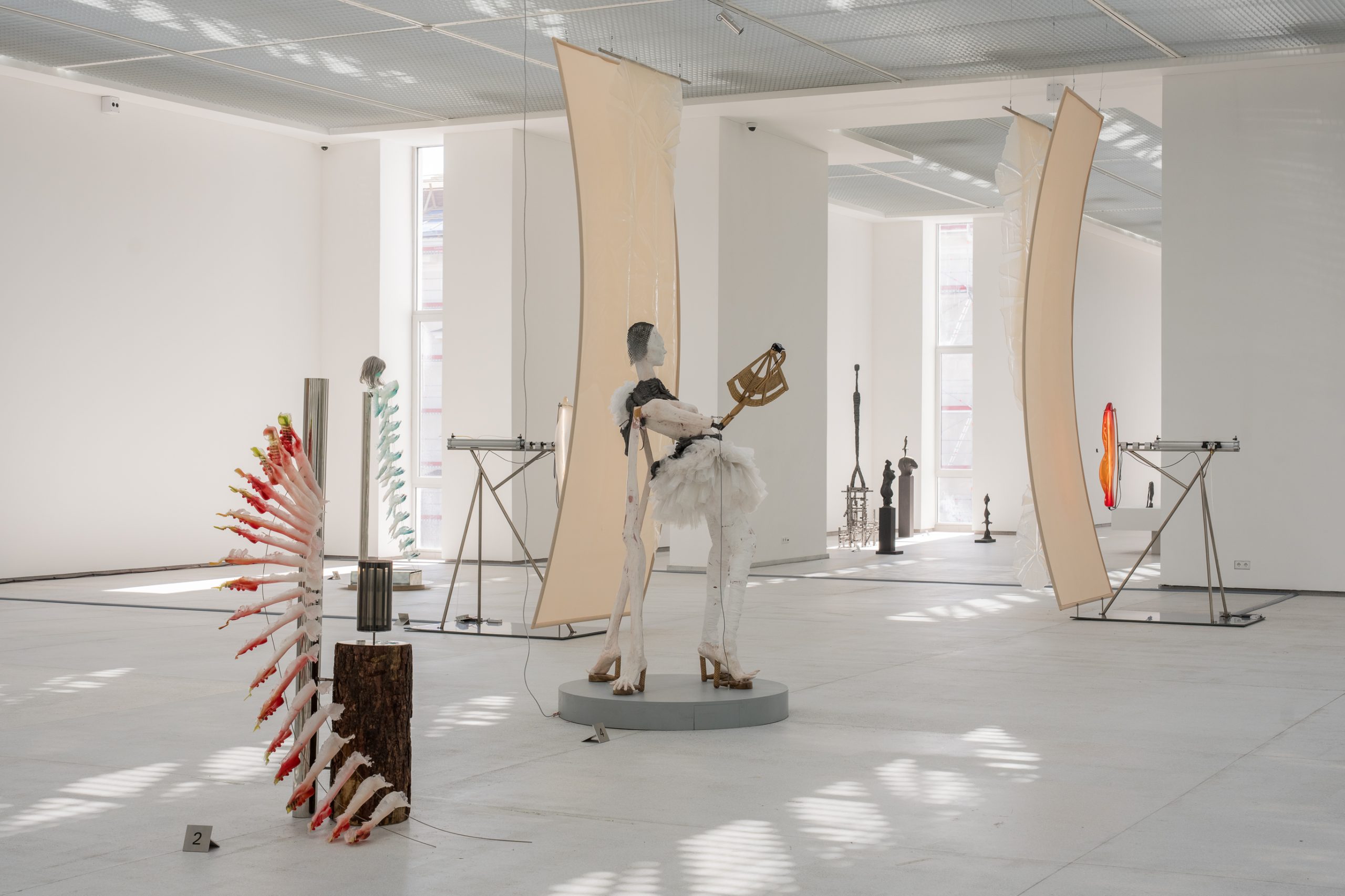
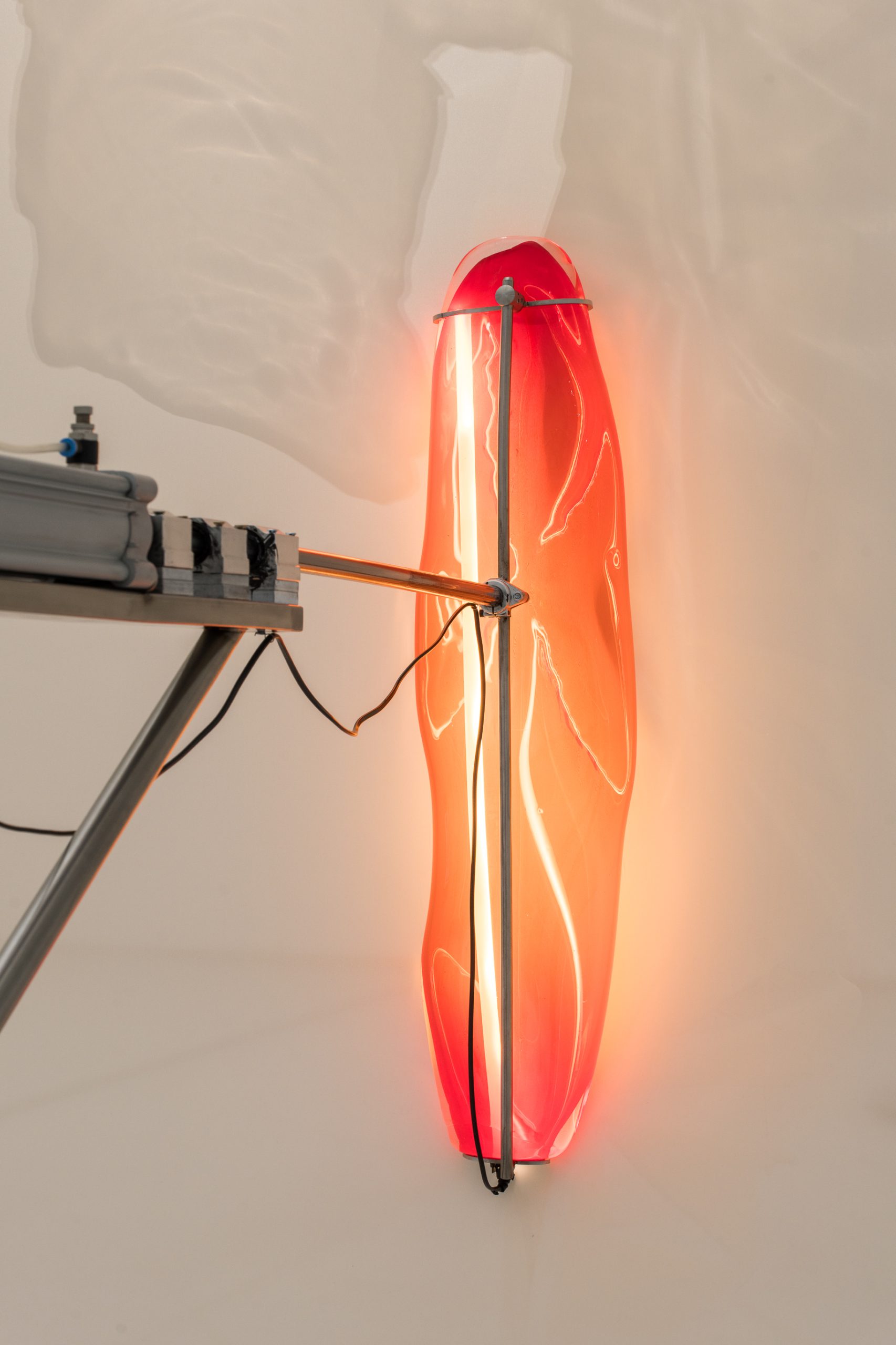
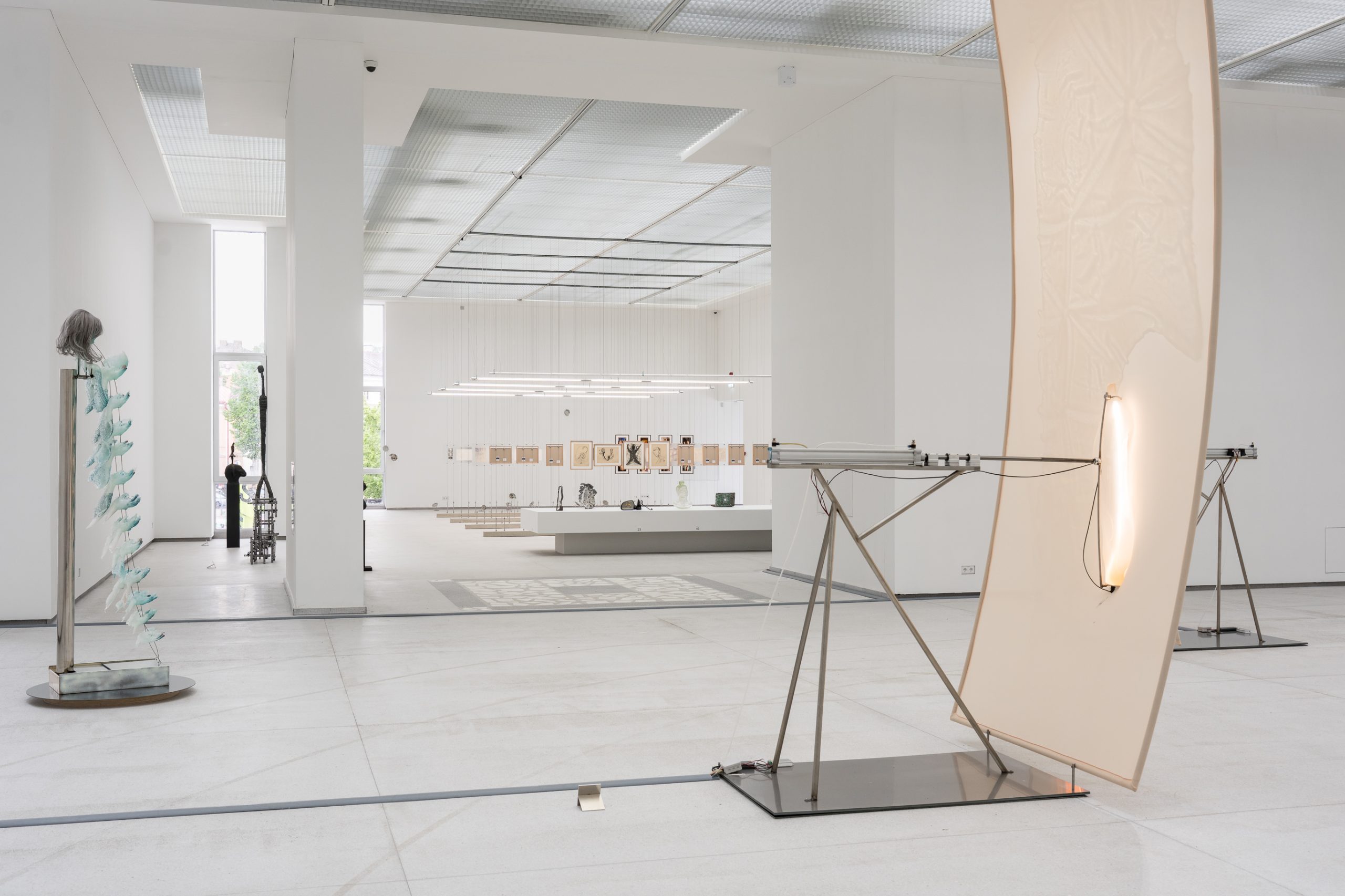
Pakui Hardware, “Thresholds”, 2025. Installation: two kinetic sculptures (glass, fabric, silicone, stainless steel, LED lighting, pneumatic actuators, controllers, plastic tubes), dimensions variable. Courtesy of the artists and carlier | gebauer gallery, Berlin and Madrid. “Superglue, or Inventing the Friend”, Contemporary Art Centre, 2026. Photographer: Andrej Vasilenko
“Superglue, or Inventing the Friend”, exhibition view. Contemporary Art Centre, 2026. Curator: Valentinas Klimašauskas. Photographer: Andrej Vasilenko
“Superglue, or Inventing the Friend”, exhibition view. Contemporary Art Centre, 2026. Curator: Valentinas Klimašauskas. Photographer: Andrej Vasilenko
“Superglue, or Inventing the Friend”, exhibition view. Contemporary Art Centre, 2026. Curator: Valentinas Klimašauskas. Photographer: Andrej Vasilenko
“Superglue, or Inventing the Friend”, exhibition view. Contemporary Art Centre, 2026. Curator: Valentinas Klimašauskas. Photographer: Andrej Vasilenko
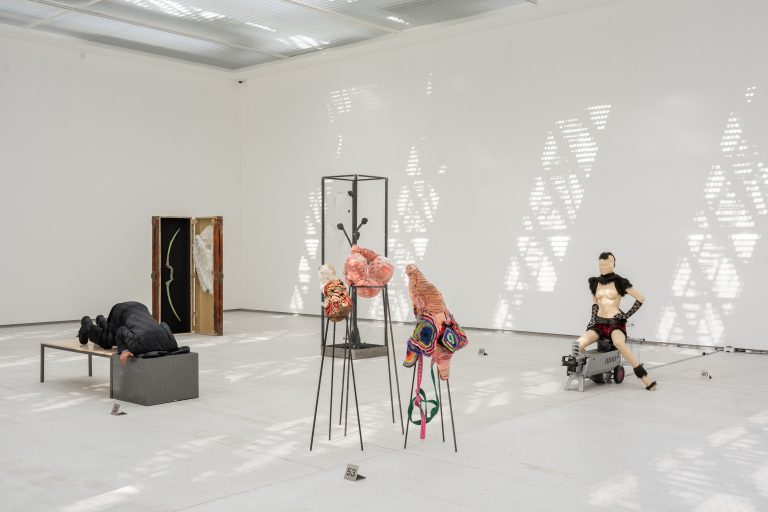
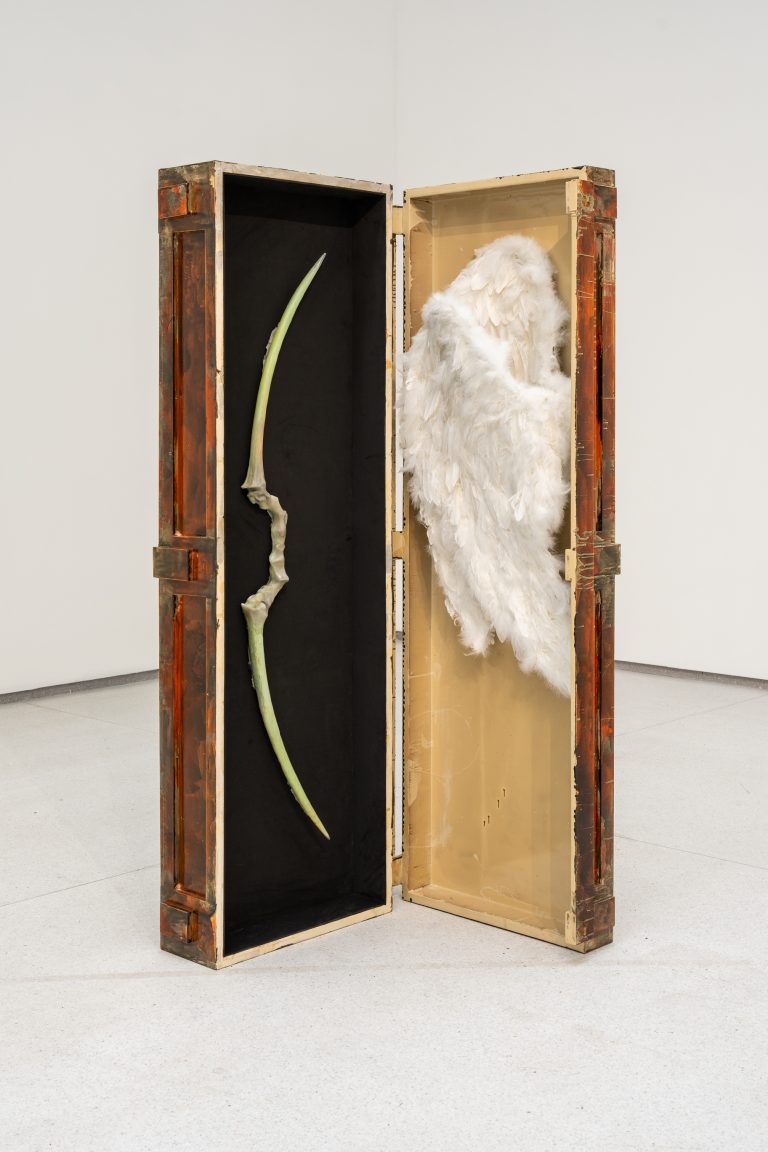
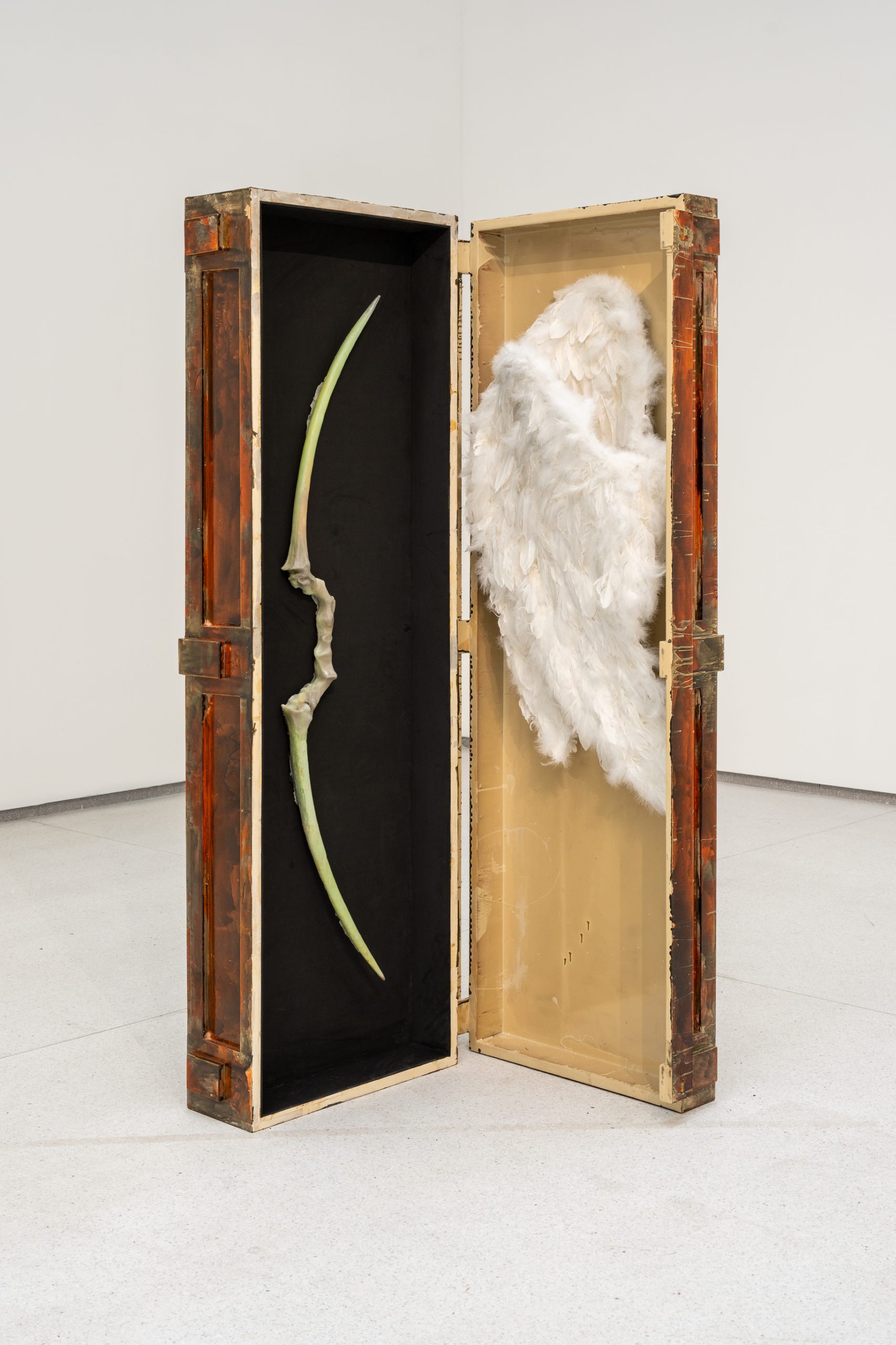
Isaac Lythgoe, “Eros vs Cupid”, 2018. Plywood, fillers, polyurethane rubber, polyurethane paint, pigments, foam, polyurethane, feathers, 200 × 85 × 50 cm. Courtesy of the artist and Piktogram, Warsaw. “Superglue, or Inventing the Friend”, Contemporary Art Centre, 2026. Photographer: Andrej Vasilenko
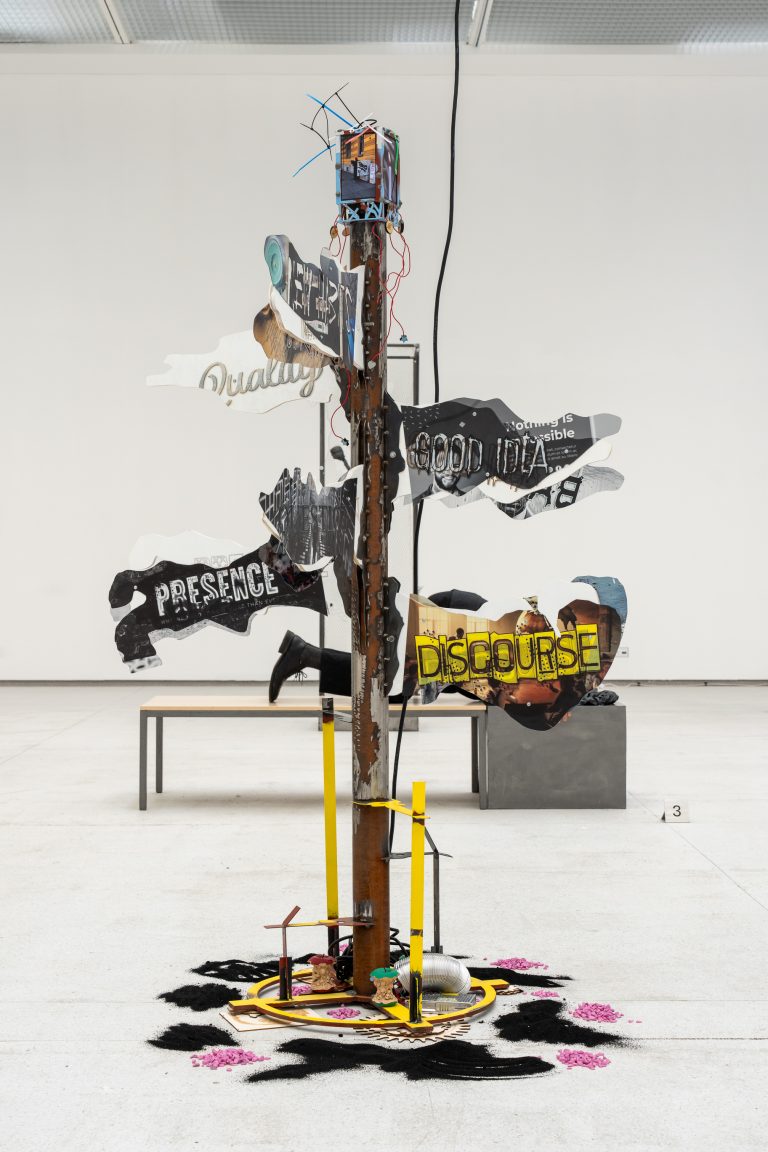
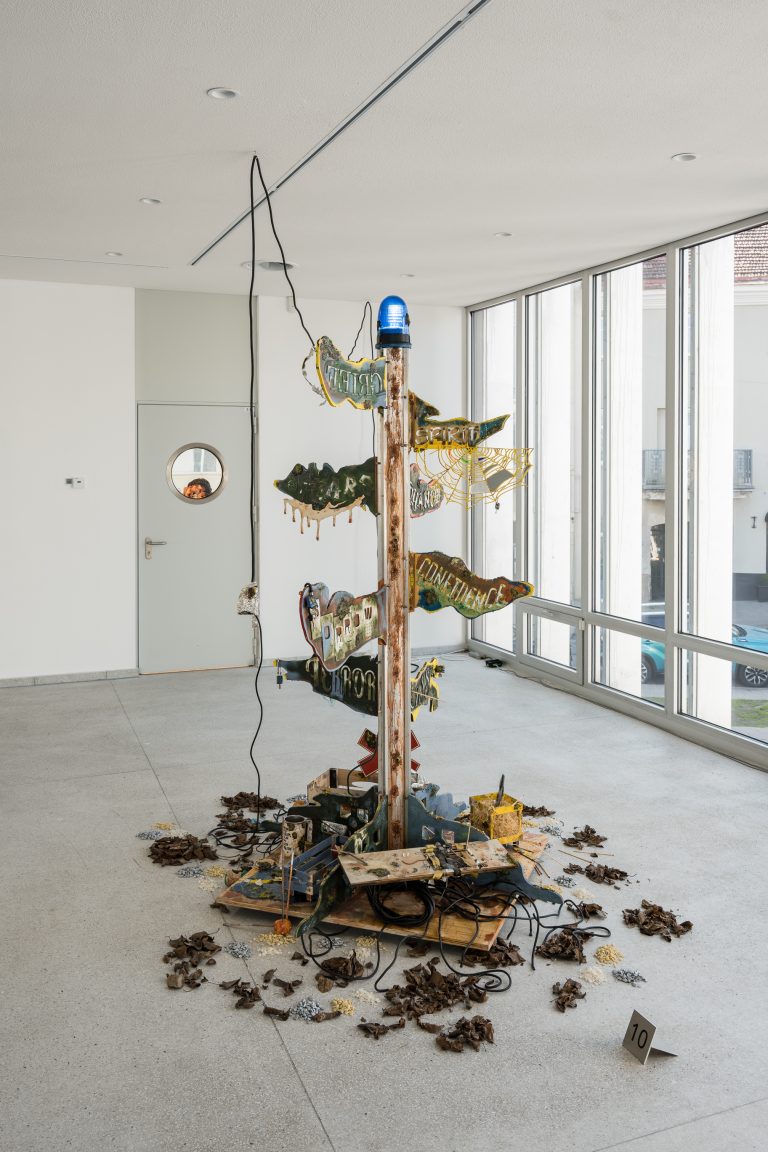
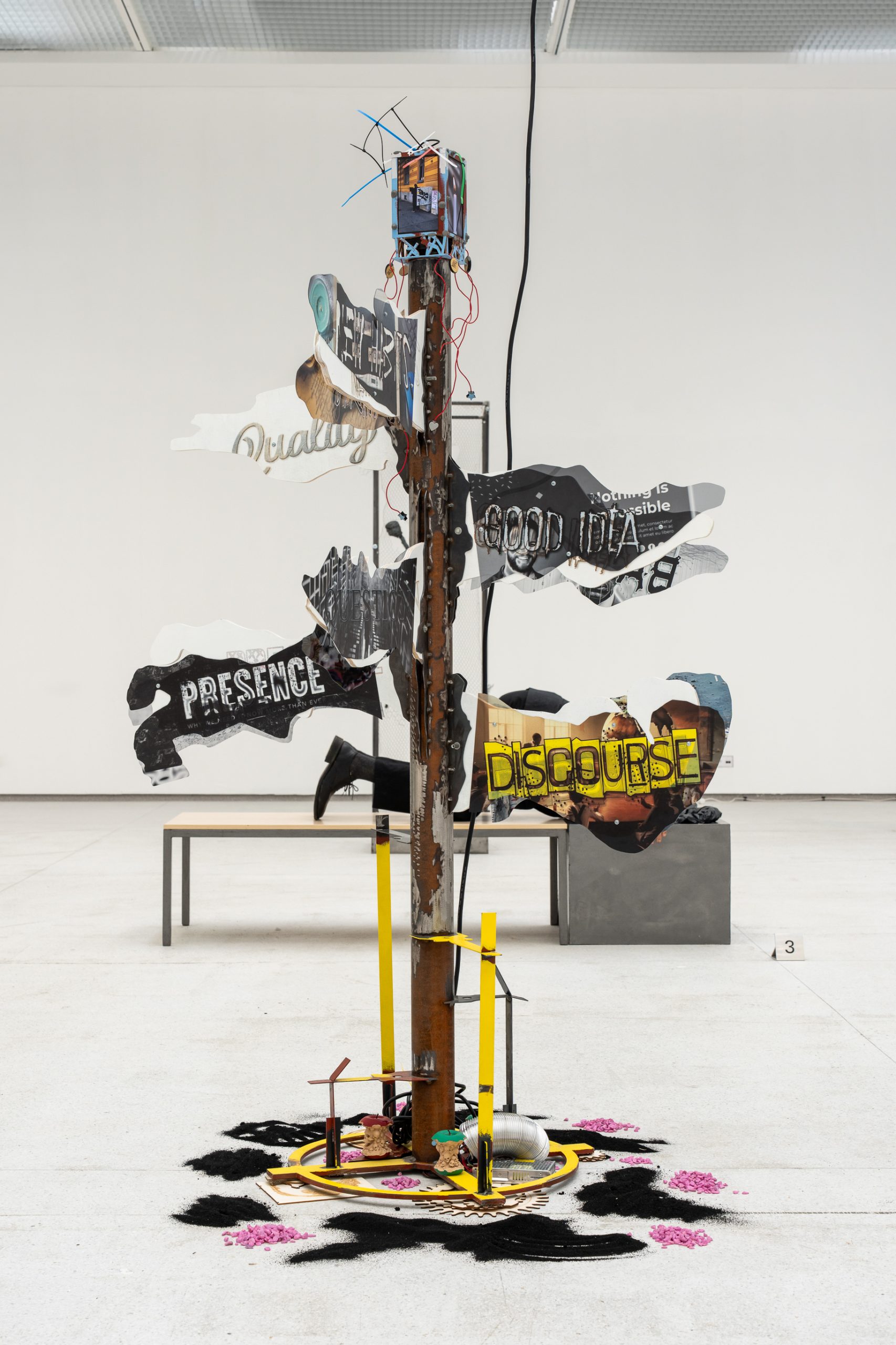
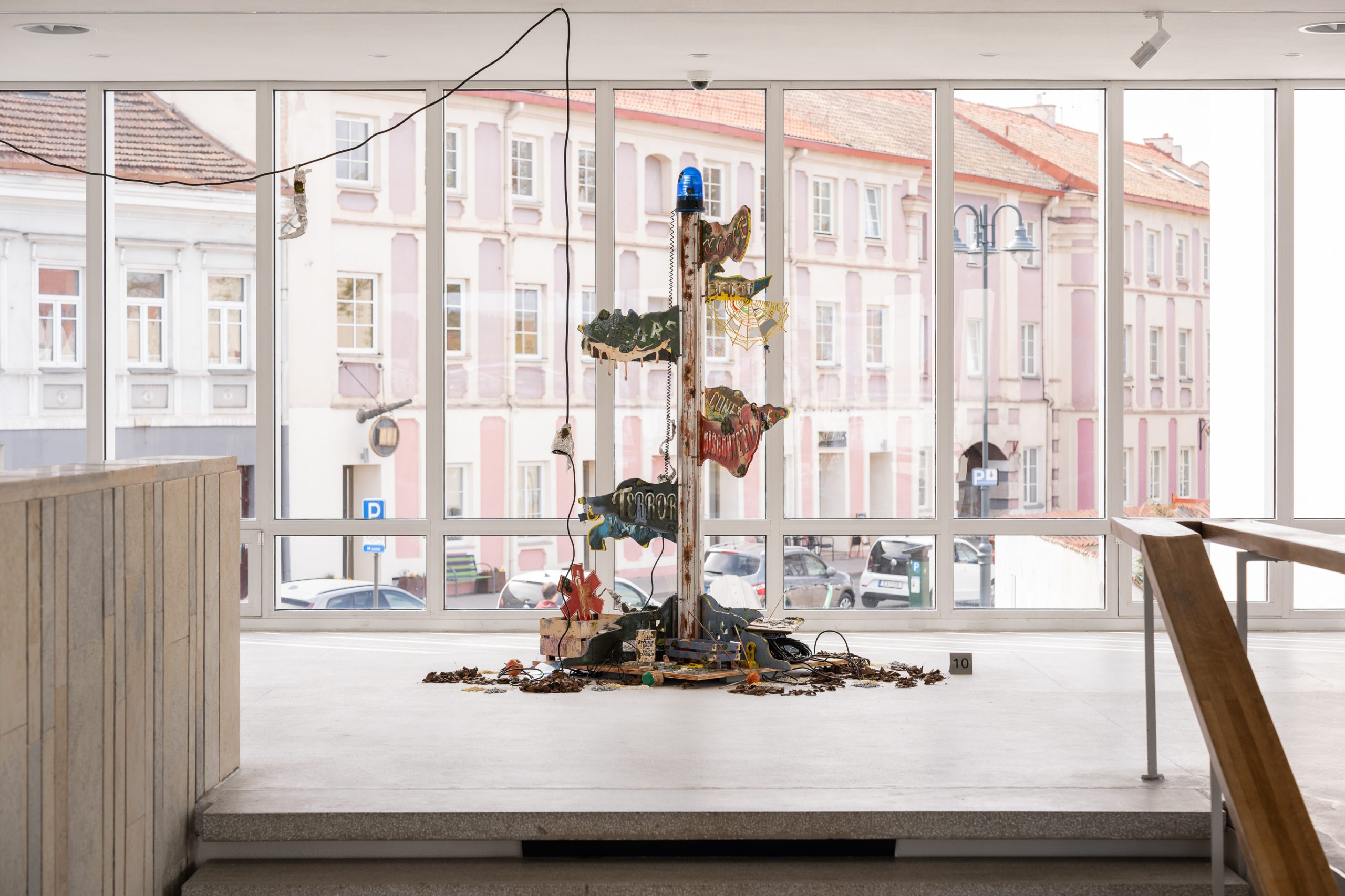
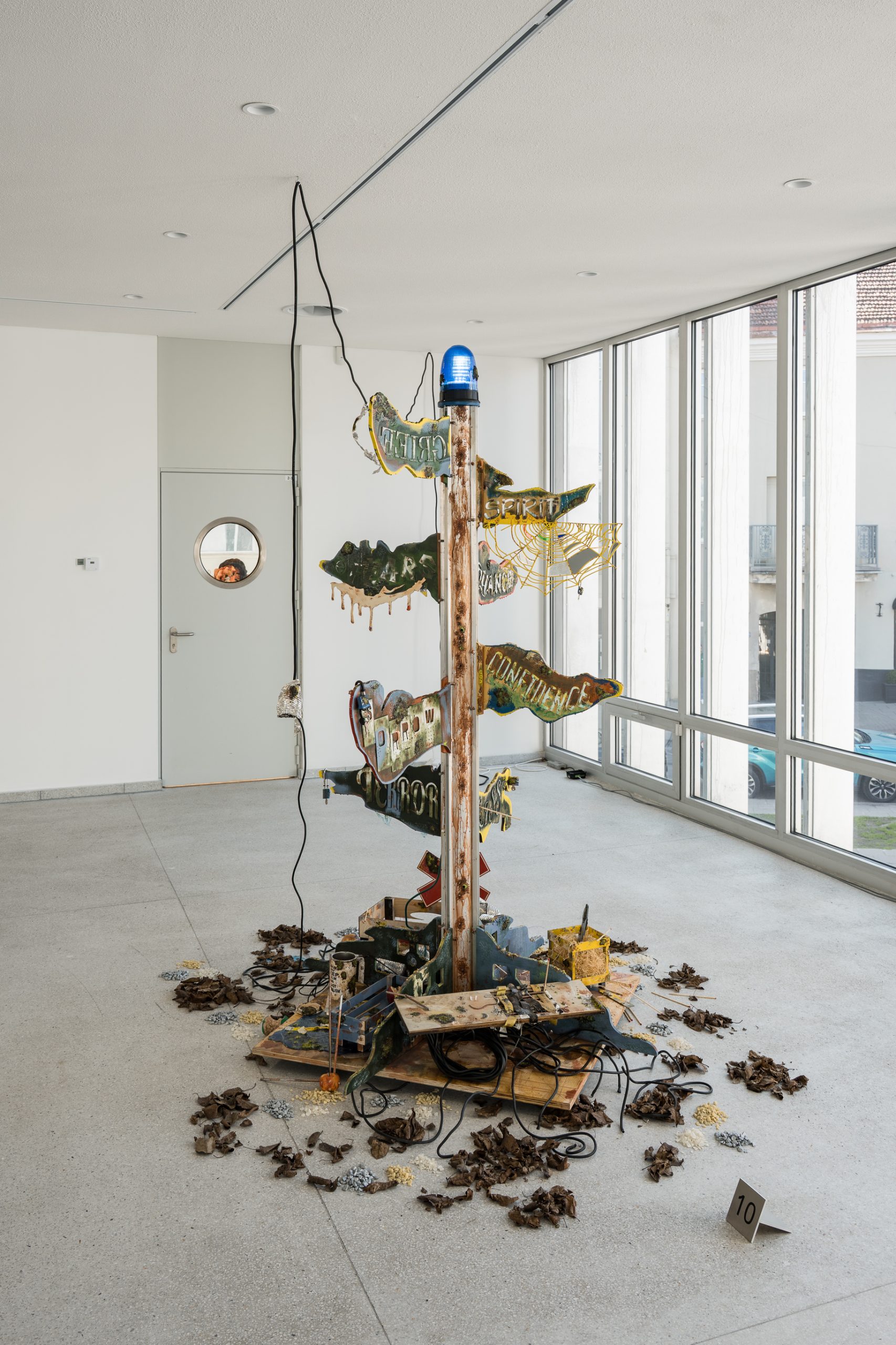
Jakub Choma, “Dead End”, 2025. Aluminium, plywood, UV print on wood, police siren light, padlocks, acrylic, UV resin, plexiglass, cables, Tyvek wristbands, false eyelashes, wire, wood shavings, custom-engraved matchboxes, UV print on plastic, steel, engraved plywood, aluminium tubes, engraved bread, thick gel solution, cork soil, automated robot arm, prop apples, automated rotating coffee cup, stickers, 222 × 220 × 140 cm. Courtesy of the artist. “Superglue, or Inventing the Friend”, Contemporary Art Centre, 2026. Photographer: Andrej Vasilenko
“Superglue, or Inventing the Friend”, exhibition view. Contemporary Art Centre, 2026. Curator: Valentinas Klimašauskas. Photographer: Andrej Vasilenko
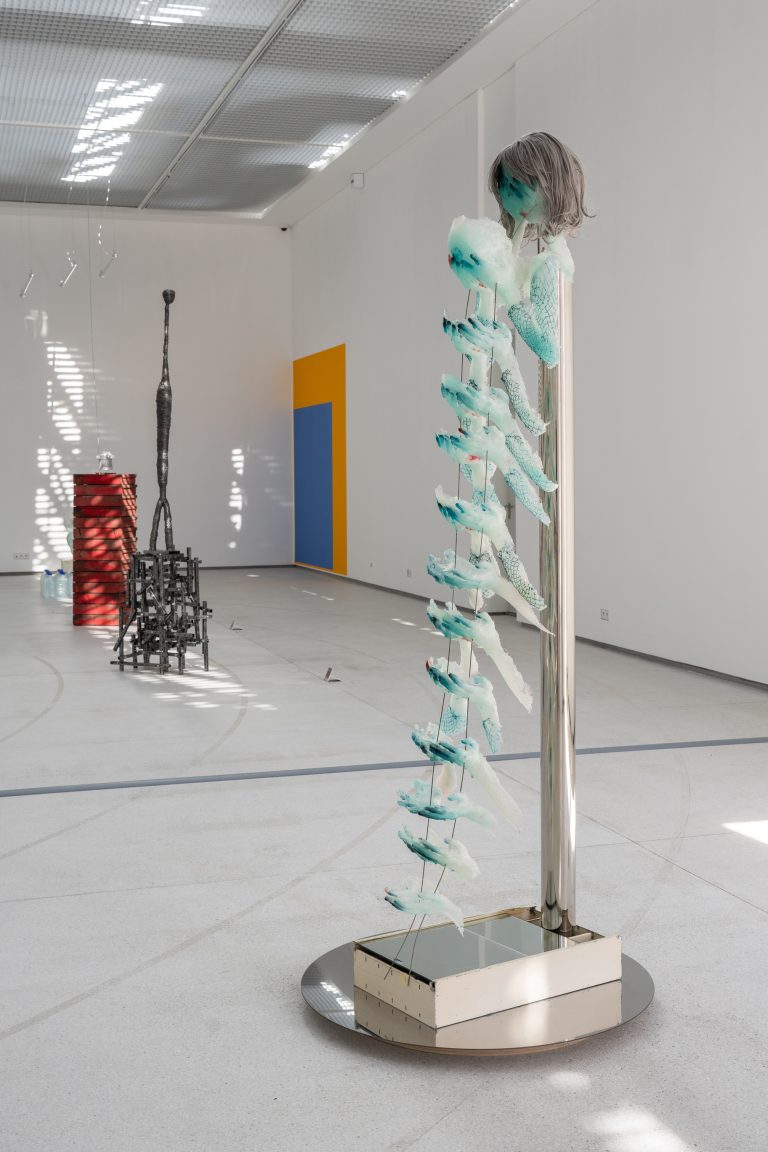
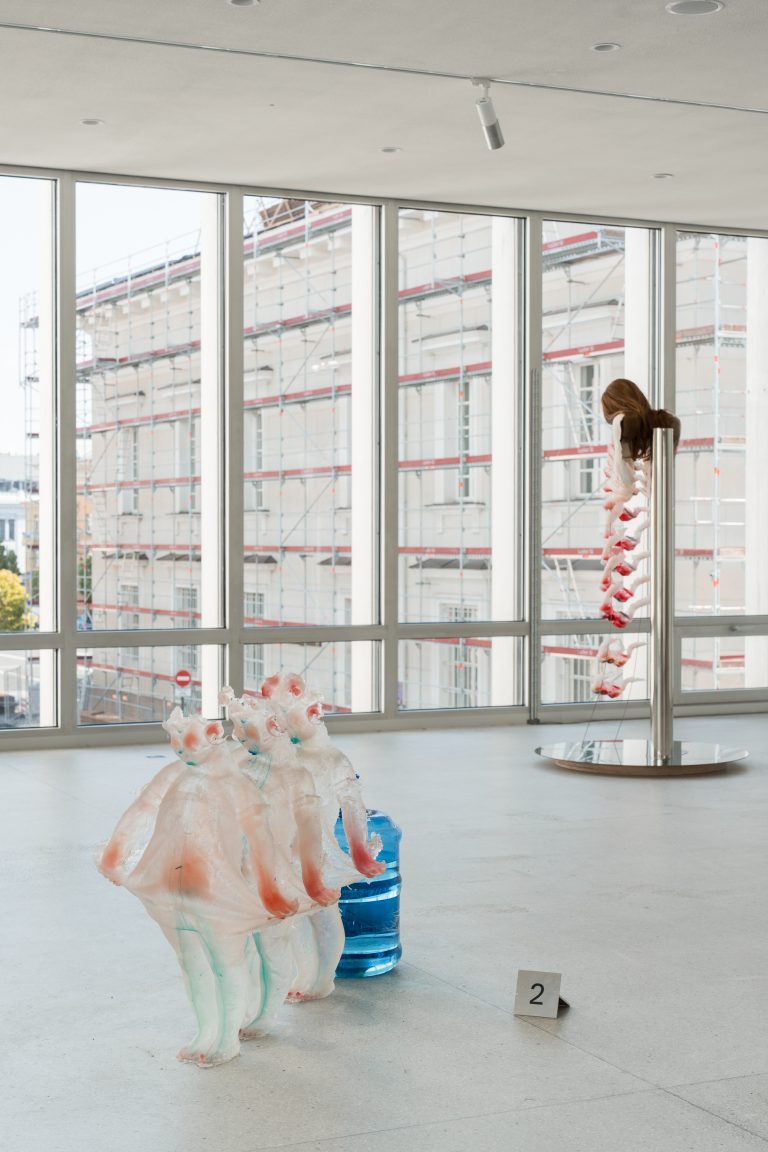
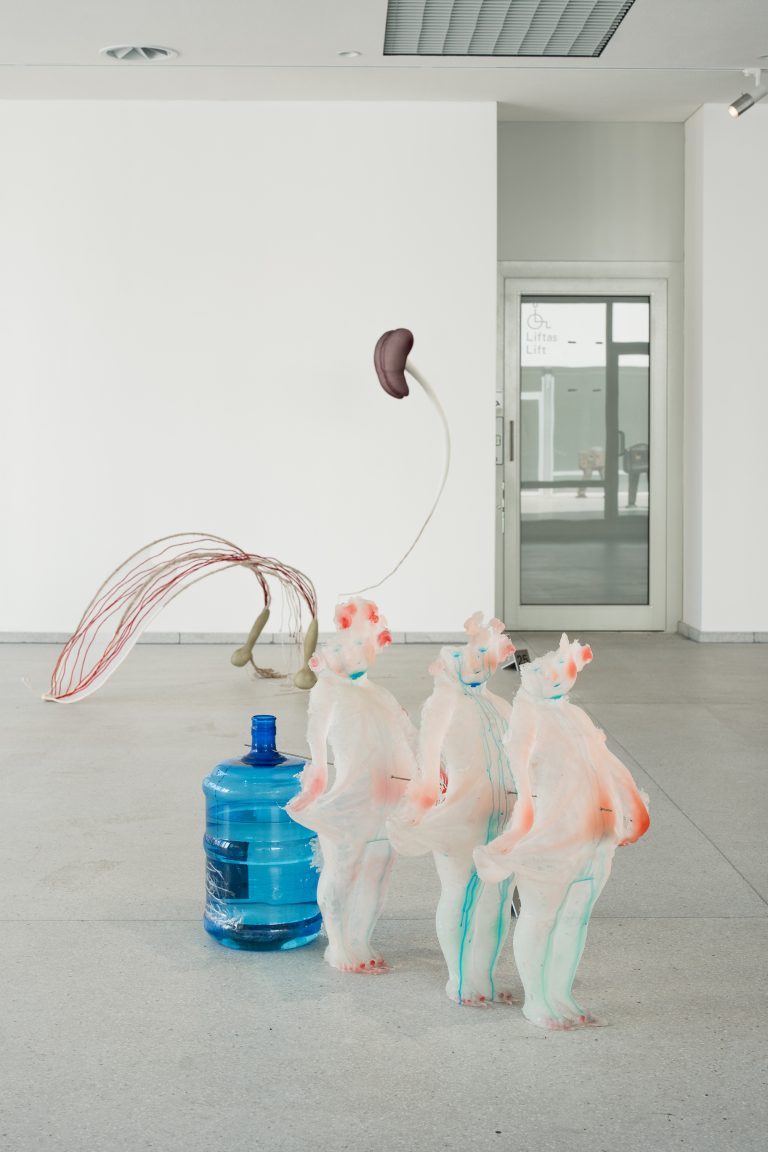
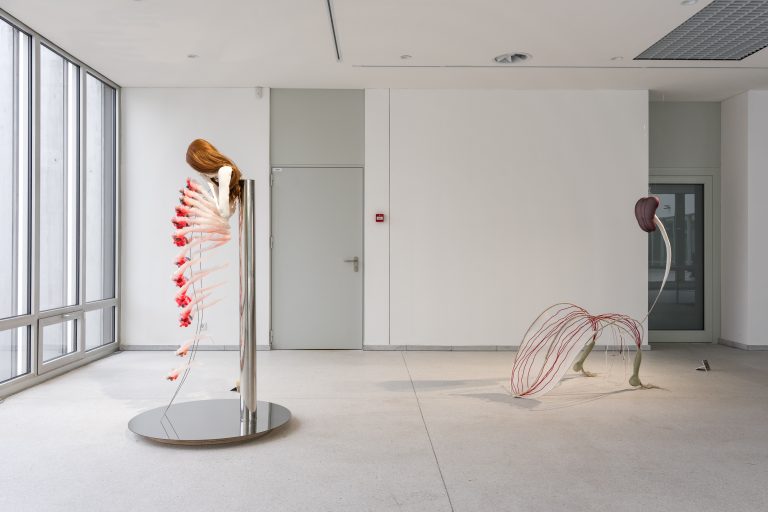
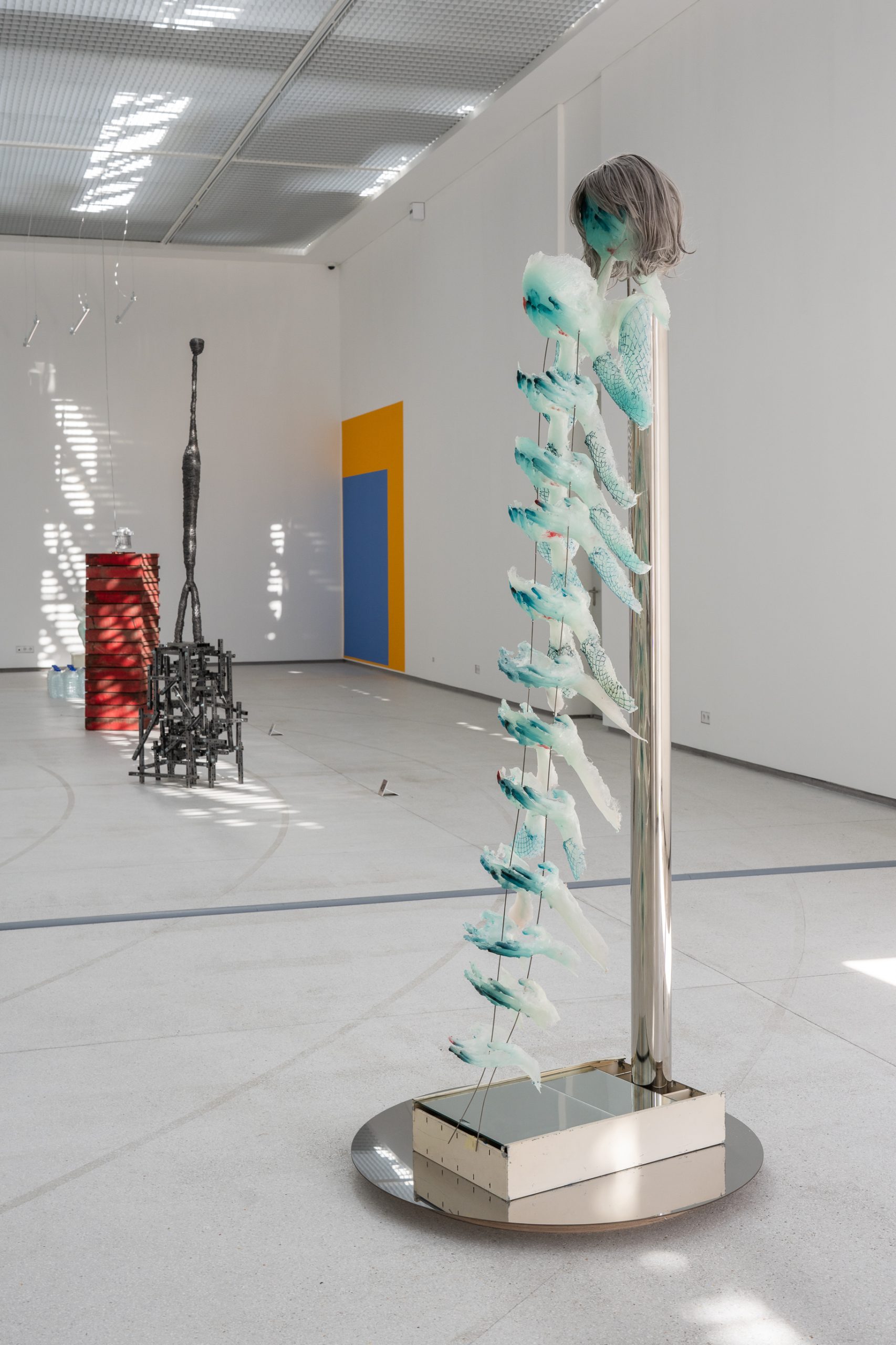
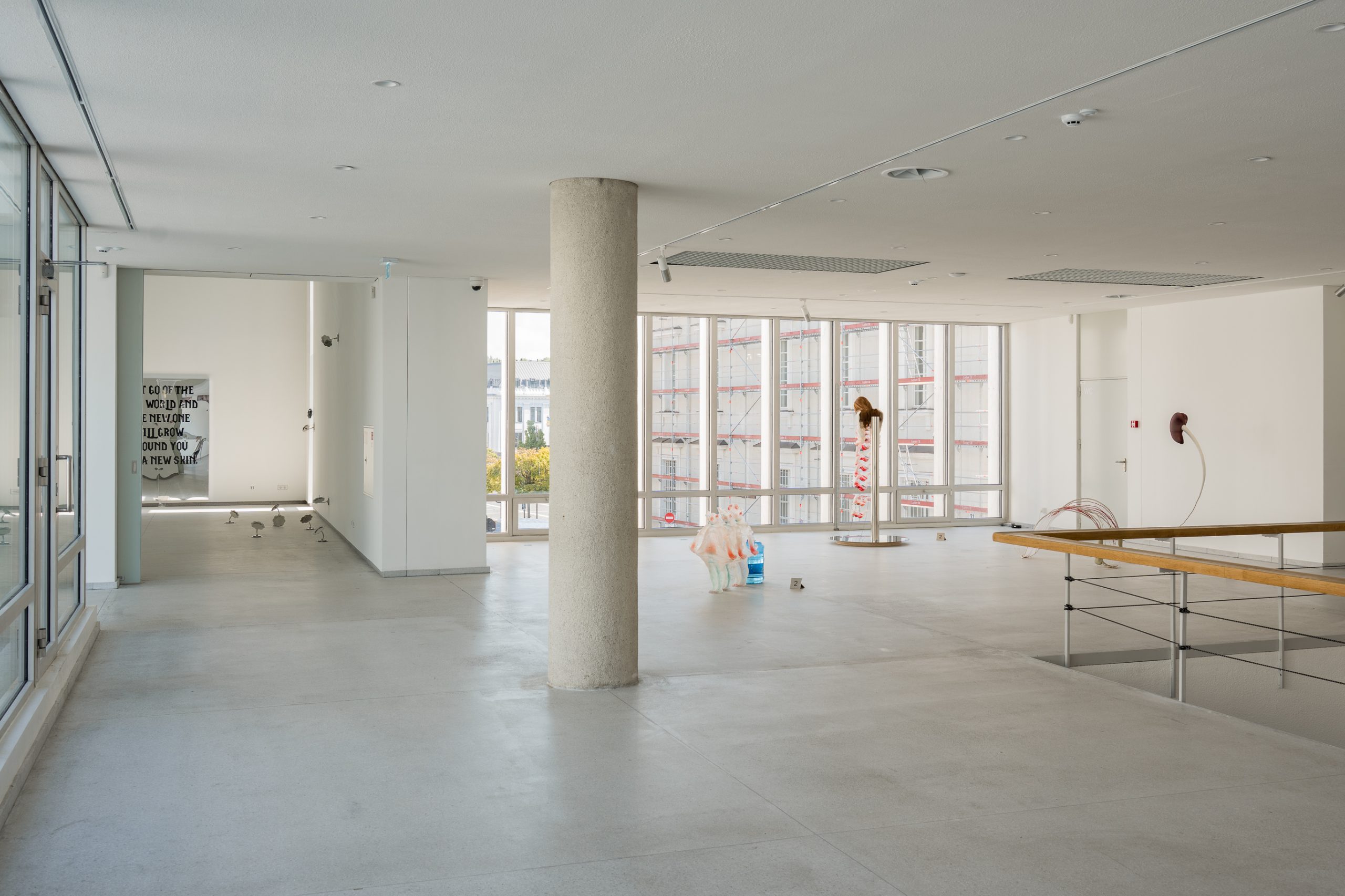
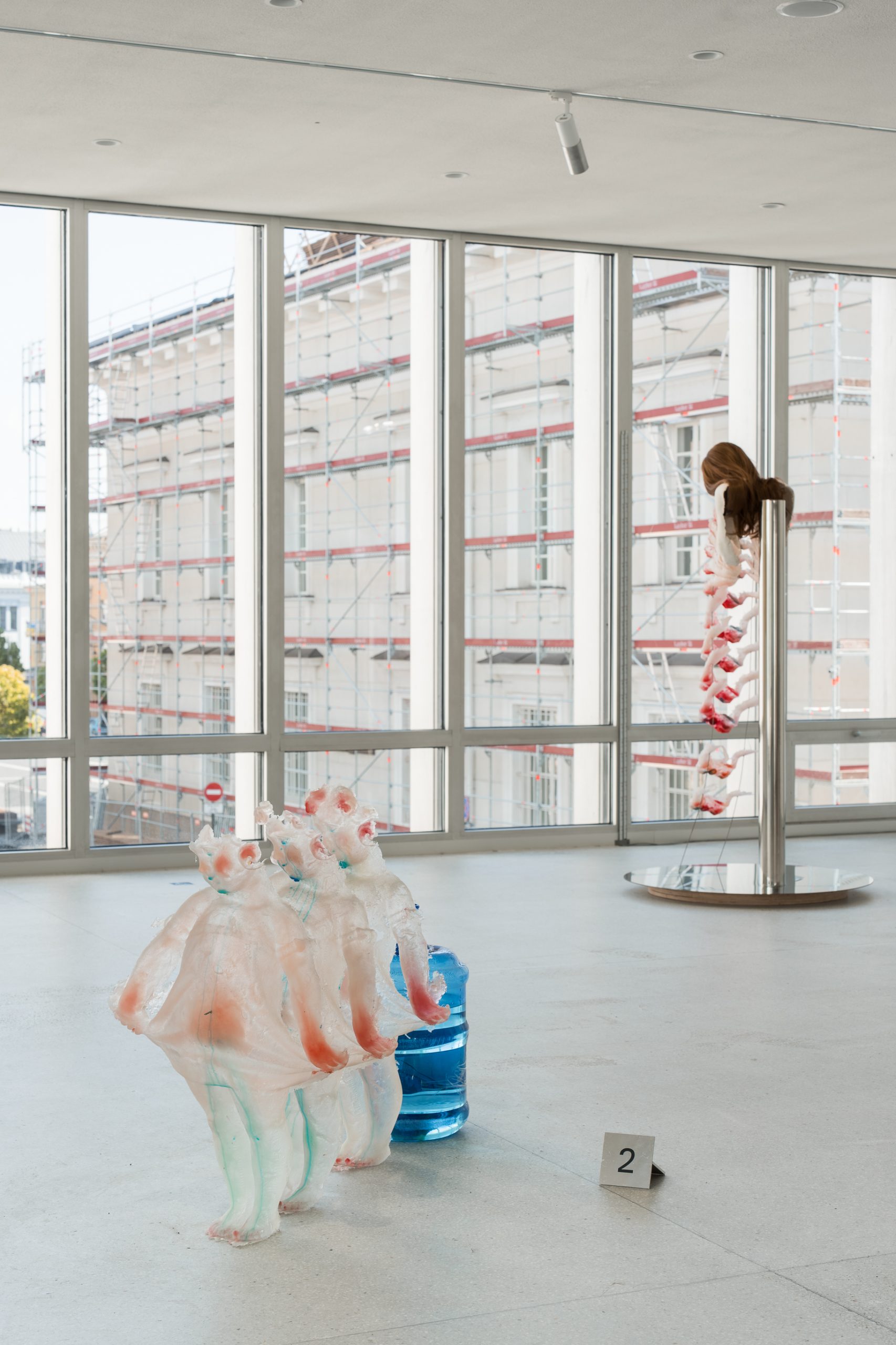
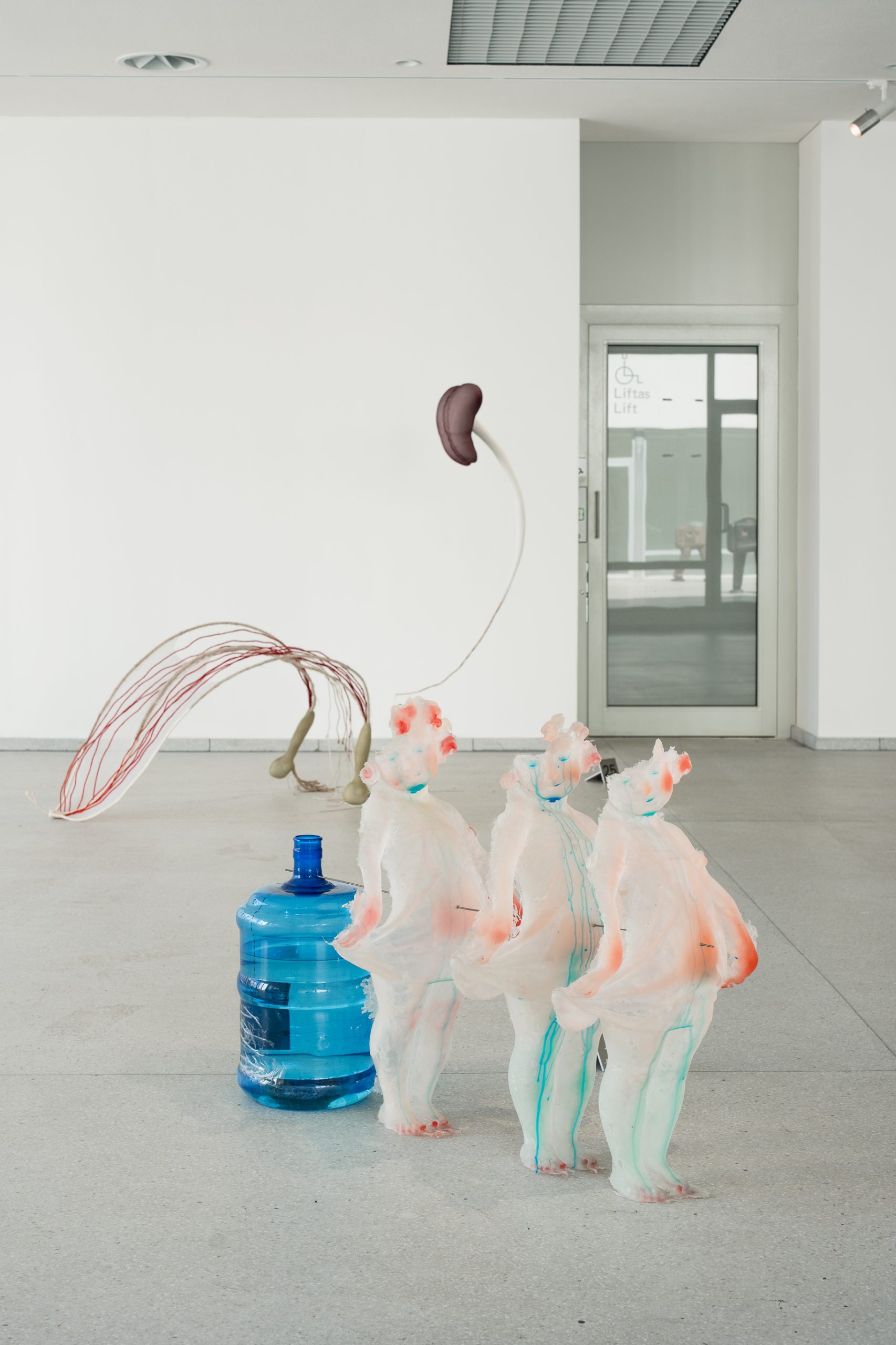
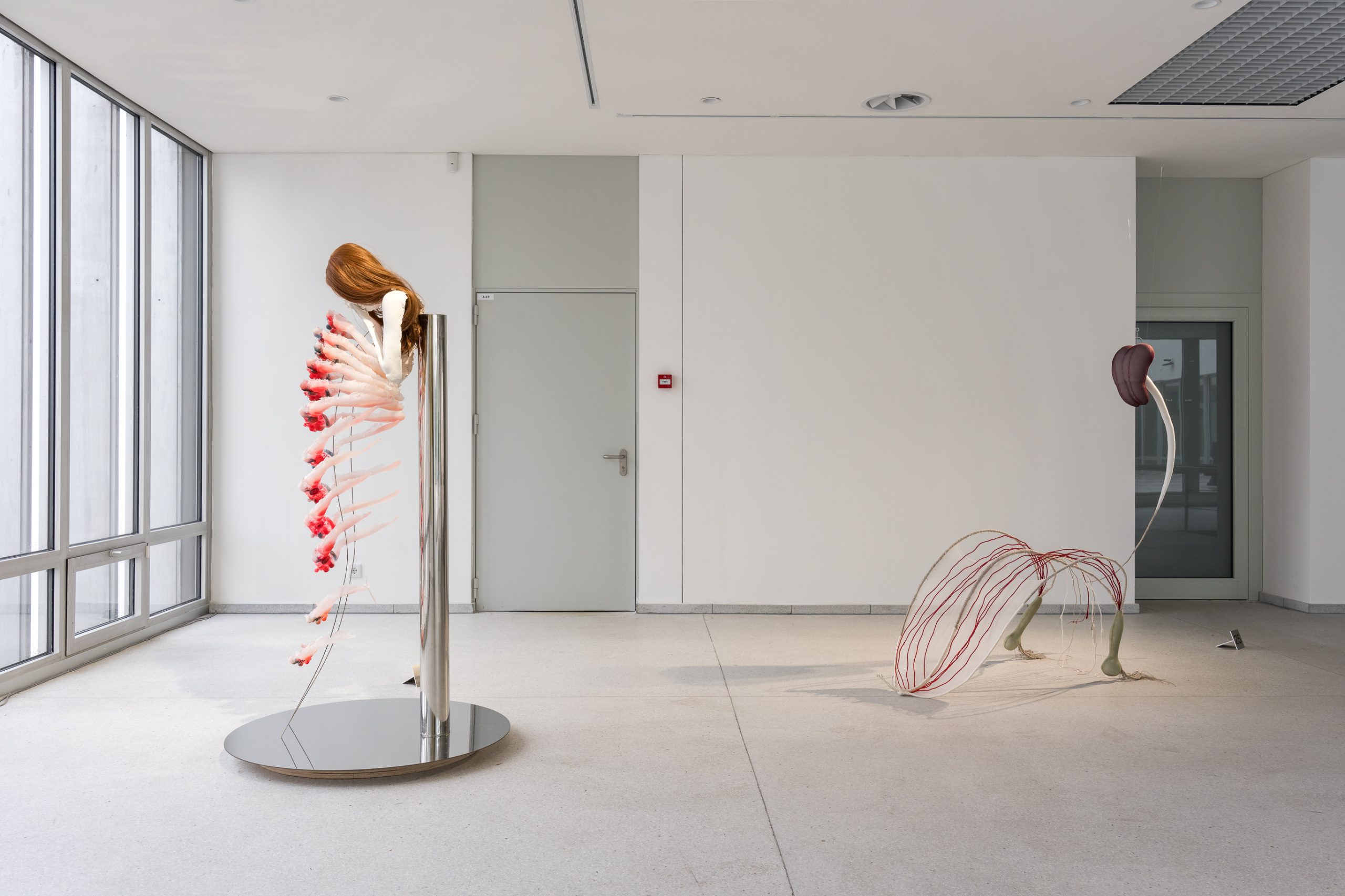
Rebecca Ackroyd, “Virgin Suicides”, 2024. Bottle of water, epoxy resin casts, printed image, threaded bar, 78 × 48 × 112 cm. Rebecca Ackroyd, “Slow Motion”, 2024. Epoxy resin casts, threaded bars, jesmonite cast, wig, mirrored steel, 178 × 57 × 38 cm. Courtesy of the artist. “Superglue, or Inventing the Friend”, Contemporary Art Centre, 2026. Photographer: Andrej Vasilenko
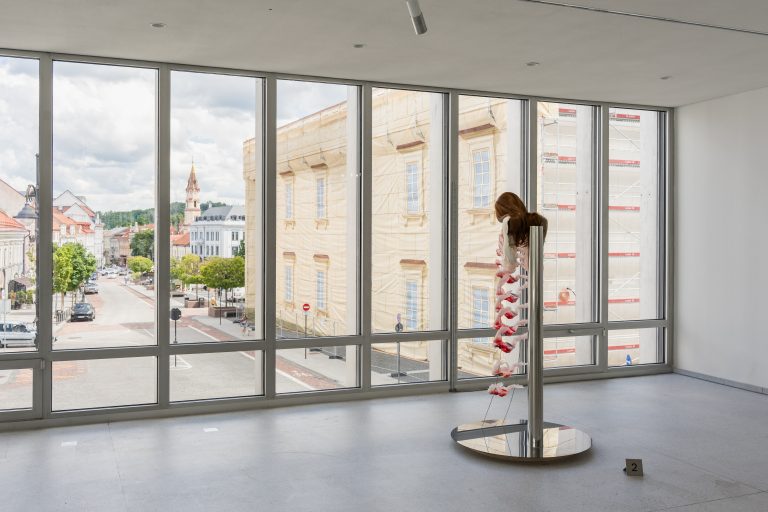
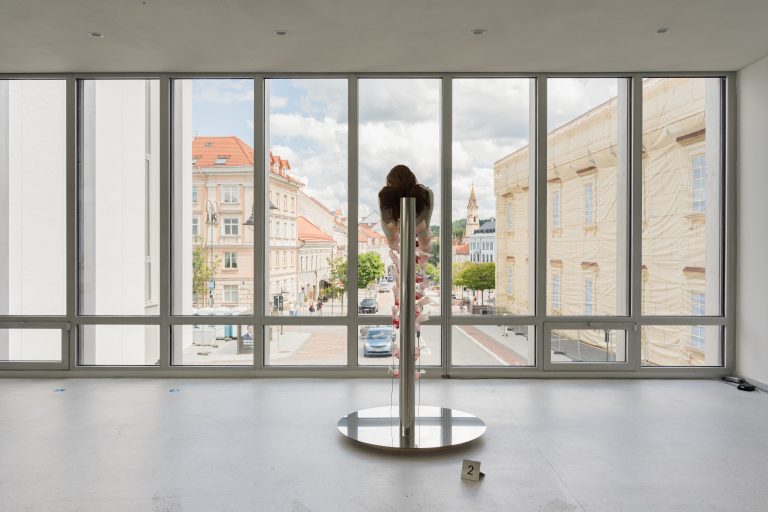
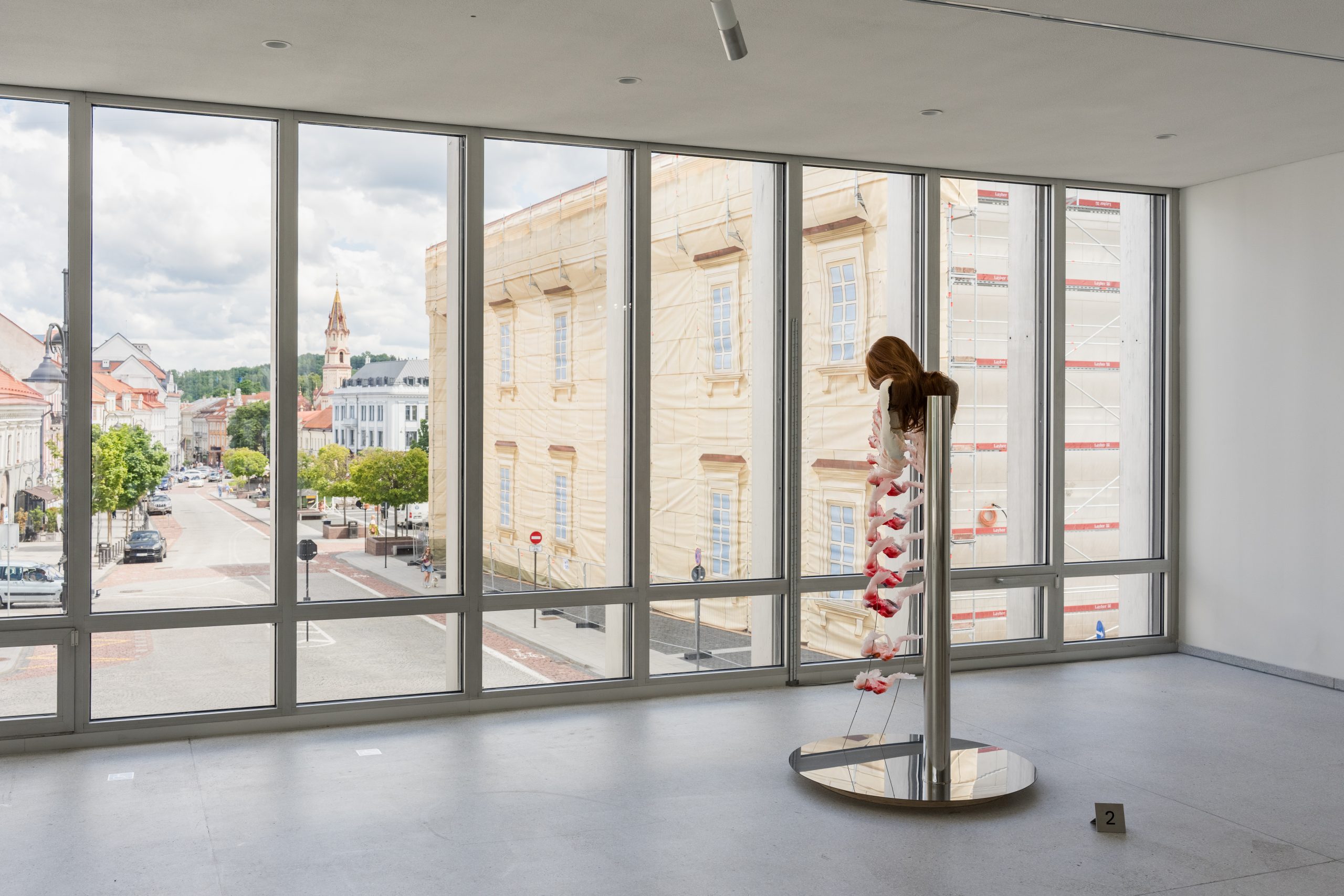
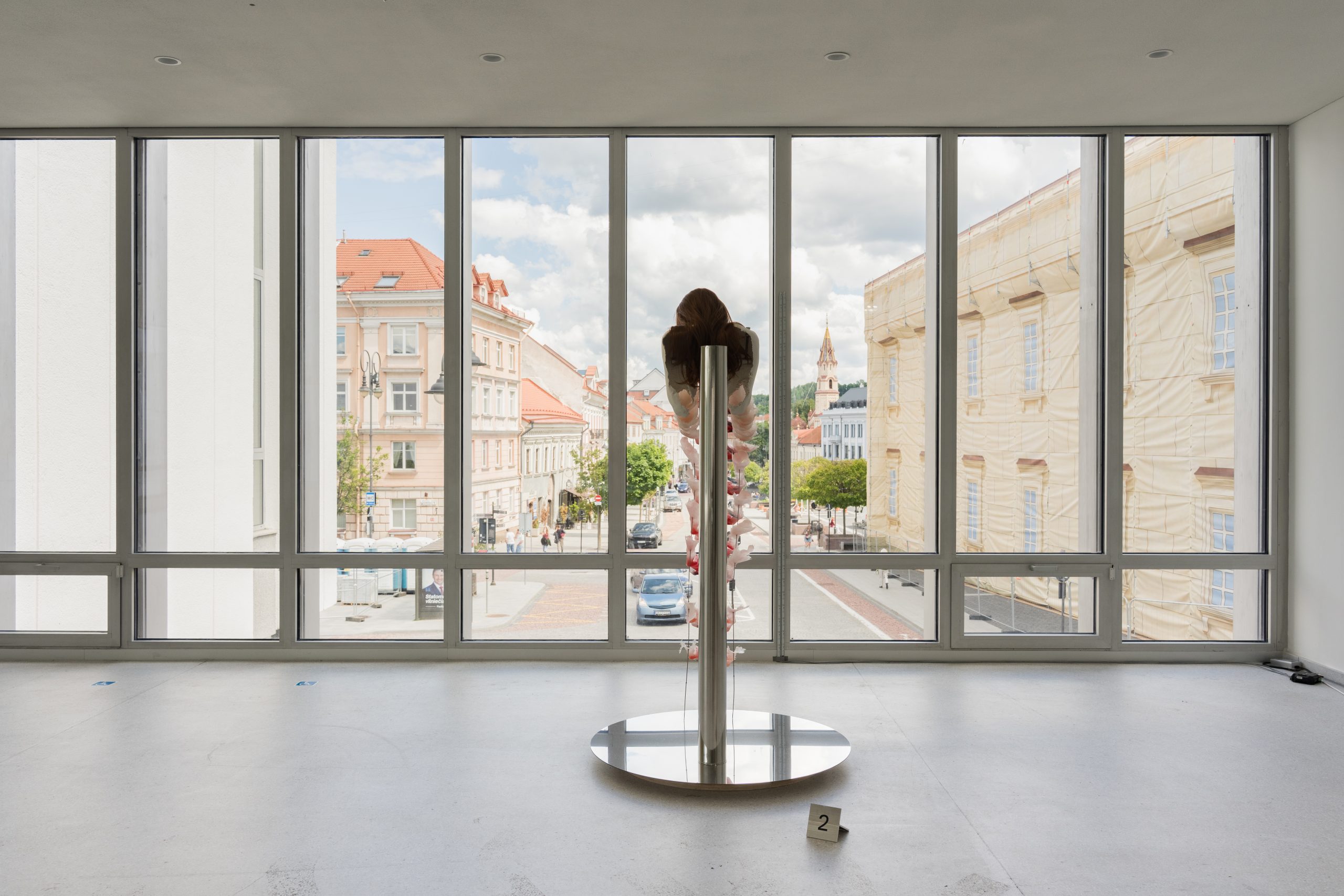
Rebecca Ackroyd, “Slow Motion”, 2024. Epoxy resin casts, threaded bars, jesmonite cast, wig, mirrored steel, 178 × 57 × 38 cm. Courtesy of the artist. “Superglue, or Inventing the Friend”, Contemporary Art Centre, 2026. Photographer: Andrej Vasilenko
Rebecca Ackroyd, “Slow Motion”, 2024. Epoxy resin casts, threaded bars, jesmonite cast, wig, mirrored steel, 178 × 57 × 38 cm. Courtesy of the artist. “Superglue, or Inventing the Friend”, Contemporary Art Centre, 2026. Photographer: Andrej Vasilenko
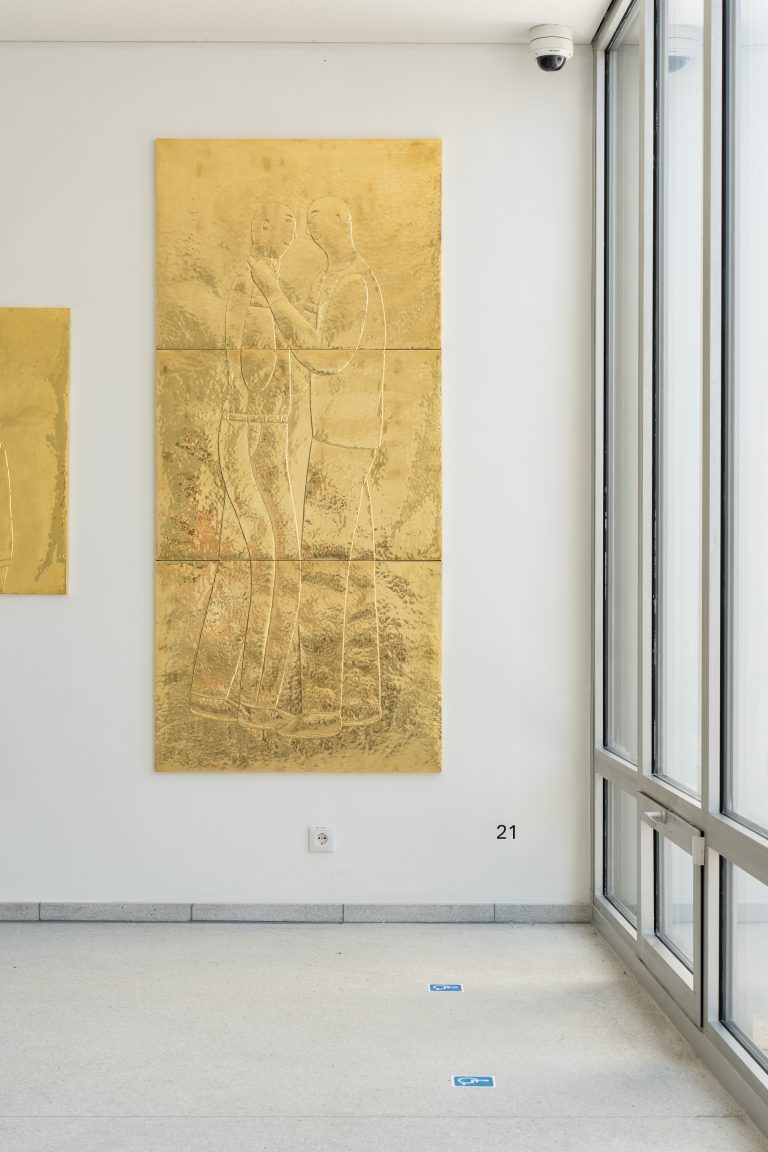
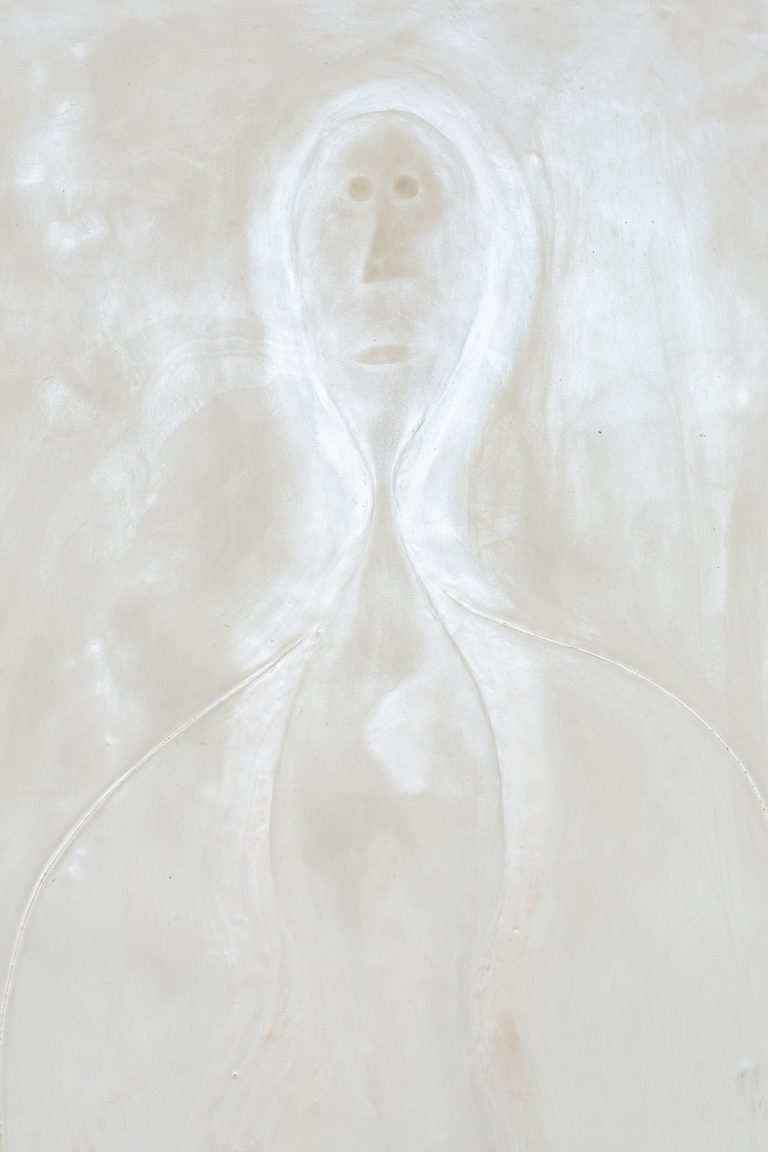
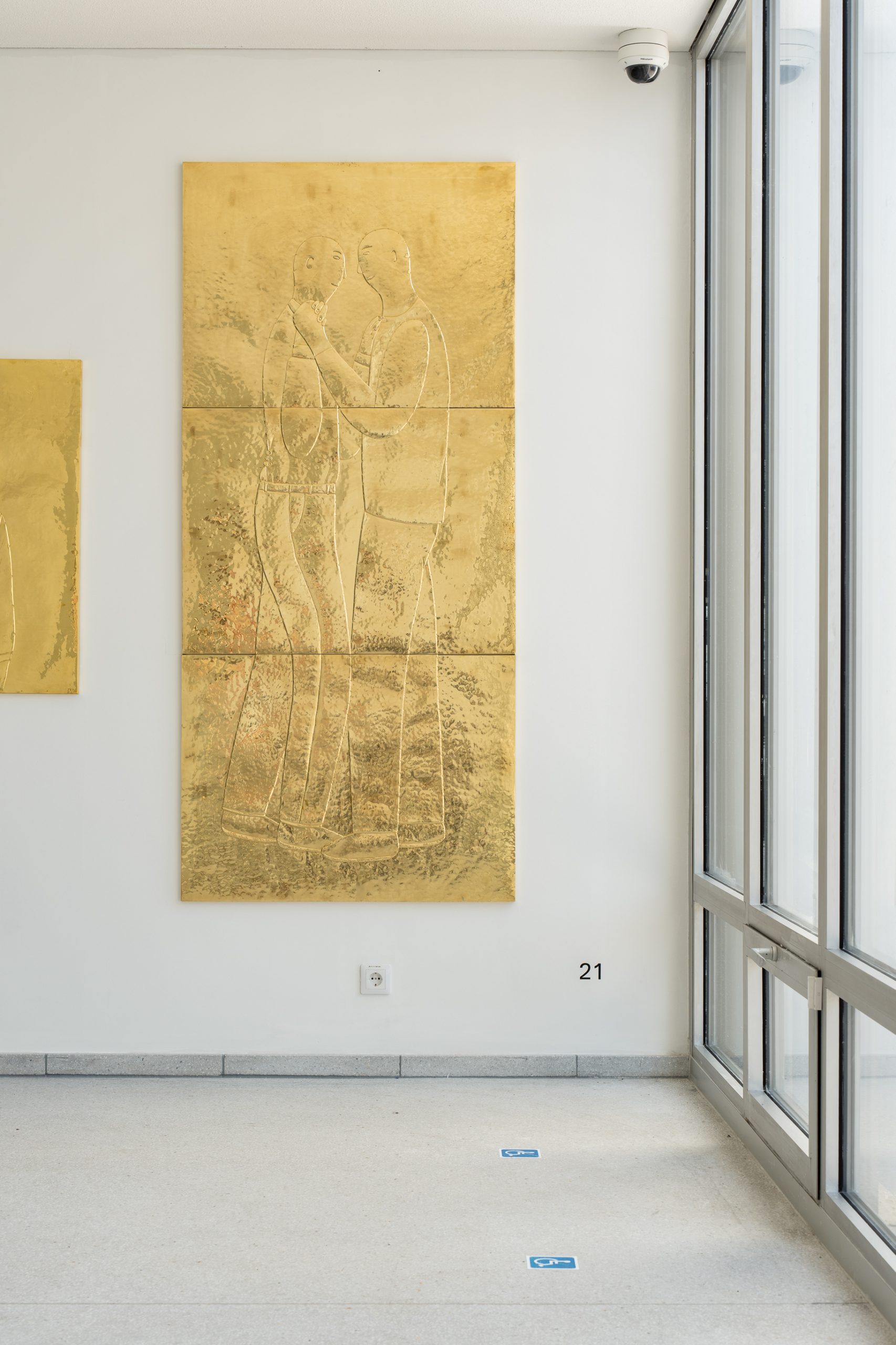
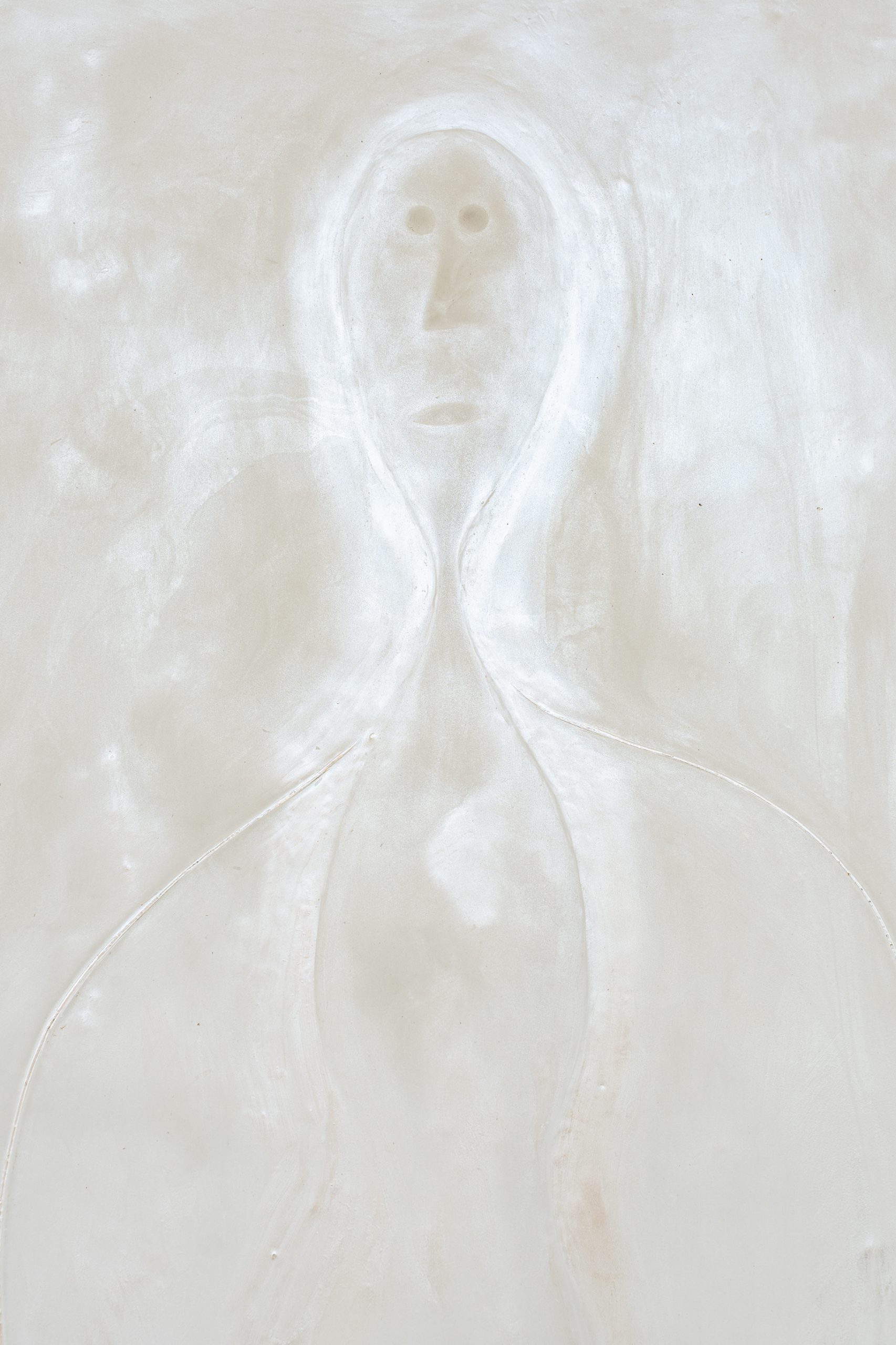
Rodrigo Hernández, “Who Loves You”, 2019. Brass, three plates, 210 × 95 × 1.8 cm. Courtesy of the artist and Gallery P420, Bologna. “Superglue, or Inventing the Friend”, Contemporary Art Centre, 2026. Photographer: Andrej Vasilenko
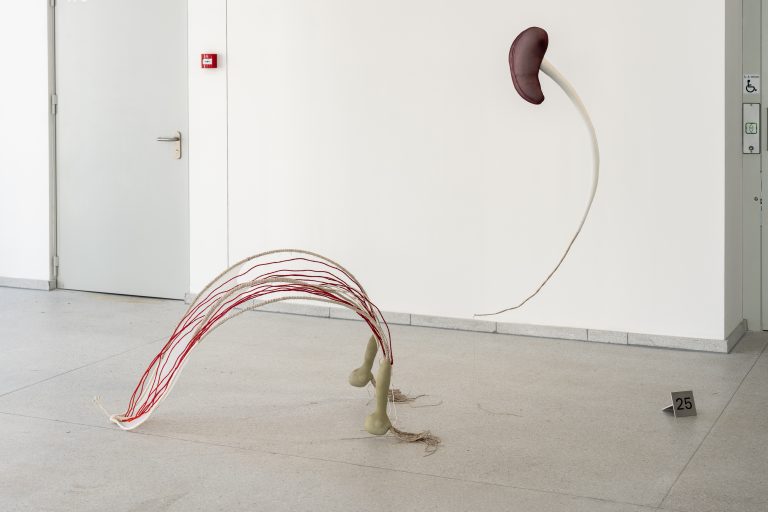
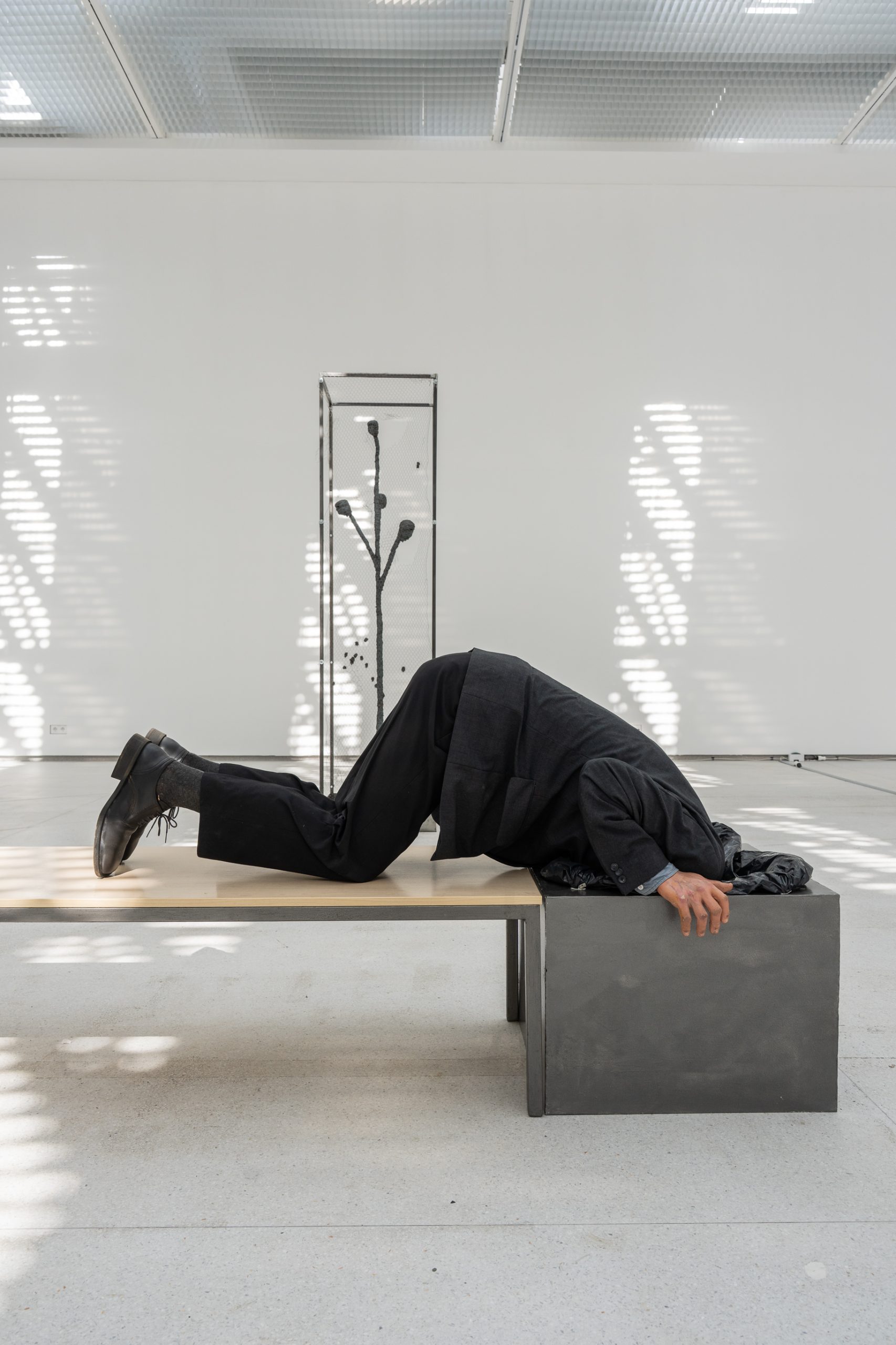
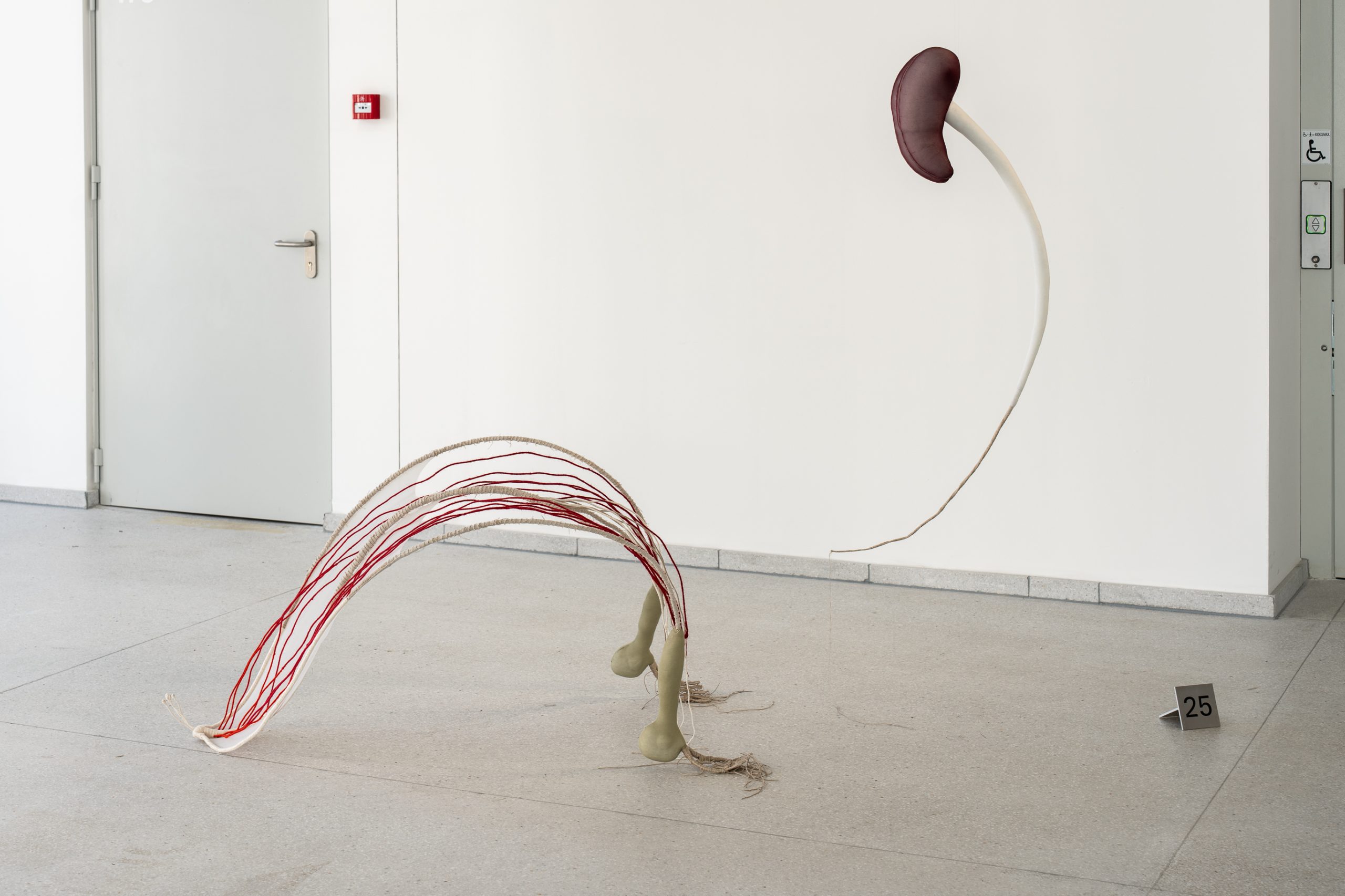
Rebecca Ackroyd, “Virgin Suicides”, 2024. Bottle of water, epoxy resin casts, printed image, threaded bar, 78 × 48 × 112 cm. Courtesy of the artist. Jūratė Kazakevičiūtė, “Broadleaf Plantain and Stamen”, 2024. Wire, linen, nylon, non-woven fabric, 135 × 22 × 29 cm. Courtesy of the artist. “Superglue, or Inventing the Friend”, Contemporary Art Centre, 2026. Photographer: Andrej Vasilenko
Jūratė Kazakevičiūtė, “Broadleaf Plantain and Stamen”, 2024. Wire, linen, nylon, non-woven fabric, 135 × 22 × 29 cm. Courtesy of the artist. “Superglue, or Inventing the Friend”, Contemporary Art Centre, 2026. Photographer: Andrej Vasilenko
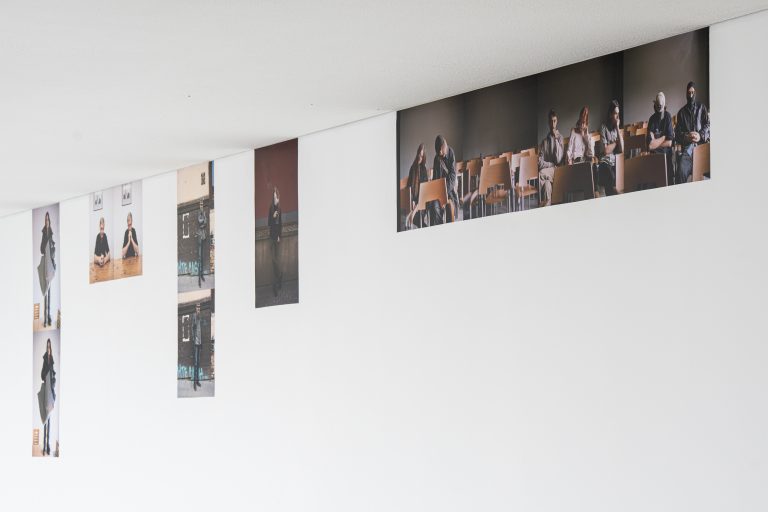
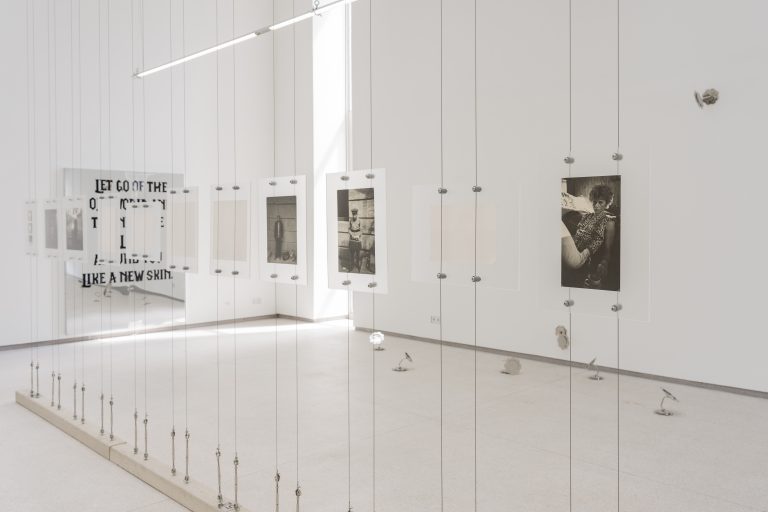
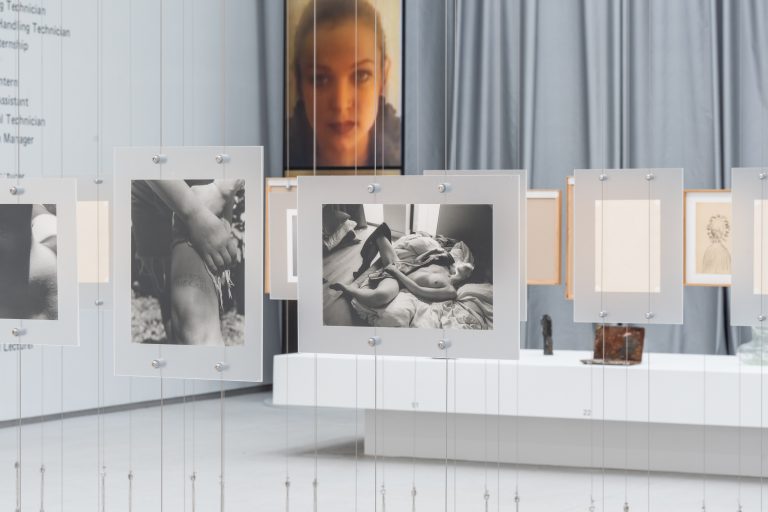
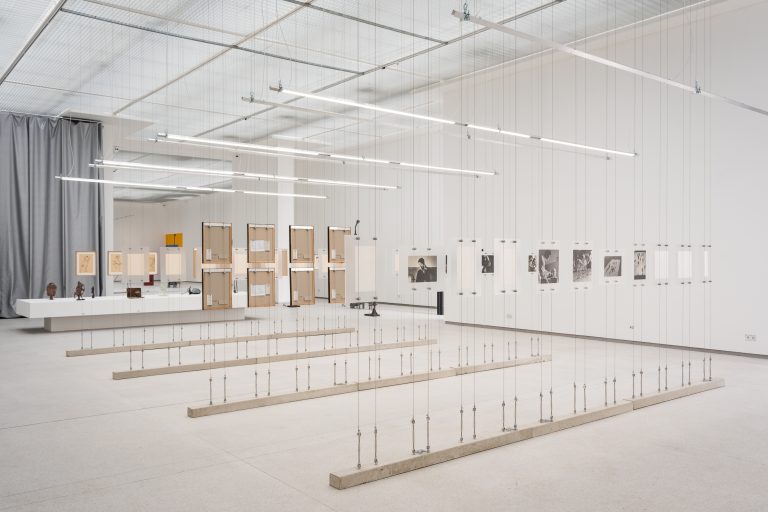
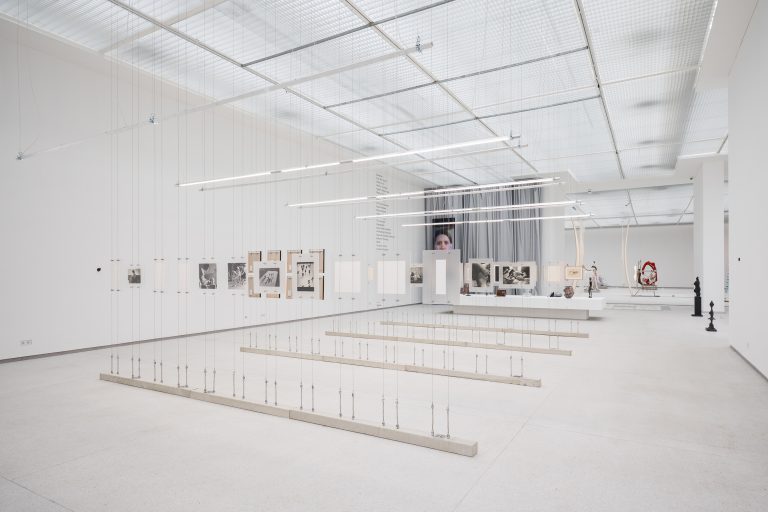
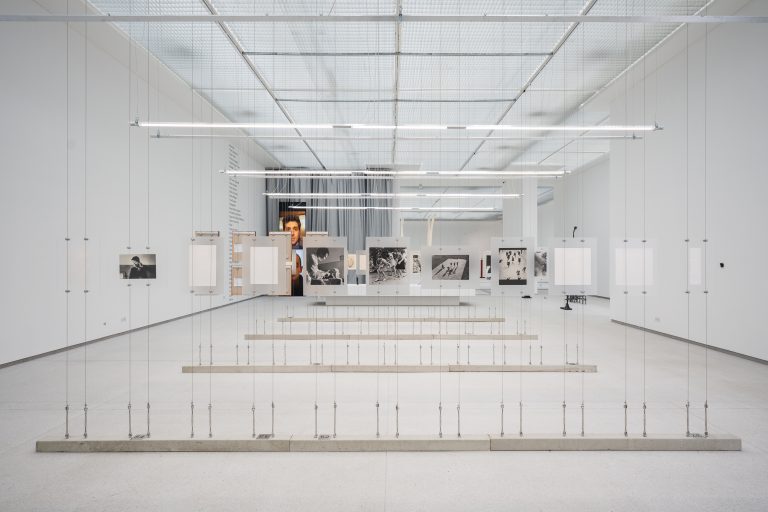
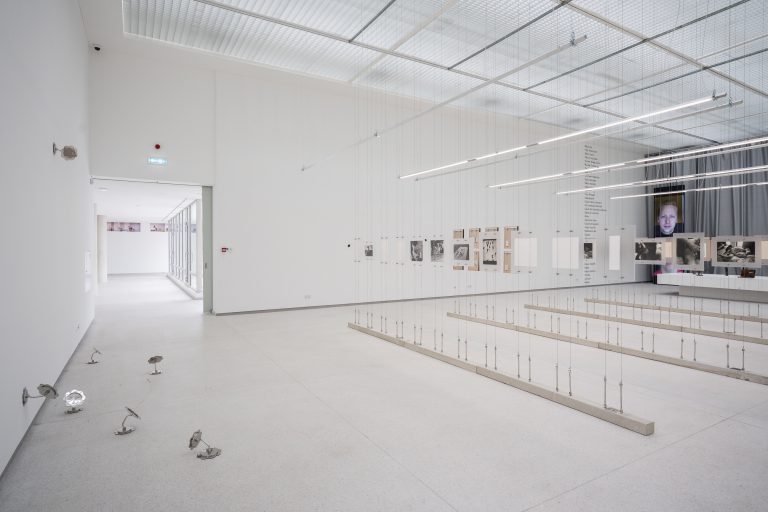
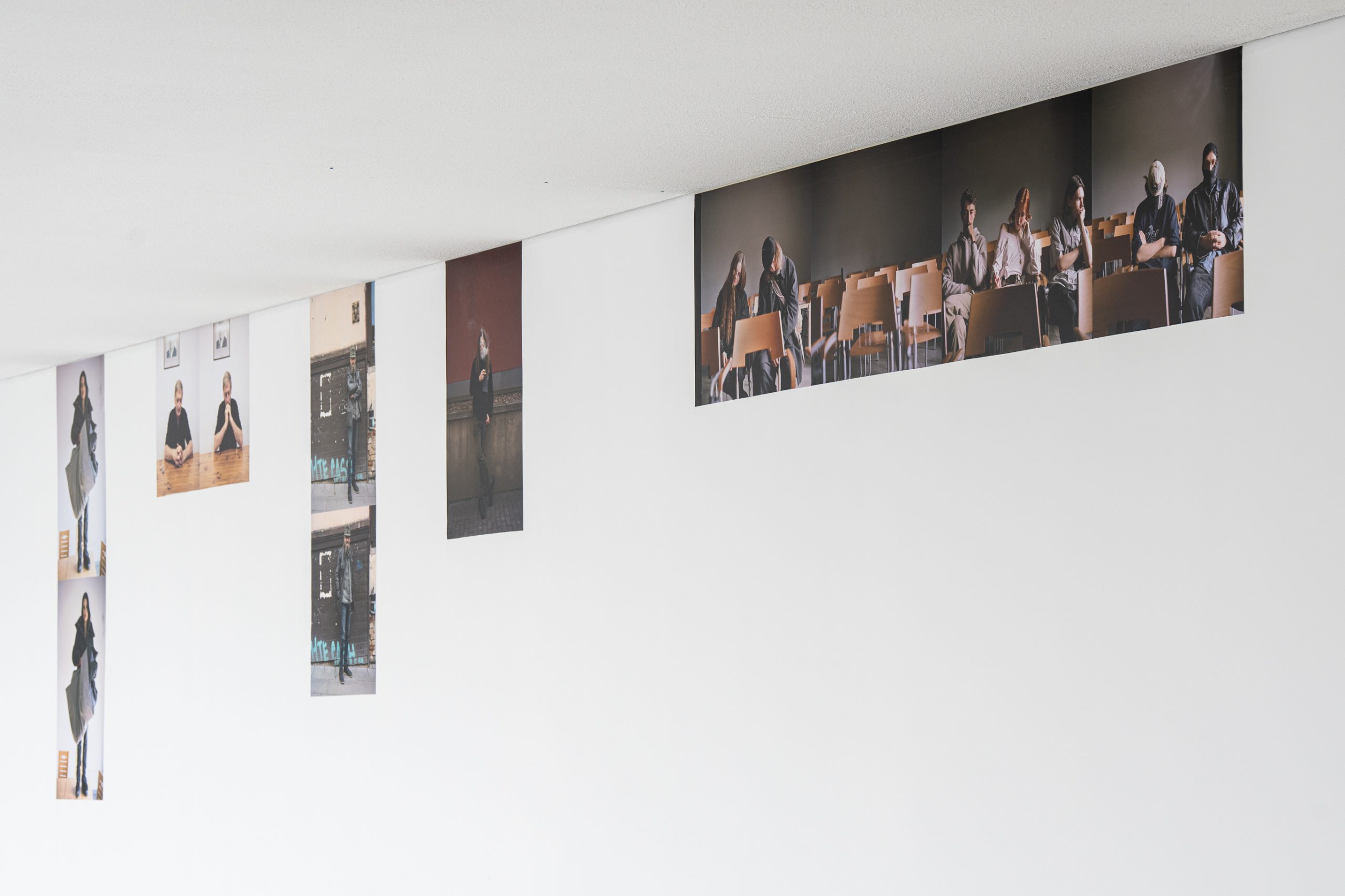
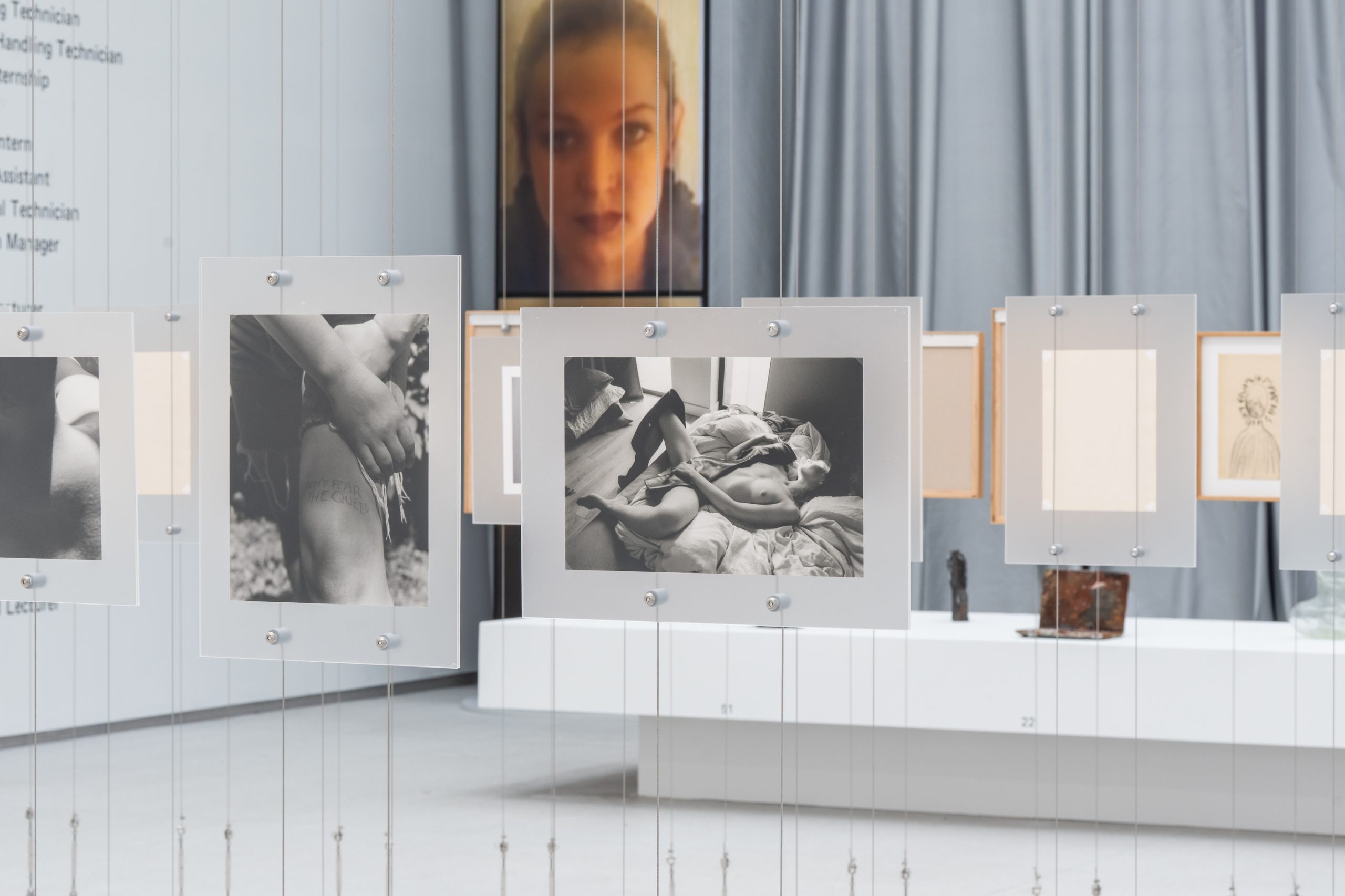
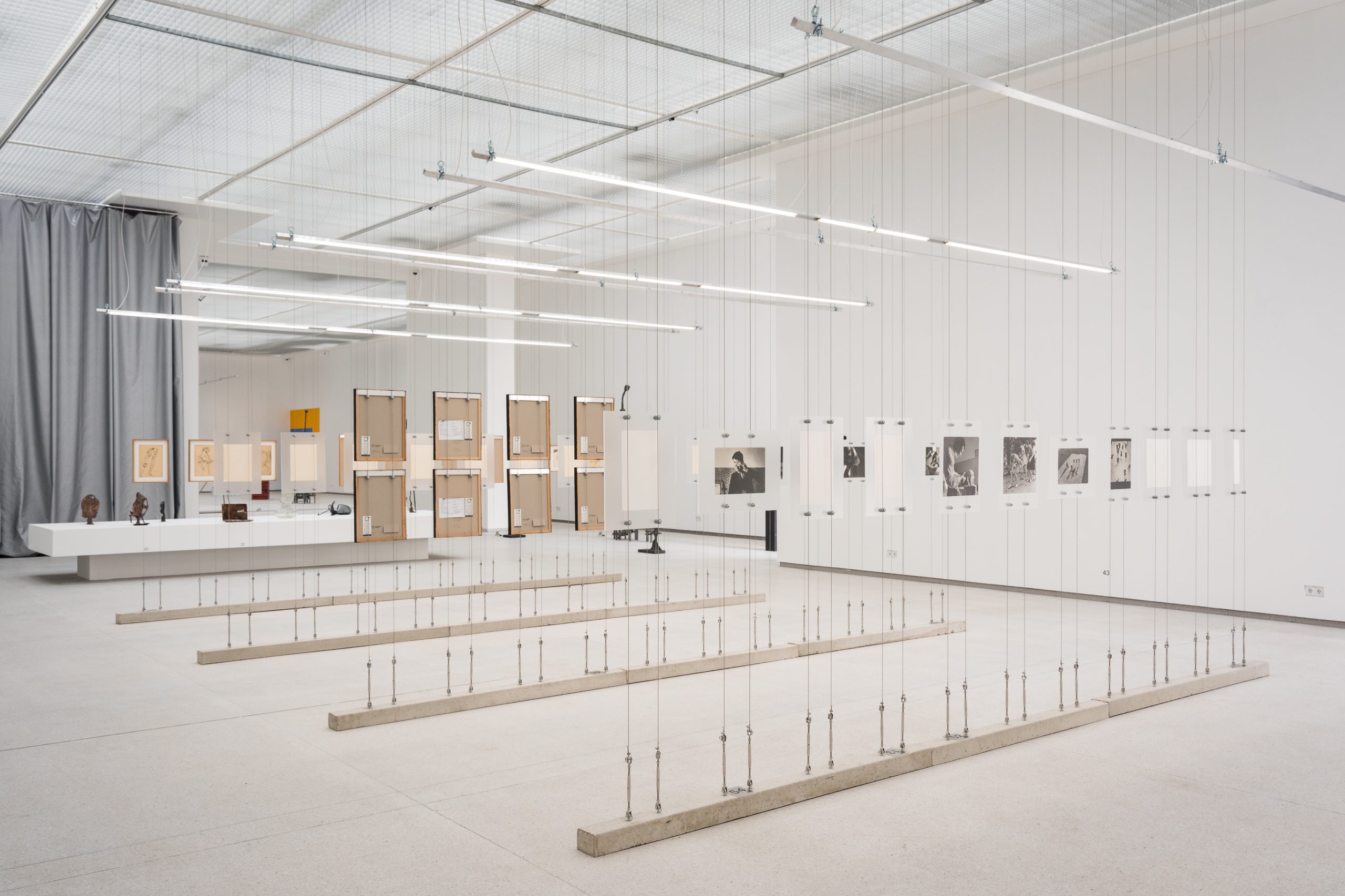
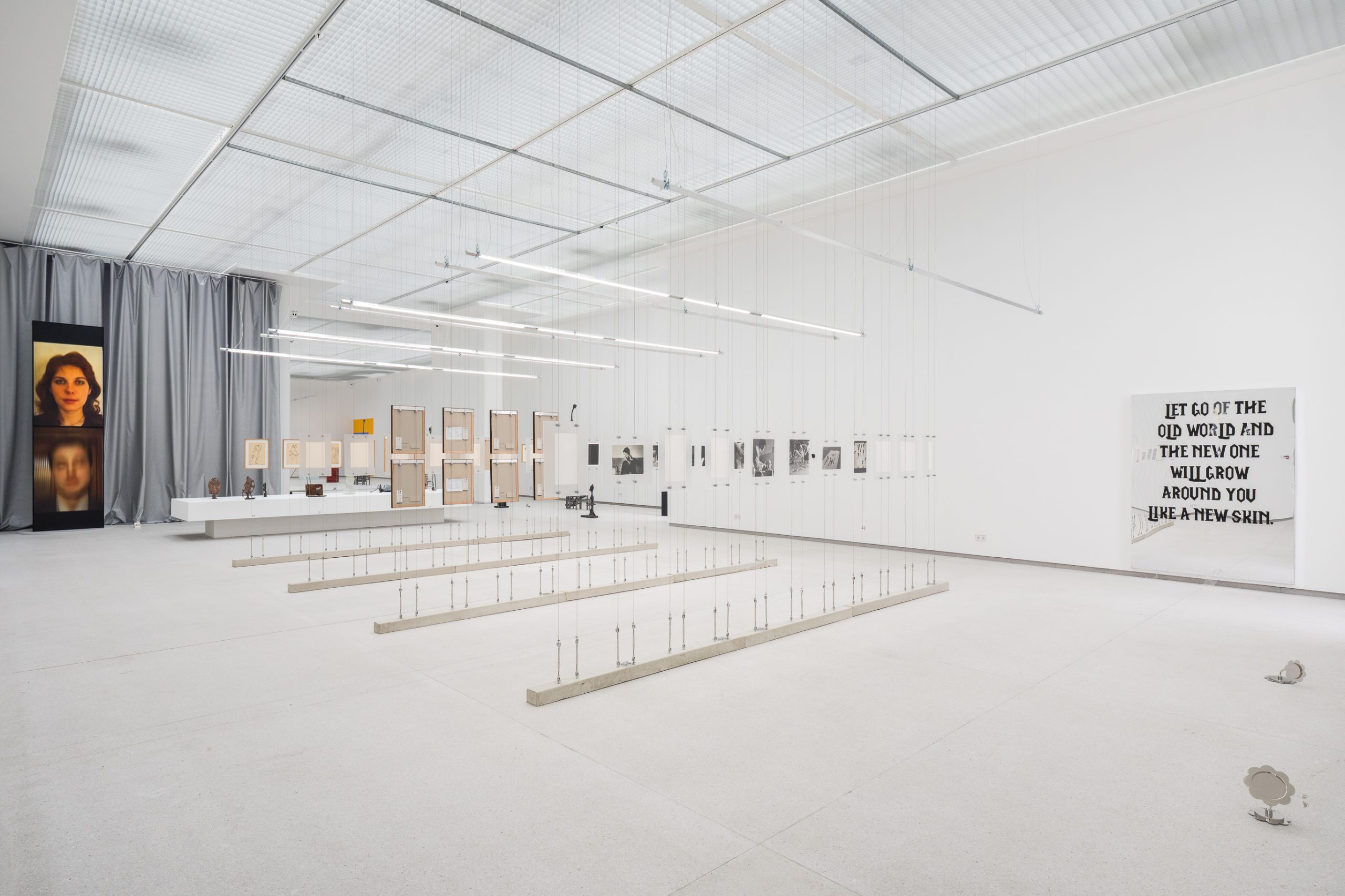
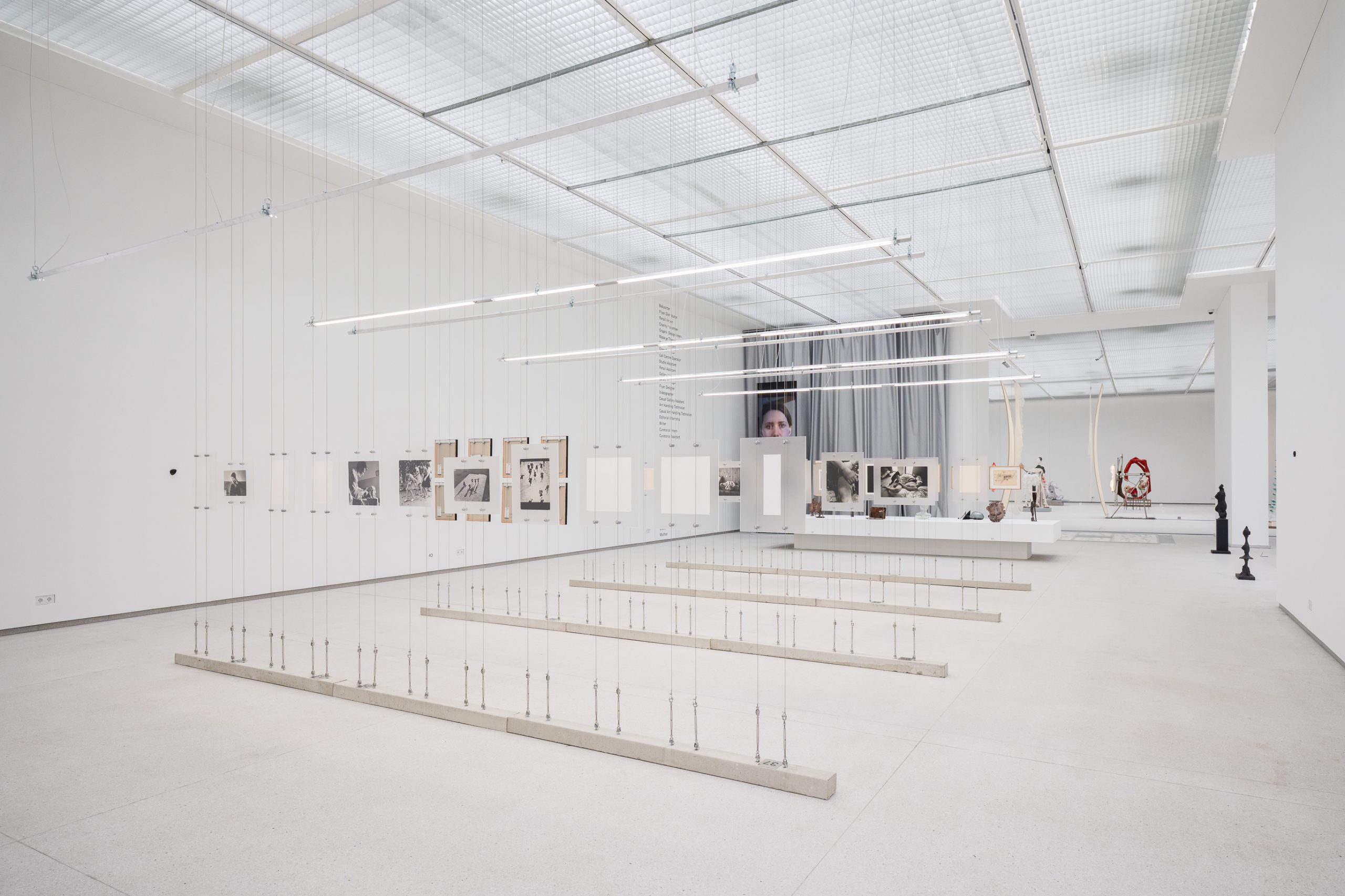
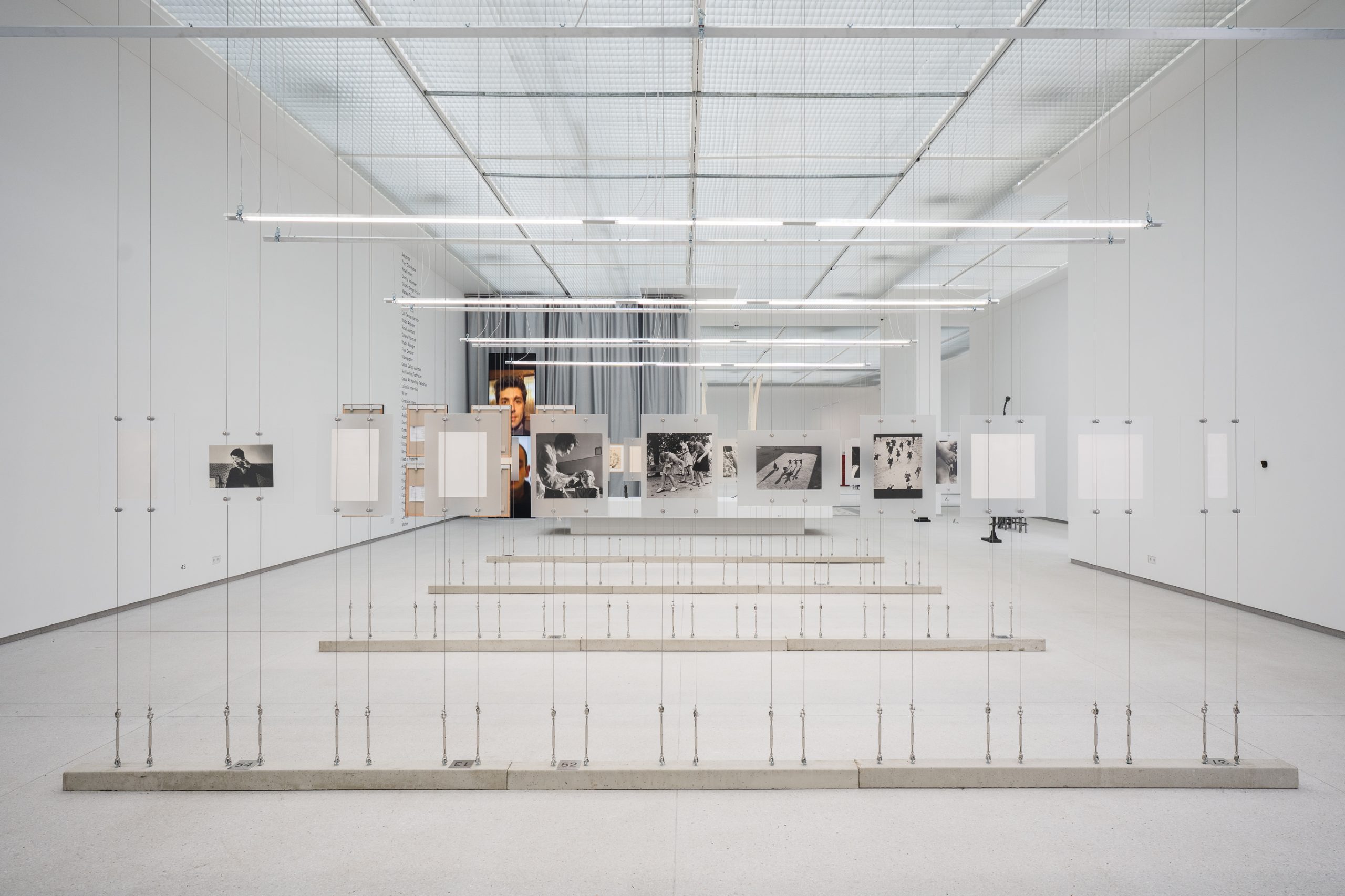
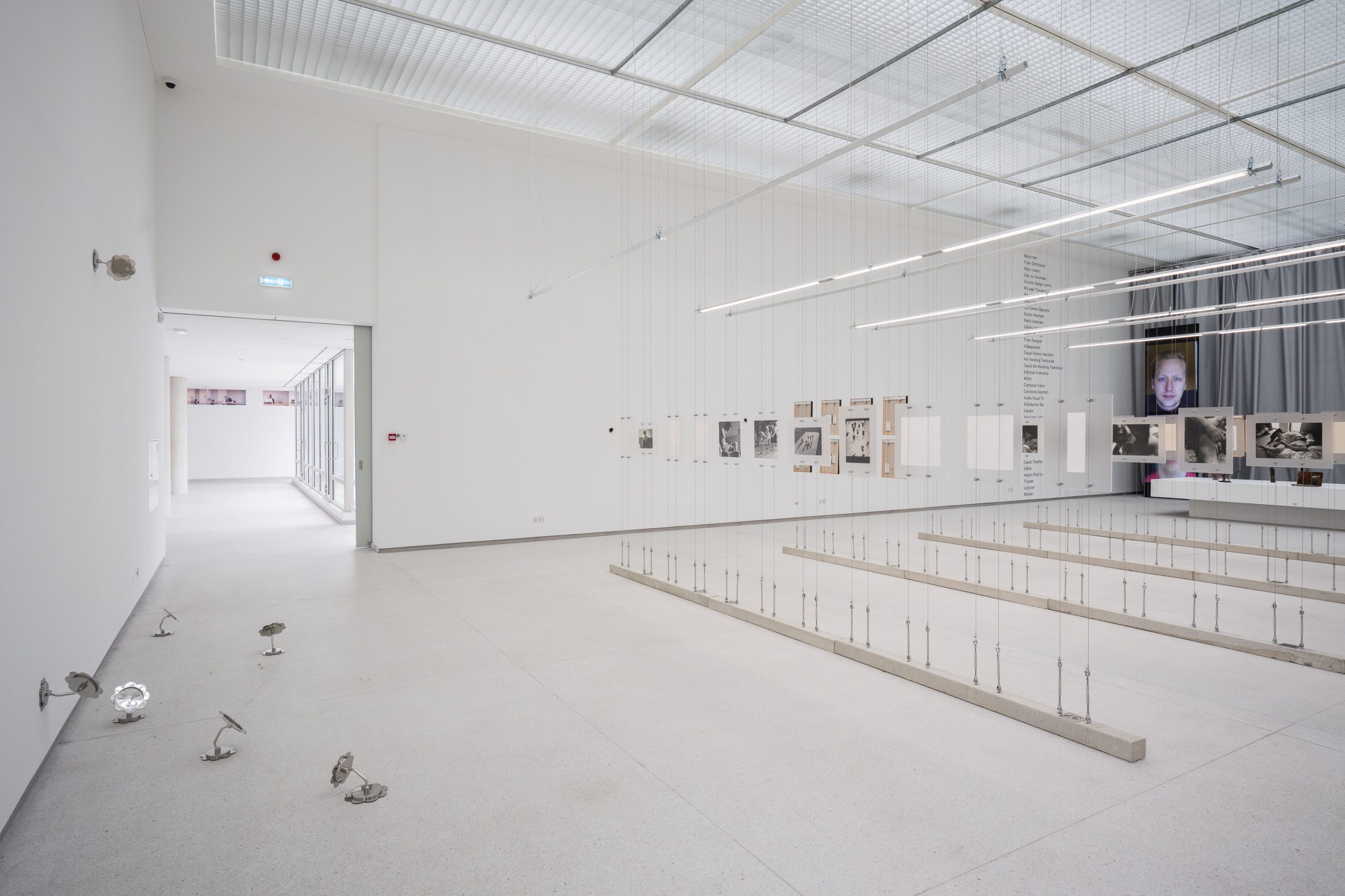
Artūras Raila, “Regularity”, 2000–2026. Photo and video installation, dimensions variable. Courtesy of the artist. “Superglue, or Inventing the Friend”, Contemporary Art Centre, 2026. Photographer: Andrej Vasilenko
Jakub Choma, “Dead End”, 2025. Aluminium, plywood, UV print on wood, police siren light, padlocks, acrylic, UV resin, plexiglass, cables, Tyvek wristbands, false eyelashes, wire, wood shavings, custom-engraved matchboxes, UV print on plastic, steel, engraved plywood, aluminium tubes, engraved bread, thick gel solution, cork soil, automated robot arm, prop apples, automated rotating coffee cup, stickers, 222 × 220 × 140 cm. Courtesy of the artist. “Superglue, or Inventing the Friend”, Contemporary Art Centre, 2026. Photographer: Andrej Vasilenko
Rebecca Ackroyd, “Slow Motion”, 2024. Epoxy resin casts, threaded bars, jesmonite cast, wig, mirrored steel, 178 × 57 × 38 cm. Courtesy of the artist. Jūratė Kazakevičiūtė, “Broadleaf Plantain and Stamen”, 2024. Wire, linen, nylon, non-woven fabric, 135 × 22 × 29 cm. Courtesy of the artist. “Superglue, or Inventing the Friend”, Contemporary Art Centre, 2026. Photographer: Andrej Vasilenko
“Superglue, or Inventing the Friend”, exhibition view. Contemporary Art Centre, 2026. Curator: Valentinas Klimašauskas. Photographer: Andrej Vasilenko
“Superglue, or Inventing the Friend”, exhibition view. Contemporary Art Centre, 2026. Curator: Valentinas Klimašauskas. Photographer: Andrej Vasilenko
“Superglue, or Inventing the Friend”, exhibition view. Contemporary Art Centre, 2026. Curator: Valentinas Klimašauskas. Photographer: Andrej Vasilenko
“Superglue, or Inventing the Friend”, exhibition view. Contemporary Art Centre, 2026. Curator: Valentinas Klimašauskas. Photographer: Andrej Vasilenko
“Superglue, or Inventing the Friend”, exhibition view. Contemporary Art Centre, 2026. Curator: Valentinas Klimašauskas. Photographer: Andrej Vasilenko
“Superglue, or Inventing the Friend”, exhibition view. Contemporary Art Centre, 2026. Curator: Valentinas Klimašauskas. Photographer: Andrej Vasilenko
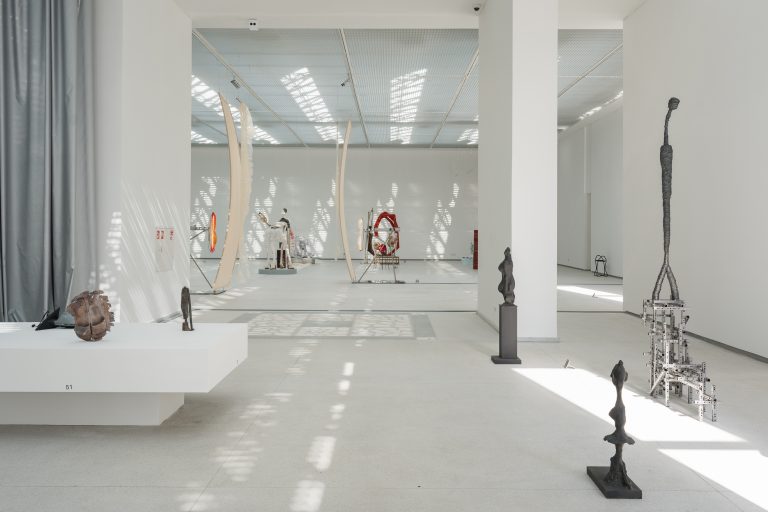
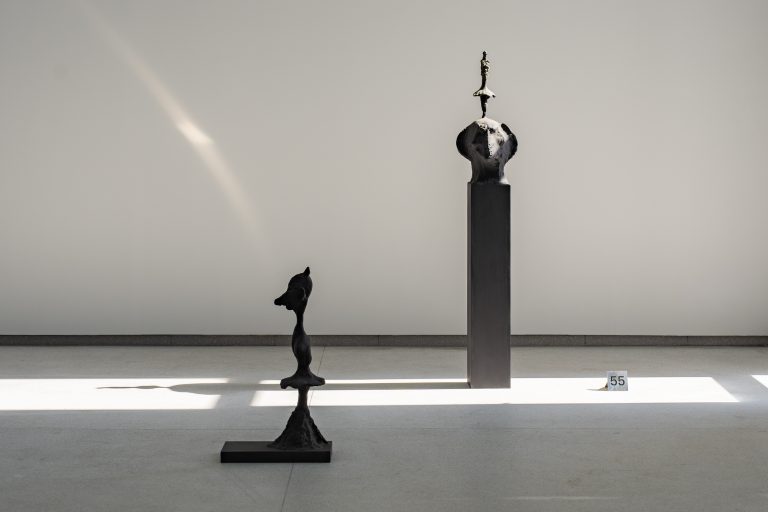
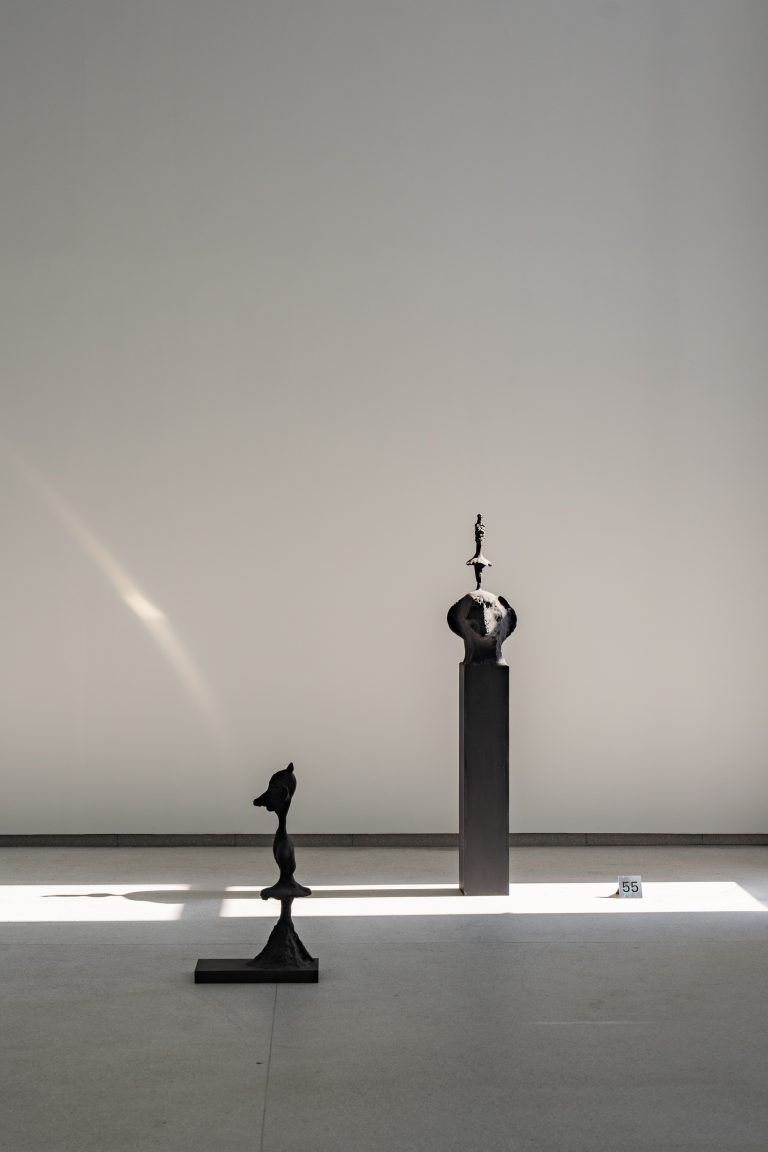
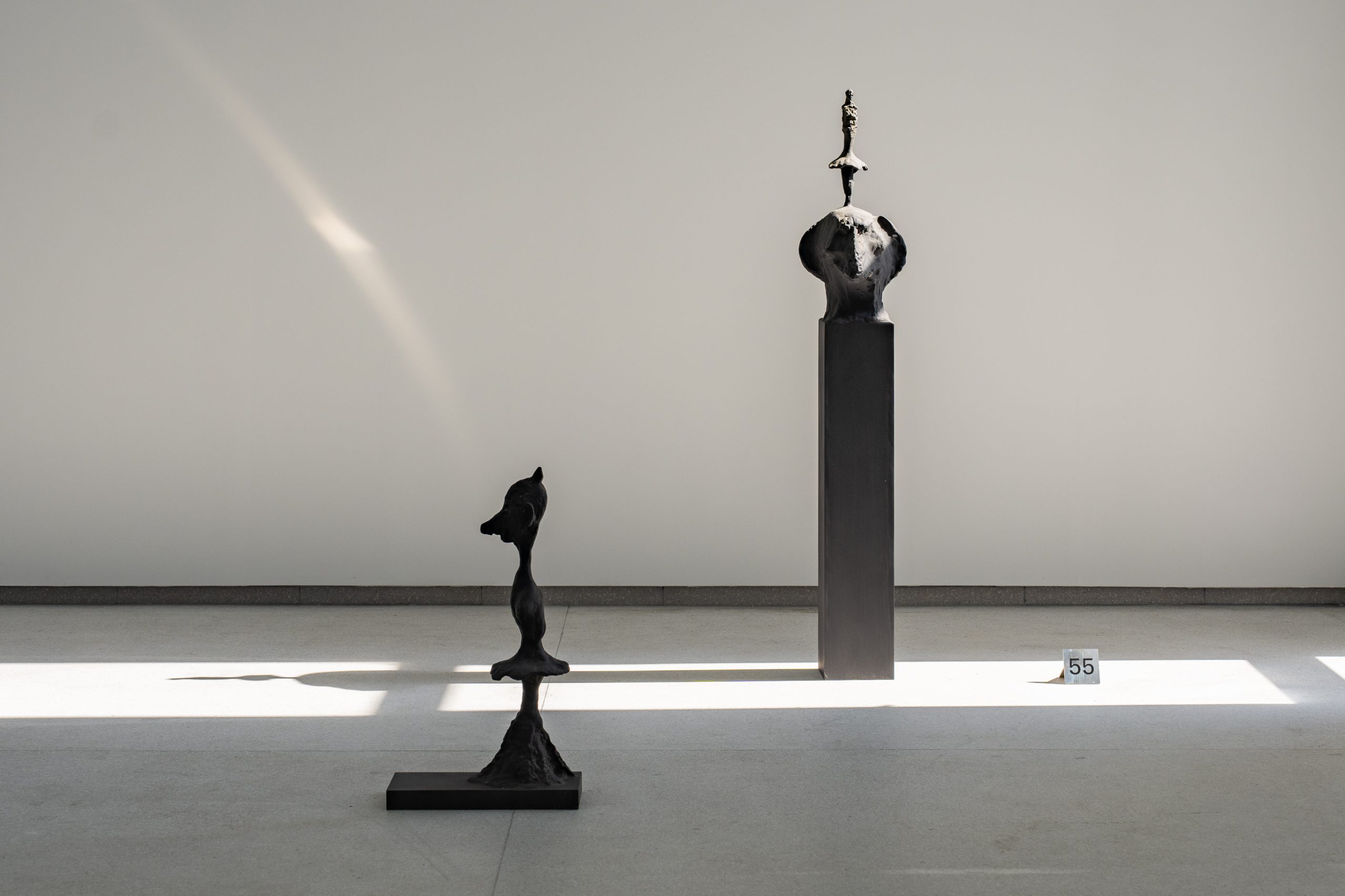
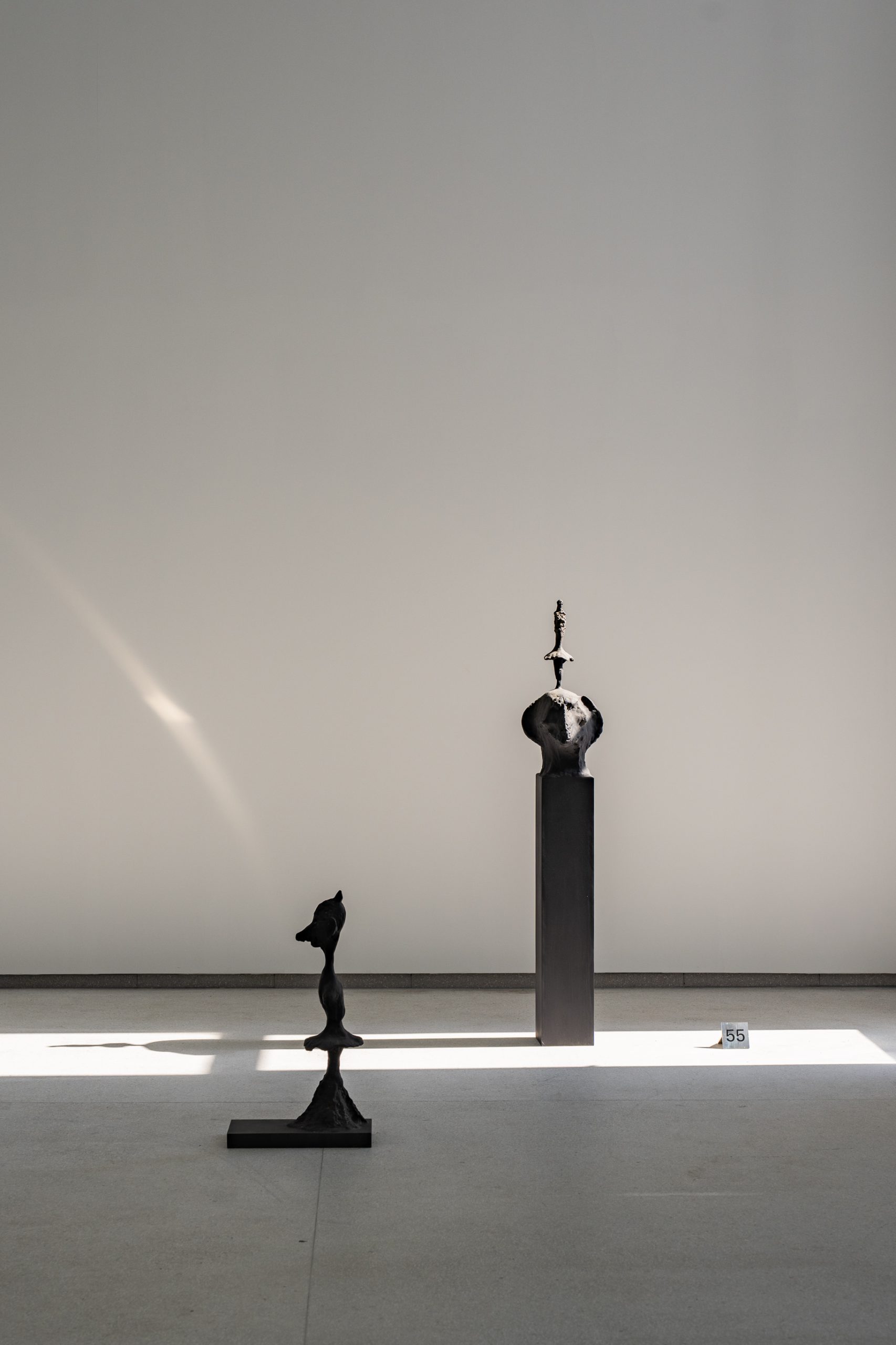
Pol Taburet, “OTTG series - 7”, 2024. Bronze, 136 × 30 × 30 cm. “OTTG series - 10”, 2024. Bronze, 171 × 38 × 38 cm. “OTTG series - 9”, 2024. Bronze, 77 × 20 × 44 cm. Courtesy of the artist and Mendes Wood DM (São Paulo / Brussels / Paris / New York / Germantown). Tomáš Roubal, “Web #1”, 2024. Steel, 268 × 170 × 69 cm. Courtesy of the artist. “Superglue, or Inventing the Friend”, Contemporary Art Centre, 2026. Photographer: Andrej Vasilenko
Pol Taburet, “OTTG series - 9”, 2024. Bronze, 77 × 20 × 44 cm. “OTTG series - 10”, 2024. Bronze, 171 × 38 × 38 cm. Courtesy of the artist and Mendes Wood DM (São Paulo / Brussels / Paris / New York / Germantown). “Superglue, or Inventing the Friend”, Contemporary Art Centre, 2026. Photographer: Andrej Vasilenko
Pol Taburet, “OTTG series - 9”, 2024. Bronze, 77 × 20 × 44 cm. “OTTG series - 10”, 2024. Bronze, 171 × 38 × 38 cm. Courtesy of the artist and Mendes Wood DM (São Paulo / Brussels / Paris / New York / Germantown). “Superglue, or Inventing the Friend”, Contemporary Art Centre, 2026. Photographer: Andrej Vasilenko
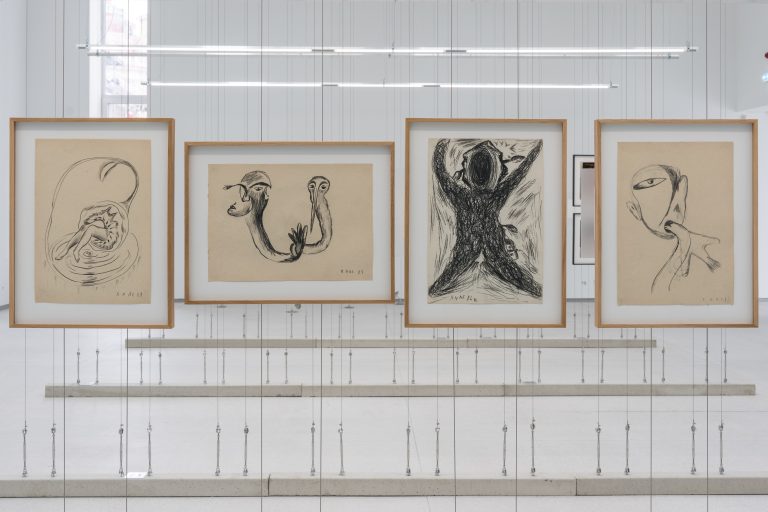
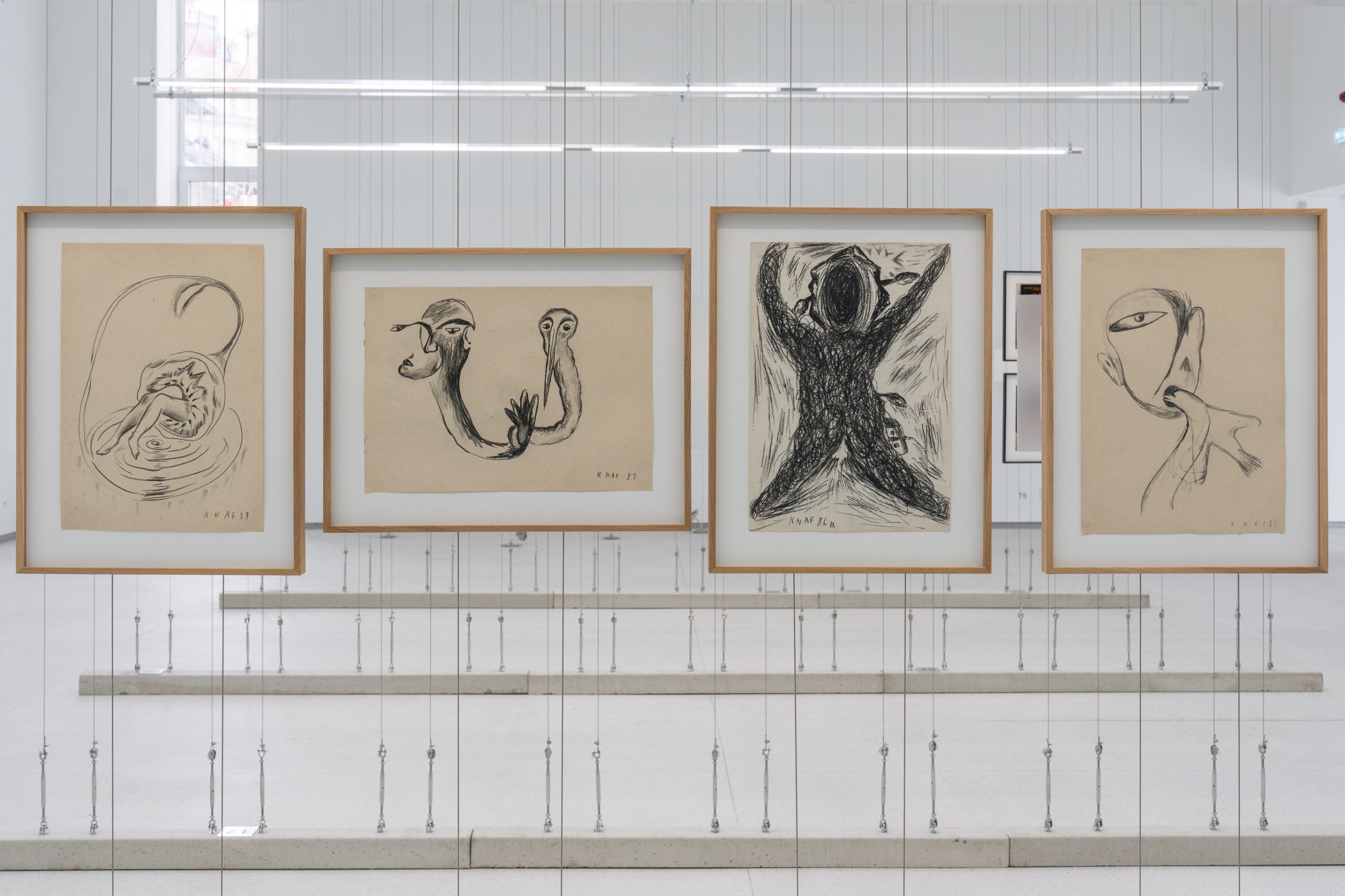
KNAF (Leszek Knaflewski, 1960–2014), series of drawings, dimensions variable. Courtesy of the artist’s family and Piktogram, Warsaw. “Superglue, or Inventing the Friend”, Contemporary Art Centre, 2026. Photographer: Andrej Vasilenko
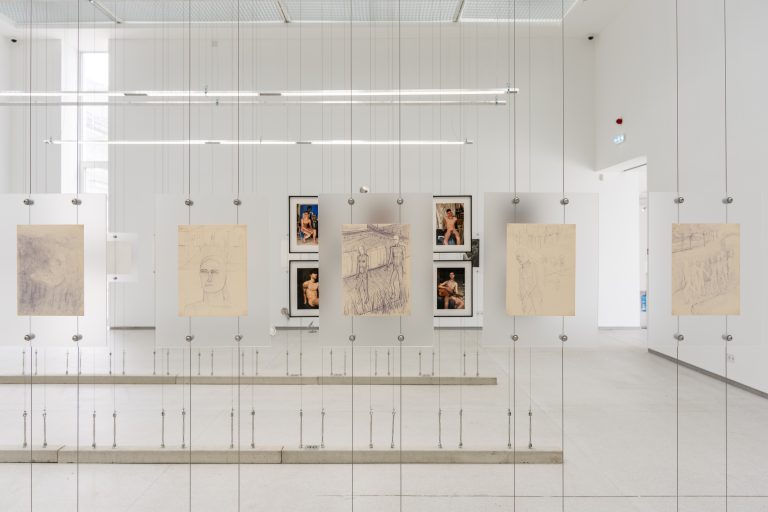
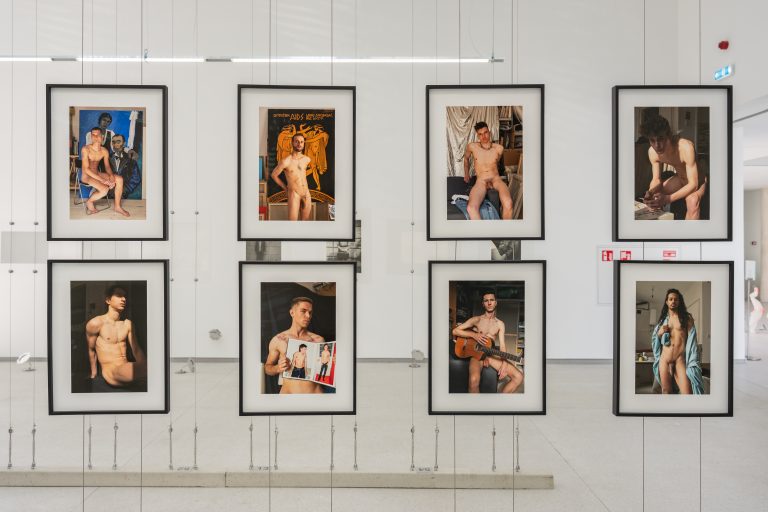
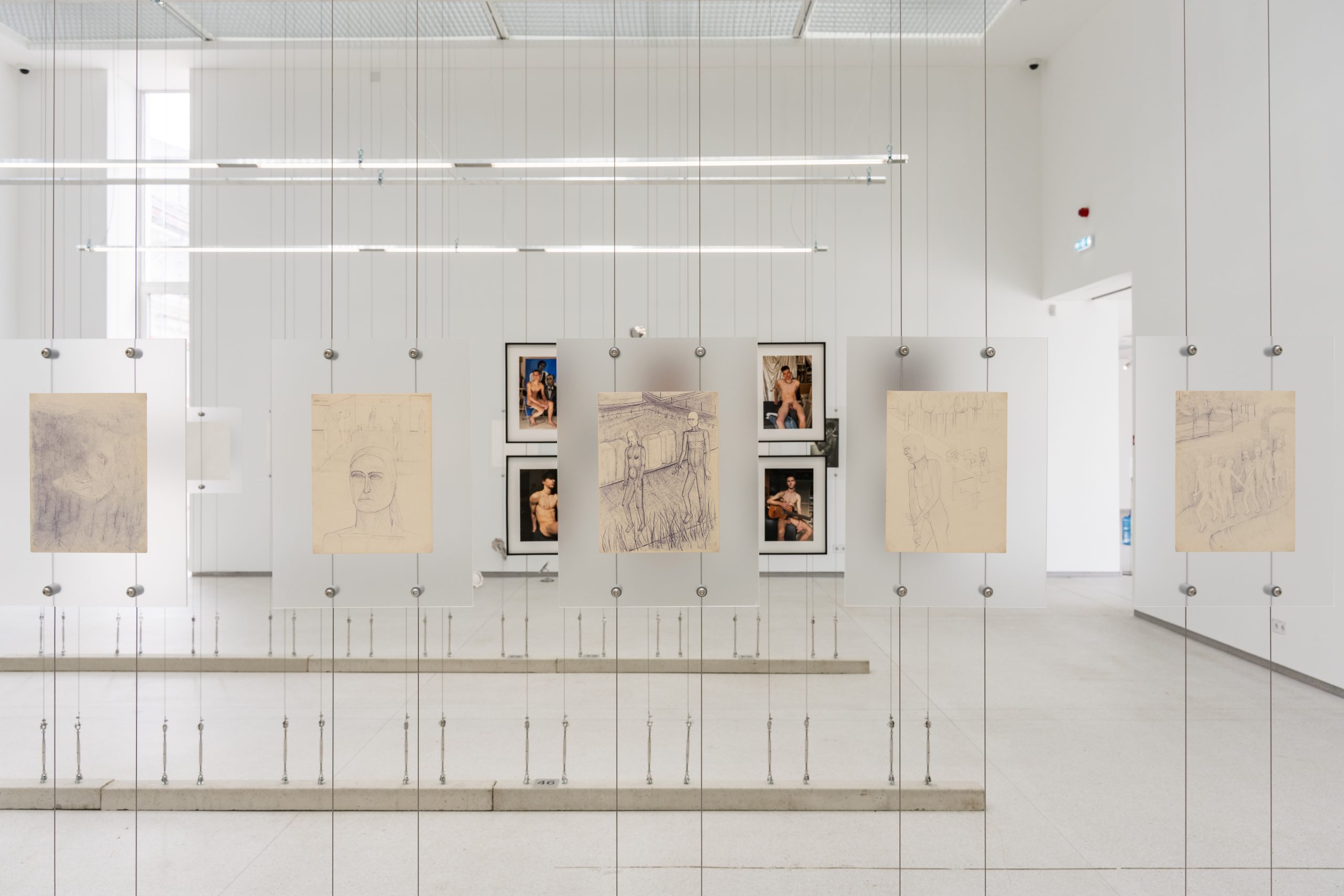
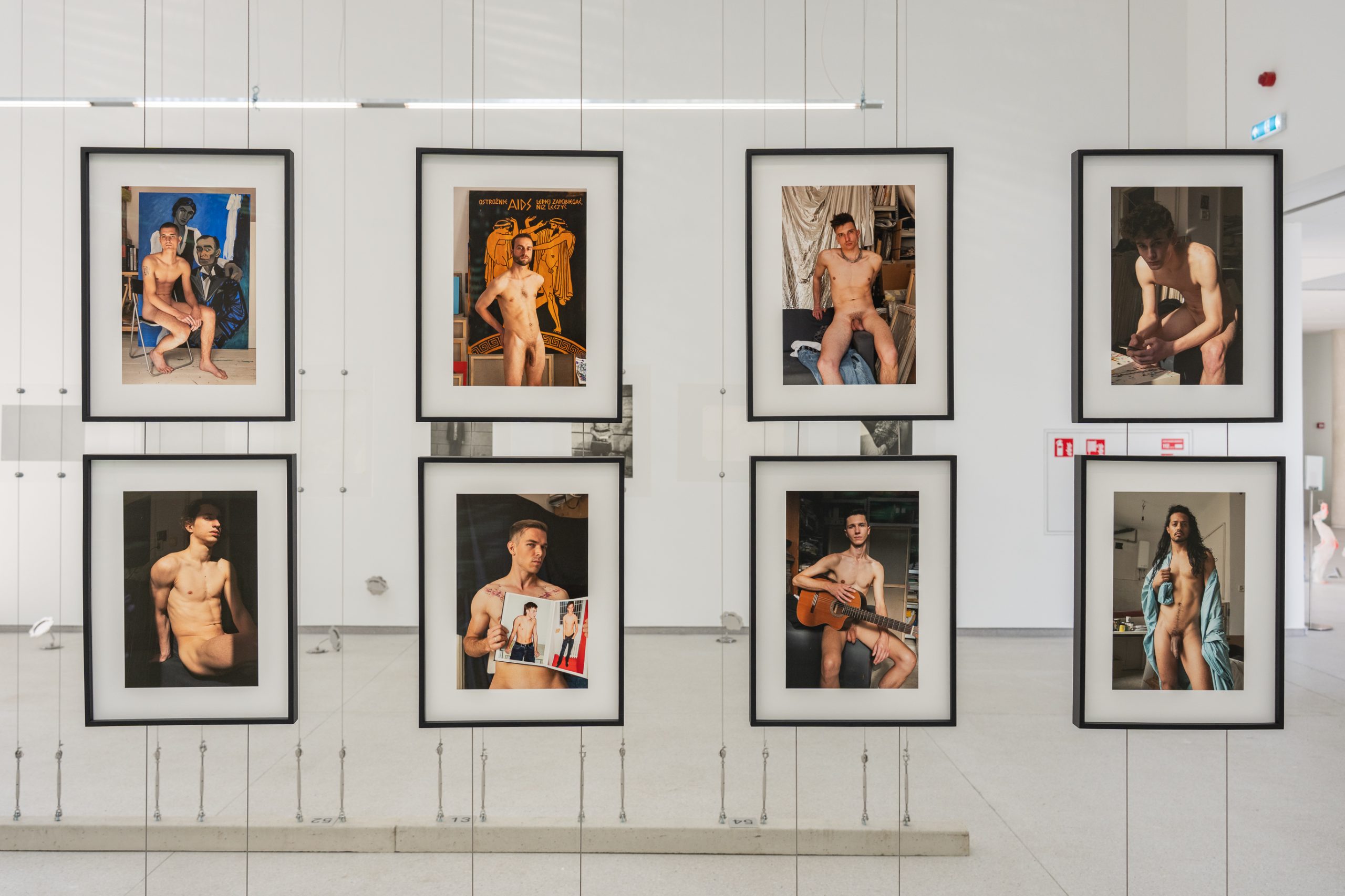
Yuliya Bokhan, “Asymmetry”, 2023–2025. Ballpoint on paper, 28 × 21 cm each. Courtesy of the artist. Karol Radziszewski, “Studio 2”, 2018–2024. Series of photographs, featuring portraits of Vlad, Maciej, Szymon, Maciek, Adam, Borys, Konrad, and Joseph. Inkjet print on archival paper, 41 × 31 cm each. Courtesy of the artist and BWA Warszawa. “Superglue, or Inventing the Friend”, Contemporary Art Centre, 2026. Photographer: Andrej Vasilenko
Karol Radziszewski, “Studio 2”, 2018–2024. Series of photographs, featuring portraits of Vlad, Maciej, Szymon, Maciek, Adam, Borys, Konrad, and Joseph. Inkjet print on archival paper, 41 × 31 cm each. Courtesy of the artist and BWA Warszawa. “Superglue, or Inventing the Friend”, Contemporary Art Centre, 2026. Photographer: Andrej Vasilenko
“Superglue, or Inventing the Friend”, exhibition view. Contemporary Art Centre, 2026. Curator: Valentinas Klimašauskas. Photographer: Andrej Vasilenko
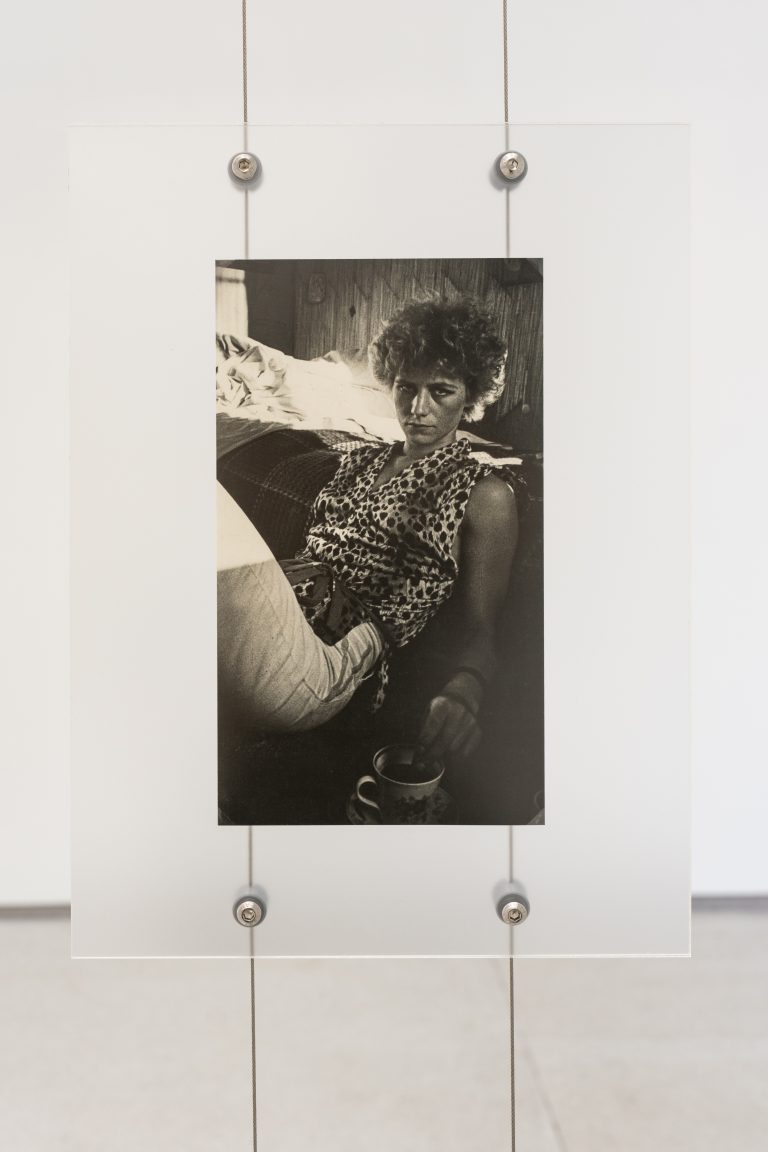
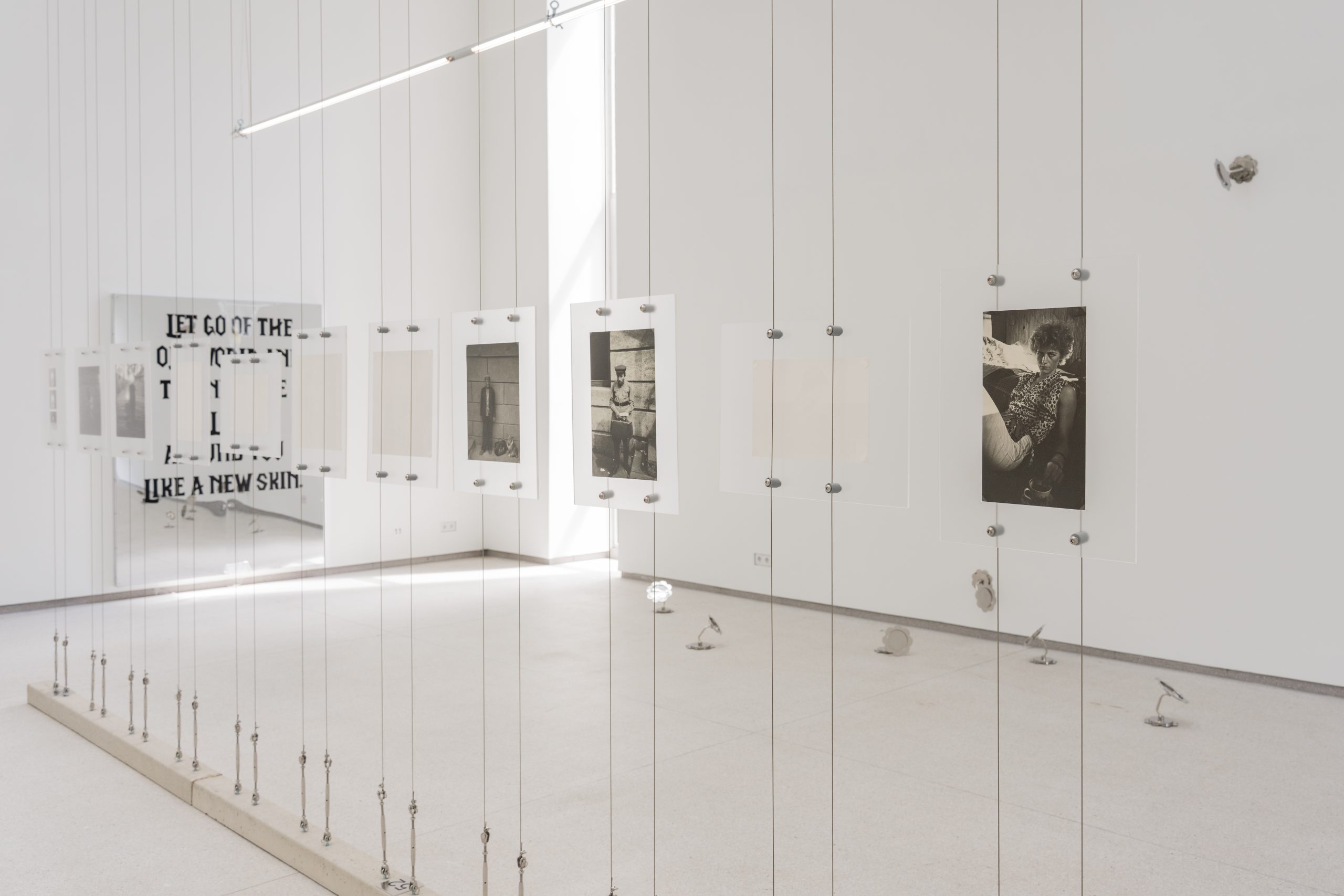
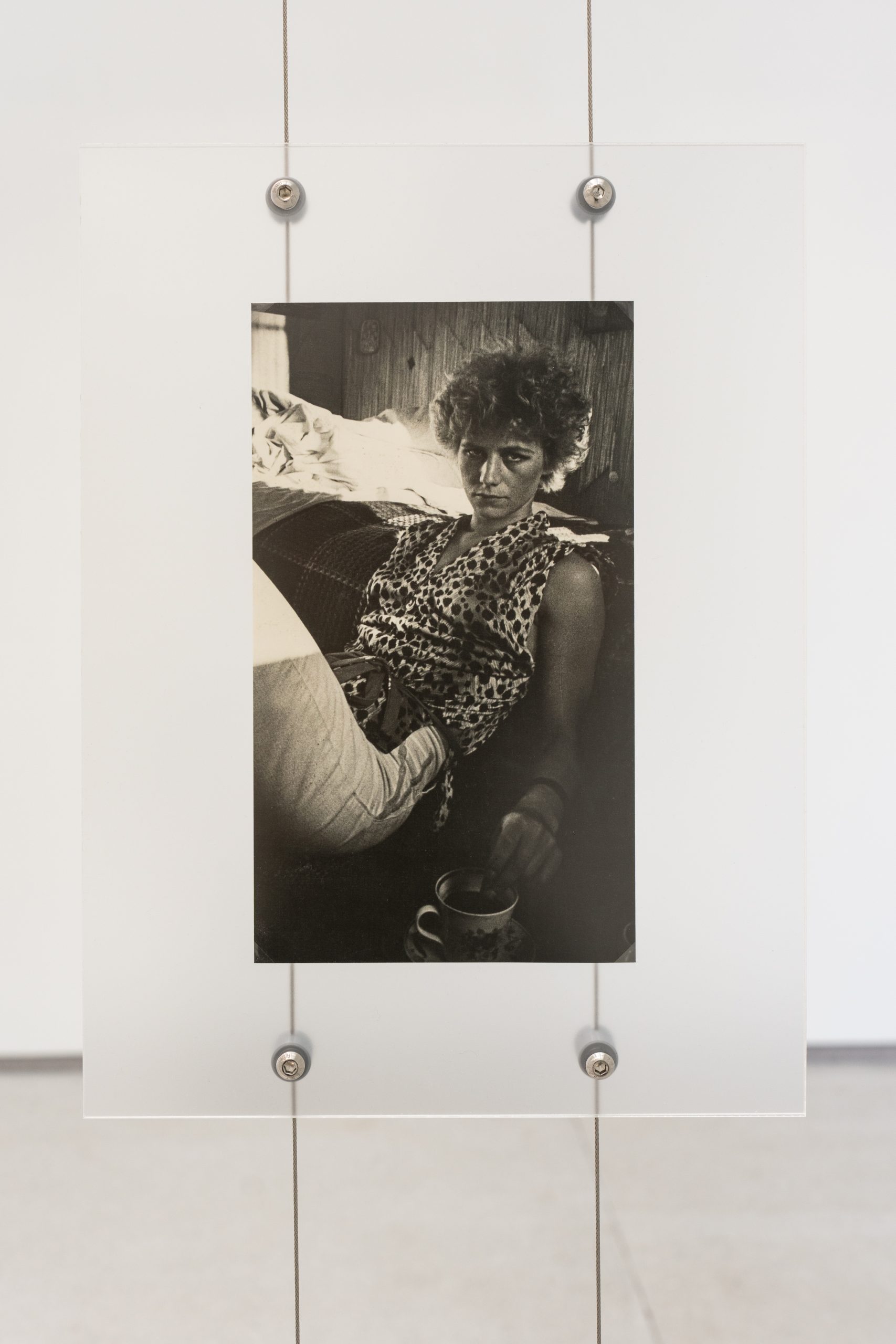
Milda Drazdauskaitė (1951–2019), “Nijolė”, 1982. Analogue photograph printed digitally, 32 × 18.5 cm. Collection of the Lithuanian Photographers Association. “Superglue, or Inventing the Friend”, Contemporary Art Centre, 2026. Photographer: Andrej Vasilenko
“Superglue, or Inventing the Friend”, exhibition view. Contemporary Art Centre, 2026. Curator: Valentinas Klimašauskas. Photographer: Andrej Vasilenko
“Superglue, or Inventing the Friend”, exhibition view. Contemporary Art Centre, 2026. Curator: Valentinas Klimašauskas. Photographer: Andrej Vasilenko
“Superglue, or Inventing the Friend”, exhibition view. Contemporary Art Centre, 2026. Curator: Valentinas Klimašauskas. Photographer: Andrej Vasilenko
“Superglue, or Inventing the Friend”, exhibition view. Contemporary Art Centre, 2026. Curator: Valentinas Klimašauskas. Photographer: Andrej Vasilenko
“Superglue, or Inventing the Friend”, exhibition view. Contemporary Art Centre, 2026. Curator: Valentinas Klimašauskas. Photographer: Andrej Vasilenko
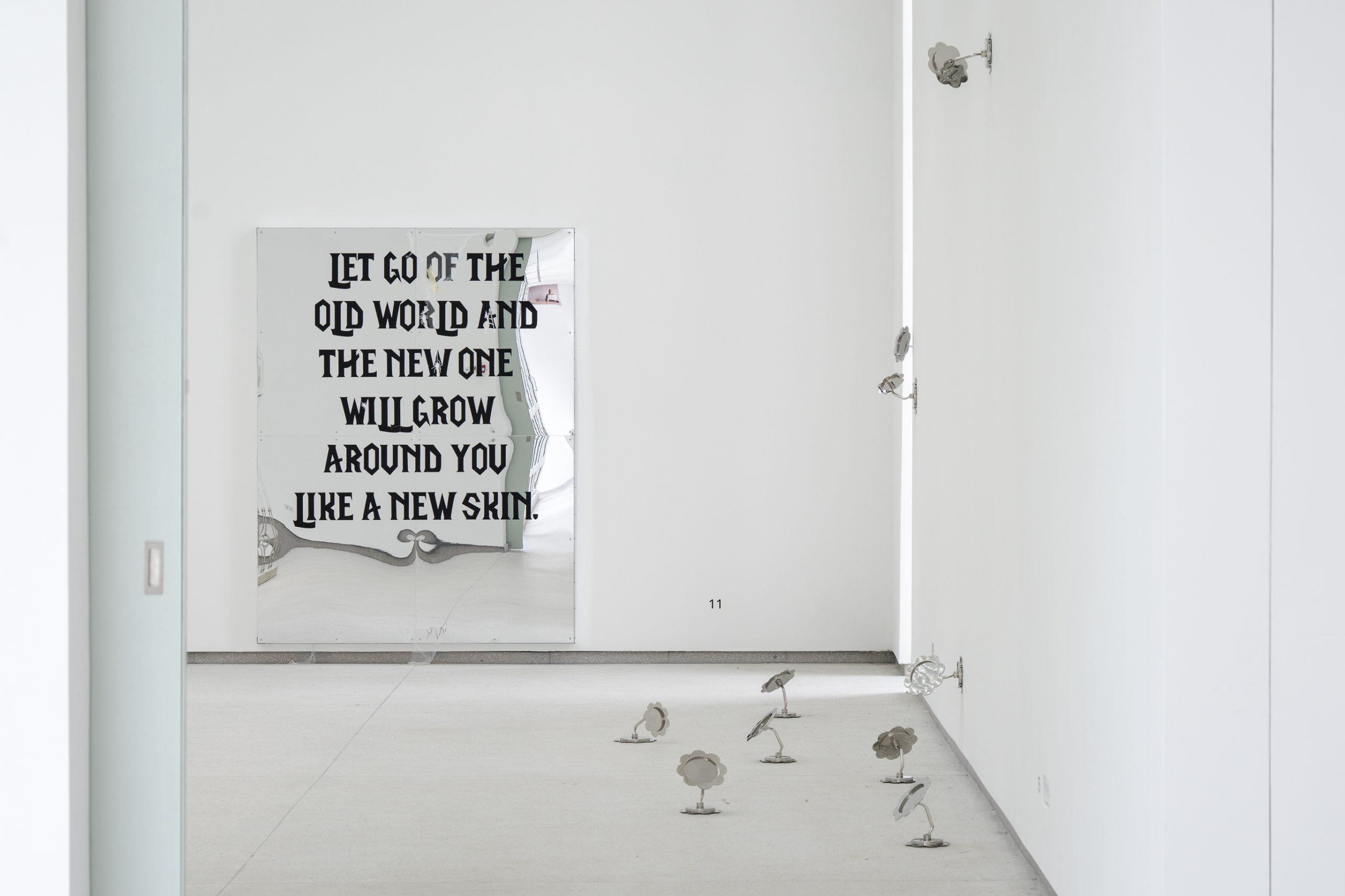
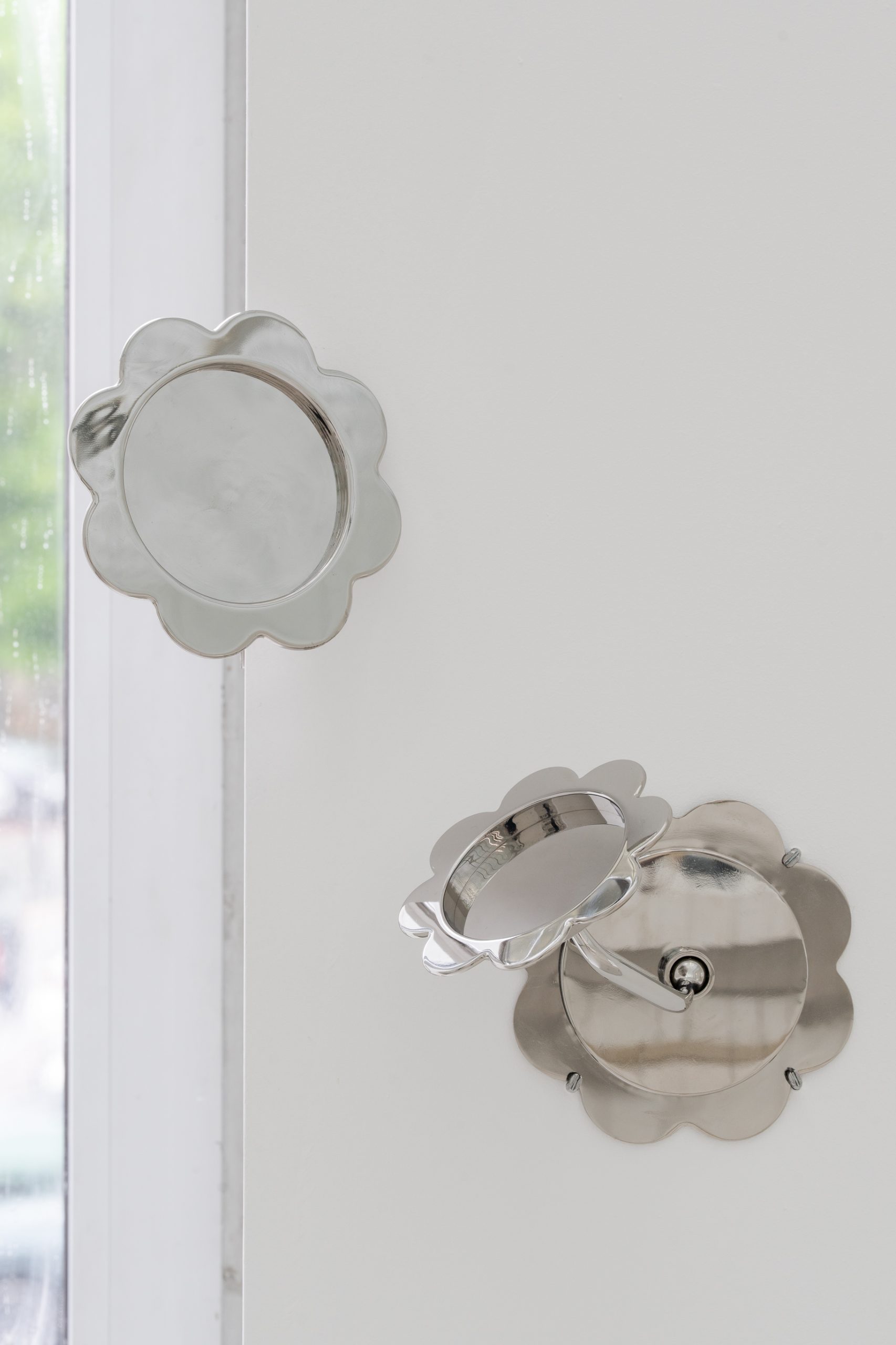
Jakub Choma, “Me, Myself & I”, 2024–2025. Wooden structure, screws, plastic film, sticker, mirror, plexiglass, 215 × 160 × 6 cm. Courtesy of the artist. Dorota Gawęda and Eglė Kulbokaitė, “Yield (twinning)”, 2025. Stainless steel casting of a found object, 17 × 16 × 14 cm each. Courtesy of the artists. “Superglue, or Inventing the Friend”, Contemporary Art Centre, 2026. Photographer: Andrej Vasilenko
Dorota Gawęda and Eglė Kulbokaitė, “Yield (twinning)”, 2025. Stainless steel casting of a found object, 17 × 16 × 14 cm each. Courtesy of the artists. “Superglue, or Inventing the Friend”, Contemporary Art Centre, 2026. Photographer: Andrej Vasilenko
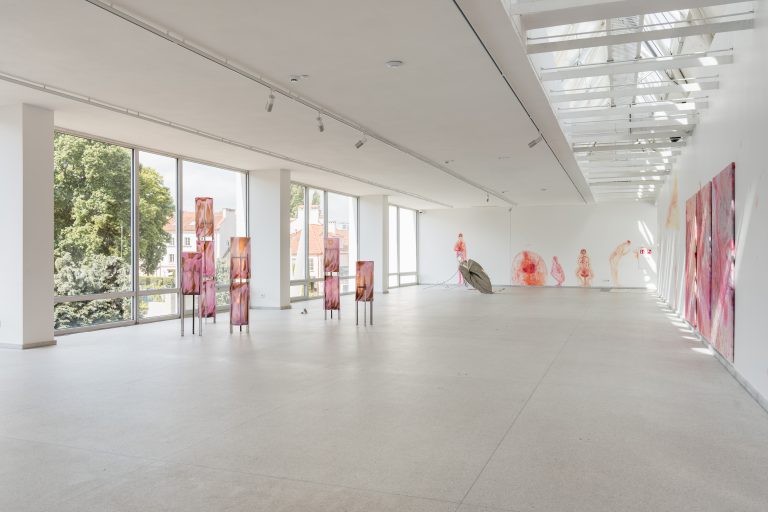
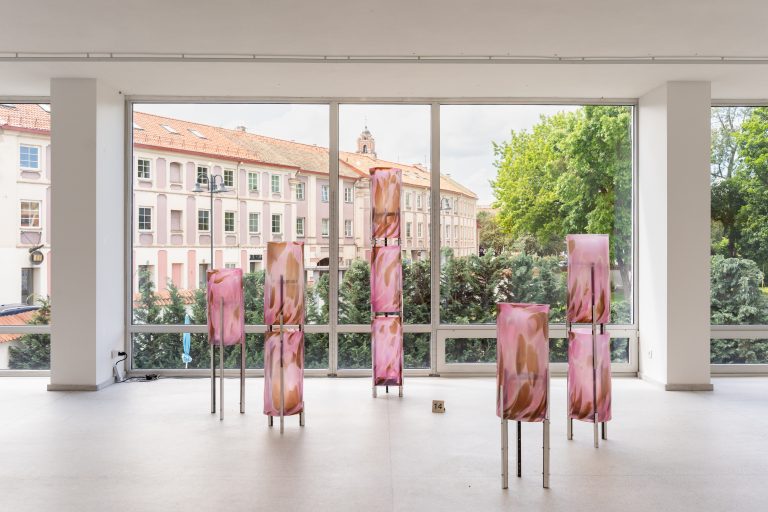
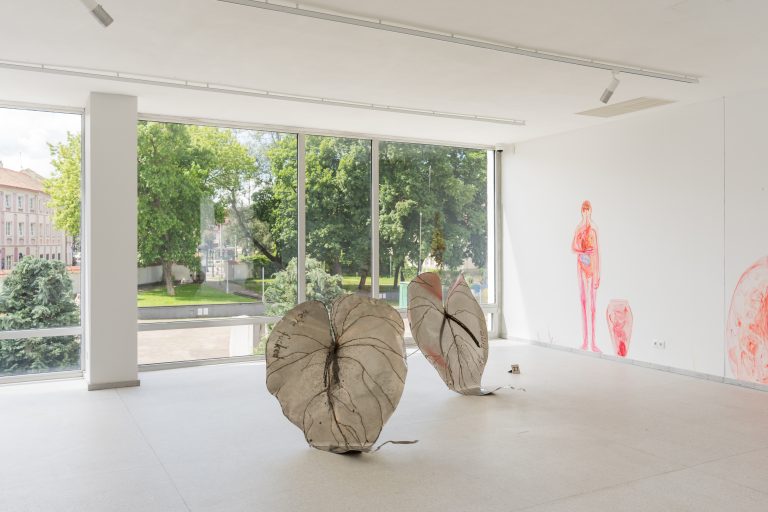
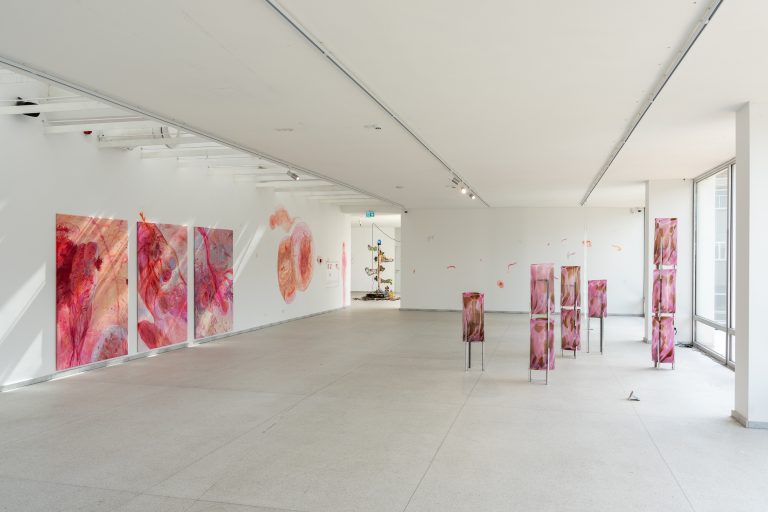
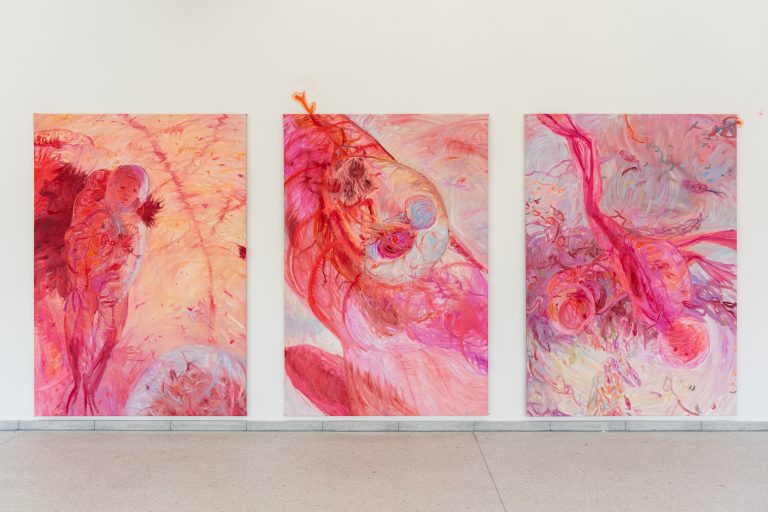
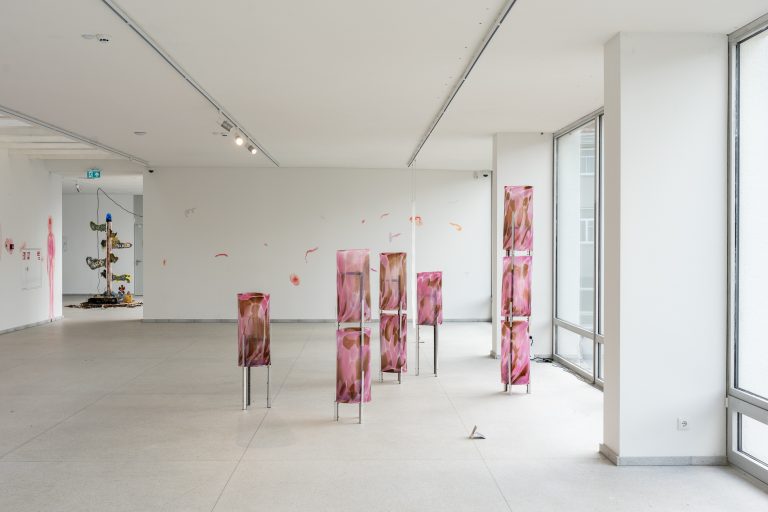
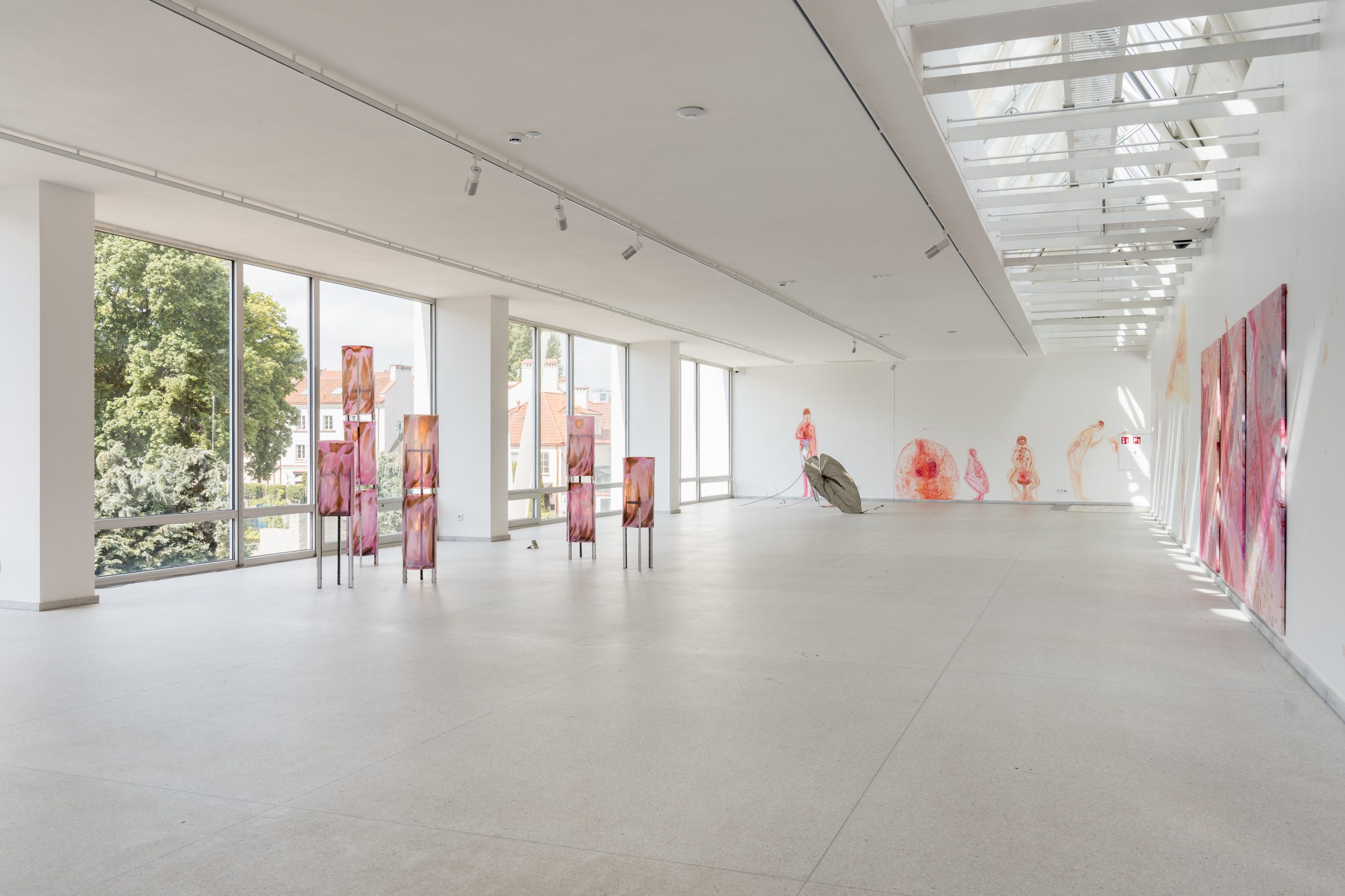
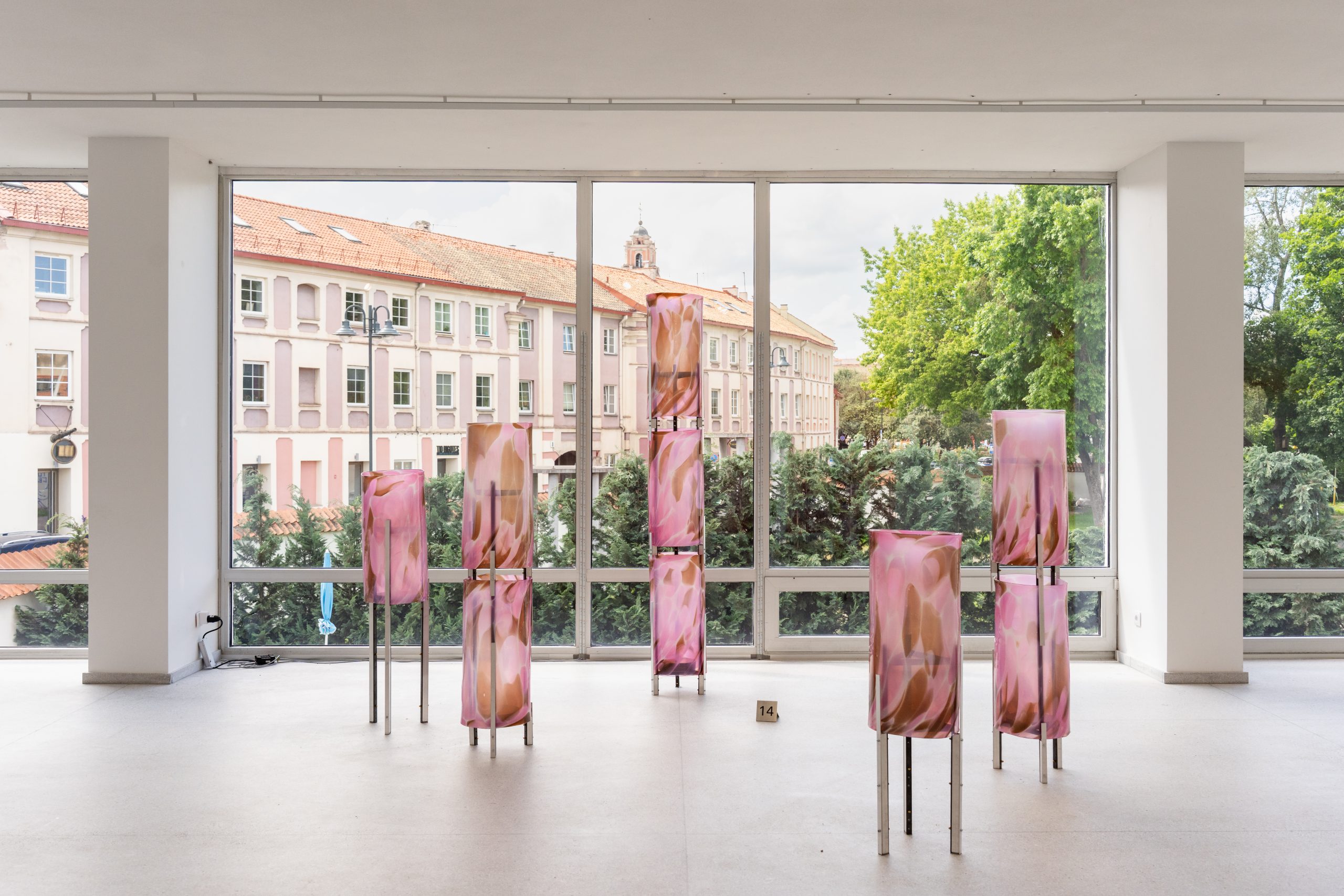
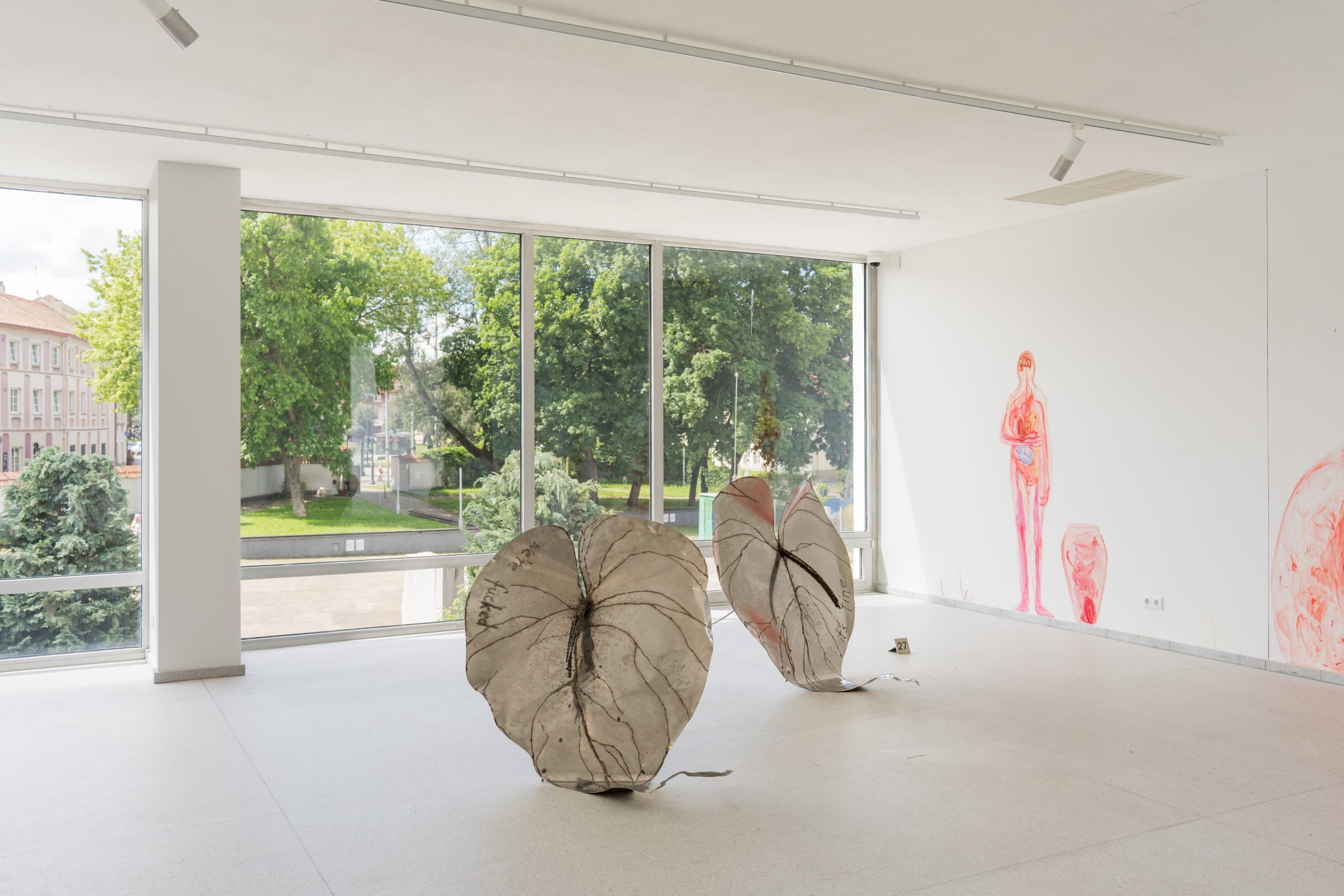
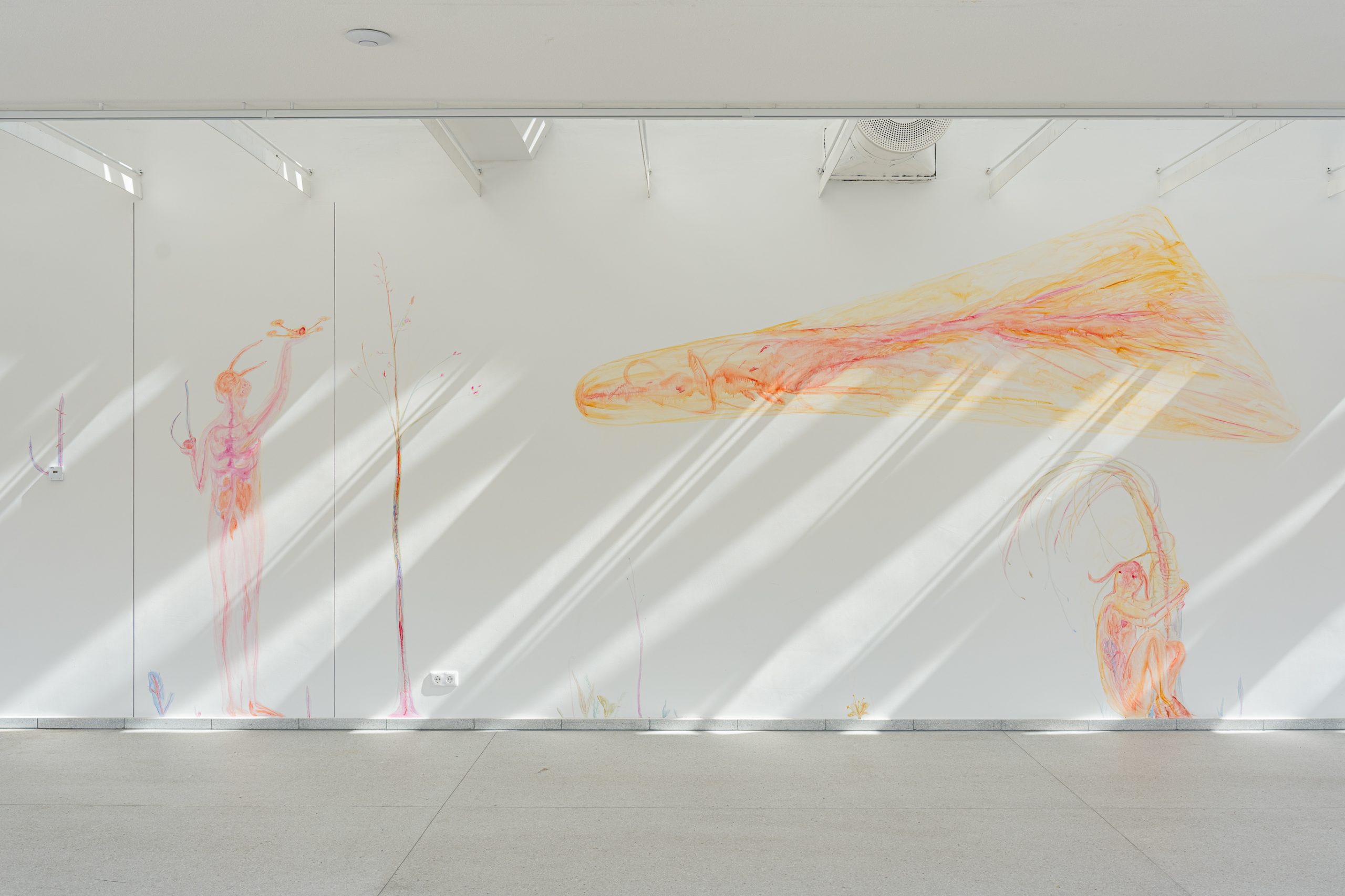
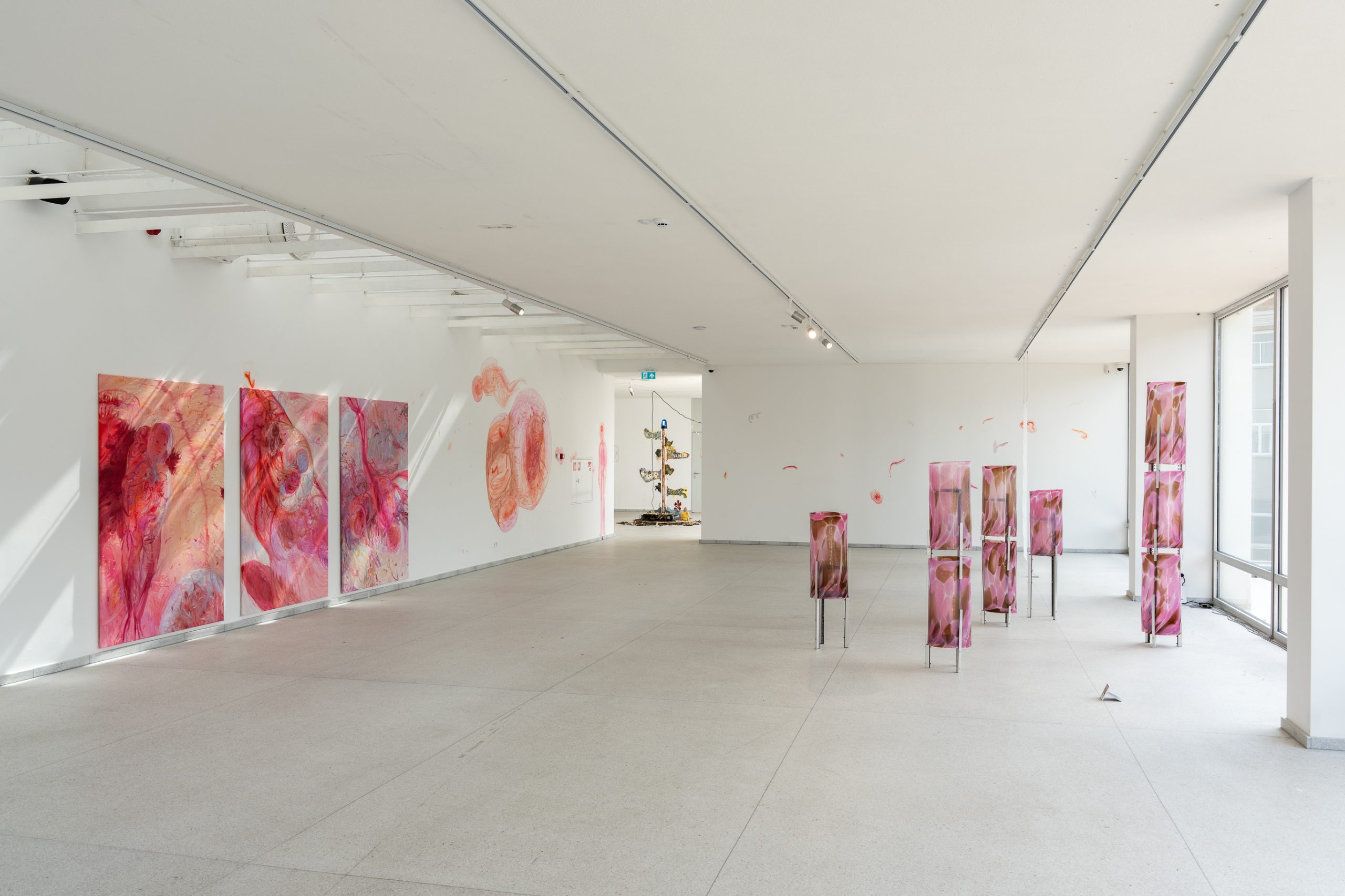
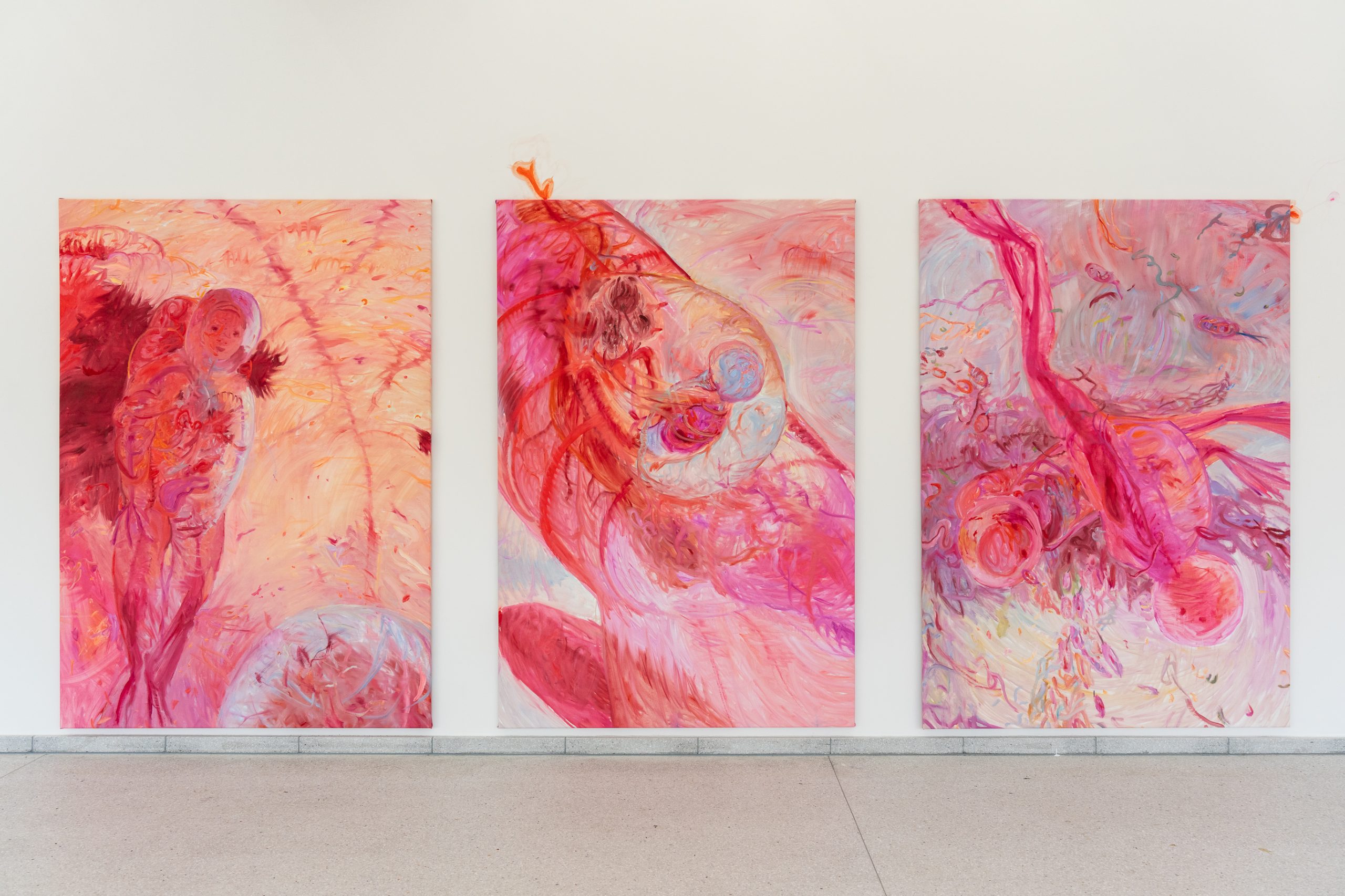
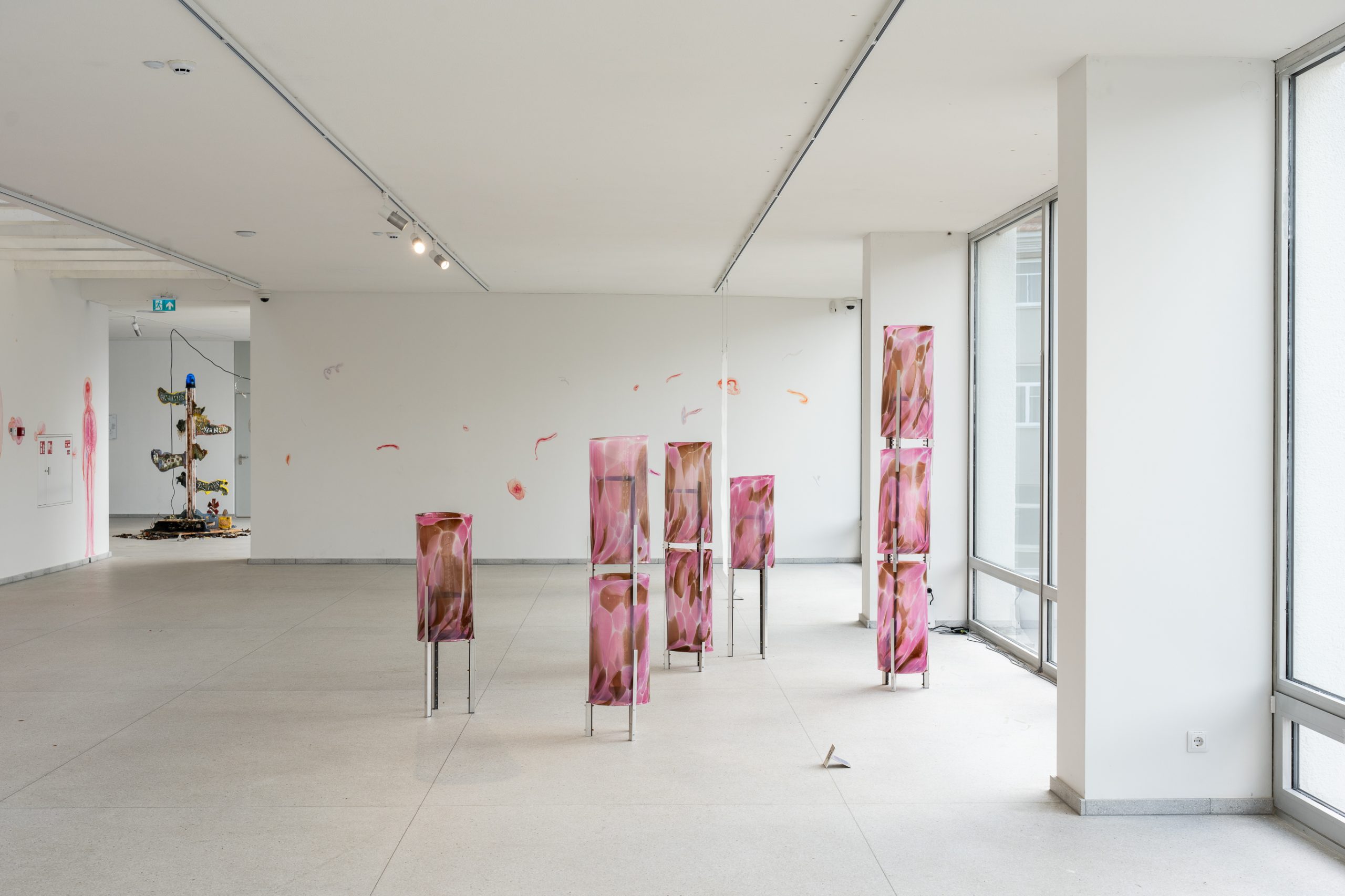
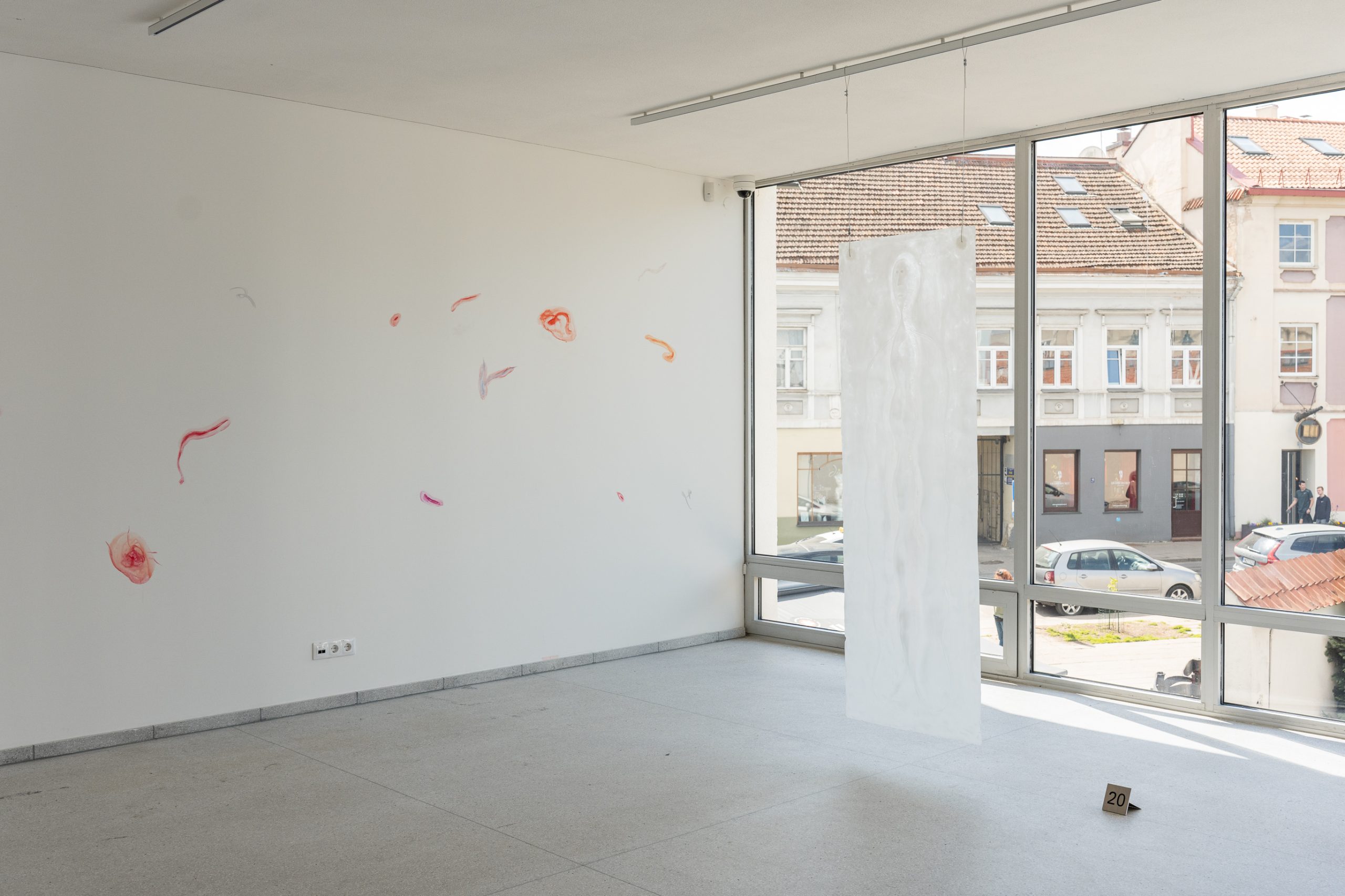
Saskia Fischer, “Columns”, 2025. Genuine antique glass, steel, aluminium, 100–220 cm × ø 35 cm. Glassworks: Glashütte Lamberts. Courtesy of the artist. Magdalena Lazar, “Hey, hi, hello, yo, what’s up”, 2024. Stainless steel, black steel, 130 × 150 × 140 cm. Courtesy of the artist and Sylwia & Piotr Krupa collection, Wrocław. Kateryna Lysovenko, “The Old Air Dependent Dream”, 2026. Installation comprising a triptych and wall painting. Oil on canvas; wall painting. Triptych: 210 × 150 cm (each). Overall installation: 9 × 24 m, height 3 m. Courtesy of the artist and TBA gallery, Warszaw. “Superglue, or Inventing the Friend”, Contemporary Art Centre, 2026. Photographer: Andrej Vasilenko
Saskia Fischer, “Columns”, 2025. Genuine antique glass, steel, aluminium, 100–220 cm × ø 35 cm. Glassworks: Glashütte Lamberts. Courtesy of the artist. “Superglue, or Inventing the Friend”, Contemporary Art Centre, 2026. Photographer: Andrej Vasilenko
Magdalena Lazar, “Hey, hi, hello, yo, what’s up”, 2024. Stainless steel, black steel, 130 × 150 × 140 cm. Courtesy of the artist and Sylwia & Piotr Krupa collection, Wrocław. Kateryna Lysovenko, “The Old Air Dependent Dream”, 2026. Installation comprising a triptych and wall painting. Oil on canvas; wall painting. Triptych: 210 × 150 cm (each). Overall installation: 9 × 24 m, height 3 m. Courtesy of the artist and TBA gallery, Warszaw. “Superglue, or Inventing the Friend”, Contemporary Art Centre, 2026. Photographer: Andrej Vasilenko
Magdalena Lazar, “Hey, hi, hello, yo, what’s up”, 2024. Stainless steel, black steel, 130 × 150 × 140 cm. Courtesy of the artist and Sylwia & Piotr Krupa collection, Wrocław. “Superglue, or Inventing the Friend”, Contemporary Art Centre, 2026. Photographer: Andrej Vasilenko
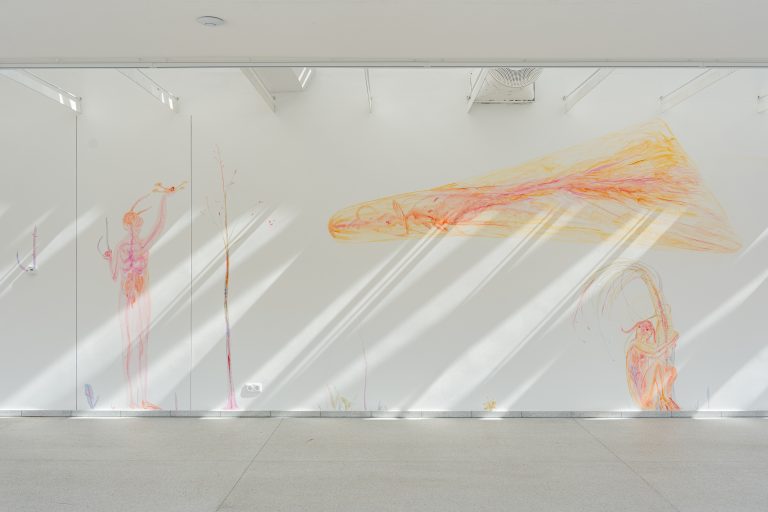
Kateryna Lysovenko, “The Old Air Dependent Dream”, 2026. Installation comprising a triptych and wall painting. Oil on canvas; wall painting. Triptych: 210 × 150 cm (each). Overall installation: 9 × 24 m, height 3 m. Courtesy of the artist and TBA gallery, Warszaw. “Superglue, or Inventing the Friend”, Contemporary Art Centre, 2026. Photographer: Andrej Vasilenko
“Superglue, or Inventing the Friend”, exhibition view. Contemporary Art Centre, 2026. Curator: Valentinas Klimašauskas. Photographer: Andrej Vasilenko
Kateryna Lysovenko, “The Old Air Dependent Dream”, 2026. Installation comprising a triptych and wall painting. Oil on canvas; wall painting. Triptych: 210 × 150 cm (each). Overall installation: 9 × 24 m, height 3 m. Courtesy of the artist and TBA gallery, Warszaw. “Superglue, or Inventing the Friend”, Contemporary Art Centre, 2026. Photographer: Andrej Vasilenko
“Superglue, or Inventing the Friend”, exhibition view. Contemporary Art Centre, 2026. Curator: Valentinas Klimašauskas. Photographer: Andrej Vasilenko
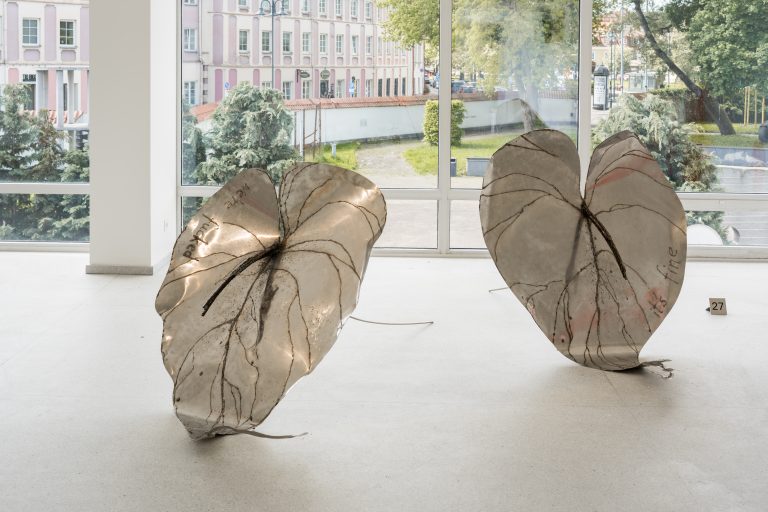
Kateryna Lysovenko, “The Old Air Dependent Dream”, 2026. Installation comprising a triptych and wall painting. Oil on canvas; wall painting. Triptych: 210 × 150 cm (each). Overall installation: 9 × 24 m, height 3 m. Courtesy of the artist and TBA gallery, Warszaw. Rodrigo Hernández, “Gourd”, 2018. Polyurethane, 220 × 65 × 5 cm. Courtesy of the artist and Gallery P420, Bologna. “Superglue, or Inventing the Friend”, Contemporary Art Centre, 2026. Photographer: Andrej Vasilenko
Rodrigo Hernández, “Gourd”, 2018. Polyurethane, 220 × 65 × 5 cm. Courtesy of the artist and Gallery P420, Bologna. “Superglue, or Inventing the Friend”, Contemporary Art Centre, 2026. Photographer: Andrej Vasilenko